
Vrnjačka Banja for First-Time Visitors: Parks, Spa Heritage and a Relaxed Weekend Plan
Discover Vrnjačka Banja’s graceful promenade, mineral springs, parkland and nearby medieval heritage on an easy first-time weekend in Serbia.
For Vrnjacka Banja first-time visitors, the appeal is immediate: this is a Serbian spa town made for slow walks, shaded benches and unhurried coffee breaks. Its identity comes less from a single headline sight than from the way its park, springs, elegant villas and pedestrian promenade flow together. A weekend is enough to understand its spa heritage while leaving room for a rewarding monastery excursion.
Vrnjačka Banja suits travellers who want culture without a demanding city schedule. You can spend much of the visit on foot, moving between spring pavilions, leafy paths and small landmarks. Then, when you want a change of scene, the medieval monastery of Žiča offers a memorable half-day beyond the resort.
Continue planning with Escape from the Urban Hustle and Stress: Serbian Spas Offer True Relaxation for Body and Soul.
Why Vrnjačka Banja feels different
Vrnjačka Banja has long been associated with mineral water and restorative breaks. Yet its real charm lies in its atmosphere. The town centre feels like a traditional European spa resort, where the act of strolling is part of the experience.
The pedestrian promenade forms the natural spine of a first visit. It threads through the spa core, linking cafés, mature trees, landscaped areas and handsome older villas. The architecture gives the town a gentle Belle Époque character, even where later buildings sit alongside it.
There is no need to treat the promenade as a route to complete quickly. Walk it in the morning, return in the evening, and allow yourself to notice the details. The pace is slower than in Serbia’s larger cities, and that is precisely the point.
Vrnjačka Banja Park extends that feeling. Its paths pass under mature trees and through the green spaces that have shaped the resort’s identity for generations. Spring pavilions appear naturally along the way, while villa-lined streets at the park’s edges hint at the town’s fashionable past.
The essential park-and-promenade walk
Bridge of Love: a small landmark with a local ritual
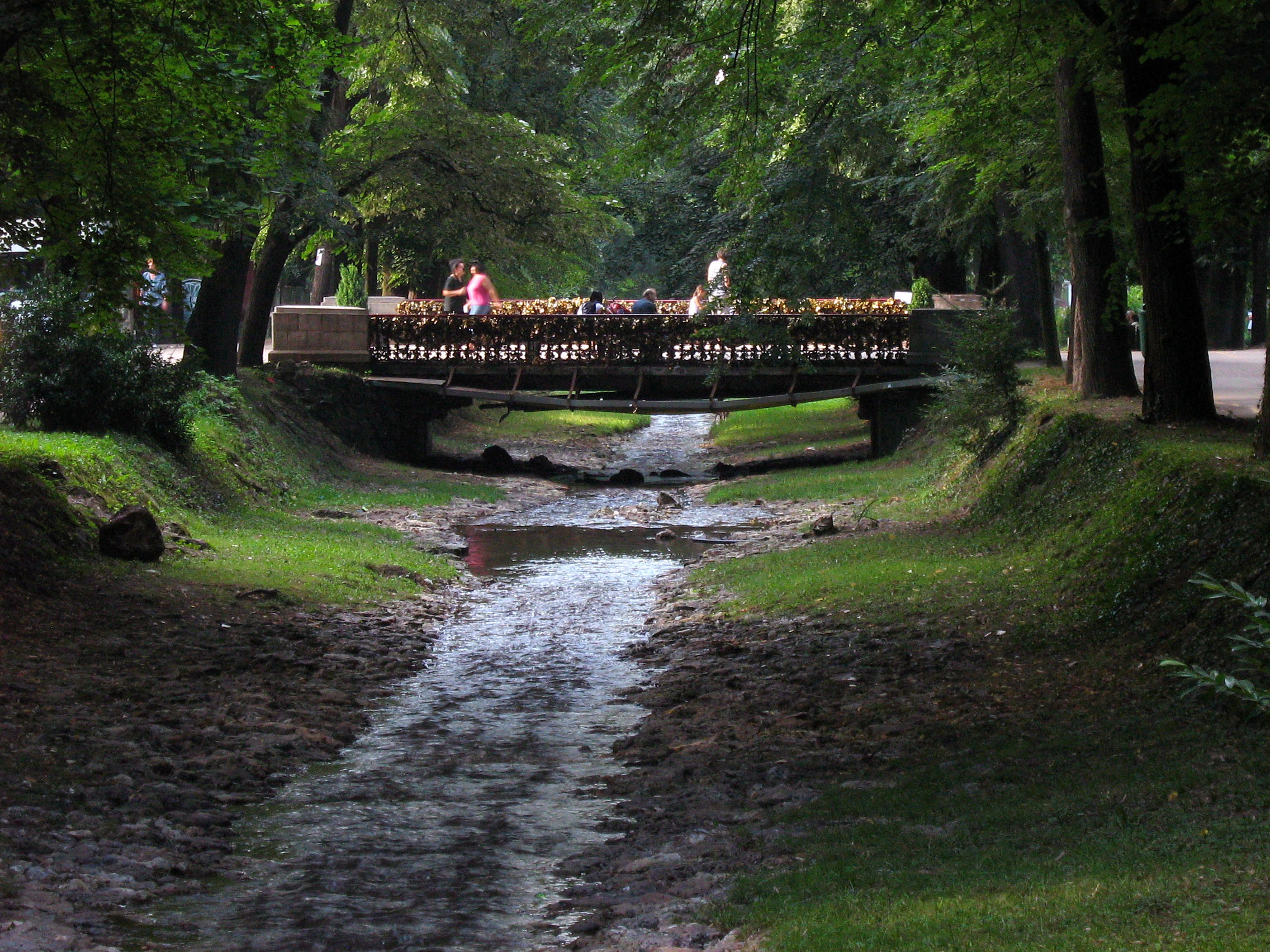
The Bridge of Love is one of Vrnjačka Banja’s most recognisable stops. Crossing the Vrnjačka River, this modest bridge is covered with padlocks left by couples. It has become a familiar symbol of romance and an easy place to pause for photographs.
The bridge works best as part of a wider wander rather than as a destination in itself. From here, continue through the central park area and let the paths guide you toward the town’s springs and villas. This is where Vrnjačka Banja reveals its most relaxed side.
Quiet corners around the park
Near the central green spaces, the Japanski vrt, or Japanese Garden, offers a compact change of mood. Its Japanese-inspired design makes it a pleasant short detour, especially if you want a quieter moment away from the main promenade.
Keep an eye out for the mineral water pavilions as you walk. They are not merely decorative features. They connect the town’s daily life with its long spa tradition. Several public springs have distinct mineral compositions, so it is sensible to follow local guidance before drinking from them, particularly if you have health concerns.
For most visitors, the pleasure comes from seeing how naturally these pavilions belong to the park. A spring stop, a short walk under the trees and a coffee on the promenade can easily fill an enjoyable afternoon.
Topla Voda and the town’s spa heritage
Topla Voda, meaning “warm water,” is central to Vrnjačka Banja’s identity. This thermal mineral spring has helped define the town as a spa destination and remains an important stop for anyone wanting to understand why the resort developed here.
Approach it as a piece of living heritage rather than a medical attraction. The spring pavilion gives a tangible sense of the old spa ritual: visitors gathering around mineral water, walking through the park and taking time out from ordinary routines. That connection between water, architecture and public space is one of Vrnjačka Banja’s lasting pleasures.
The town is associated with bathing traditions and drinking cures, but a short leisure trip is not the moment for health promises or self-prescribed routines. If you are considering spa treatments or drinking the waters for a specific reason, seek appropriate professional advice locally. For sightseeing, Topla Voda is best appreciated for its history and setting.
A cultural hour beyond the spa paths
Belimarković Castle
Belimarković Castle gives a first-time visit a welcome cultural counterpoint. Despite its name, it is a 19th-century villa rather than a medieval fortress. Its elegant presence near the park reflects the era when Vrnjačka Banja attracted visitors seeking both social life and relaxation.
The building is worth seeing for its architecture and for the way it fits the townscape. It feels at home among the older residences and greenery, adding a more formal landmark to a day of informal strolling. Visiting arrangements for any interior displays can vary, so treat the exterior and its setting as part of the experience.
A respectful church stop
The Church of the Nativity of the Blessed Virgin Mary is another worthwhile pause in the central vicinity. This Orthodox church provides a brief architectural and local-cultural stop, especially for travellers interested in the religious life that continues beyond the resort image.
Dress respectfully and keep voices low if worship is taking place. Even a short visit adds another layer to Vrnjačka Banja, reminding you that this is a lived-in town as well as a historic spa.
A relaxed two-day weekend plan
Day one: settle into the spa-town rhythm
Devote your first day to the centre. Begin with a gentle walk along the Vrnjačka Banja Promenade, then explore the park without a fixed agenda. Visit the Bridge of Love, look for the spring pavilions and spend time around Topla Voda.
Later, make time for Belimarković Castle and the Church of the Nativity of the Blessed Virgin Mary. Neither requires a rushed approach. The best version of this day includes pauses: a bench beneath the trees, a café stop and an evening return to the promenade when the town’s social rhythm becomes more visible.
If you have extra energy, include the Japanski vrt as a peaceful final loop through the park. It is a small stop, but it reinforces the town’s emphasis on landscape and calm.
Day two: choose forest air or medieval Serbia
For a nature-focused morning, Goč Mountain rises above the resort and offers a refreshing contrast to the formal parkland below. Its woodland setting suits an easy outdoor outing, whether you choose a short walk or simply want cooler forest air. Conditions can change with the season, so plan this flexibly and wear suitable footwear.
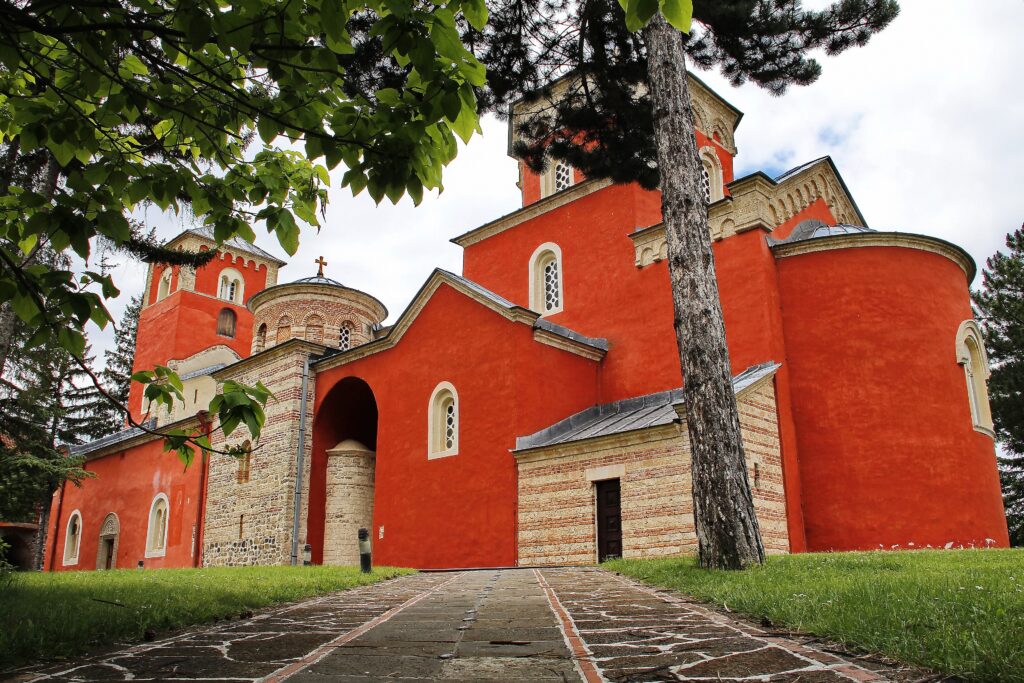
For many first-time visitors, however, Žiča Monastery is the stronger choice for a main excursion. Located near Kraljevo, it is one of Serbia’s important medieval Orthodox monasteries and adds real historical depth to a spa weekend. Its distinctive red church and peaceful monastic setting make a powerful impression.
Allow this outing to take half a day rather than trying to squeeze it between other plans. Arrange transport beyond Vrnjačka Banja in advance, as the monastery is not part of the town’s walkable core. Respectful clothing and behaviour are essential when visiting an active religious site.
Choosing the right excursion
If you have time for only one trip beyond Vrnjačka Banja, choose Žiča Monastery. It offers the clearest contrast with the resort: medieval history, Orthodox heritage and a more contemplative landscape near Kraljevo. It also gives the weekend a satisfying sense of variety.
Ljuboostinja Monastery is another meaningful option for travellers especially interested in Serbian medieval religious heritage. It can suit a longer itinerary or a return visit, but Žiča remains the most natural principal excursion for a compact first weekend.
Kraljevo itself may appeal if you need an urban stop or want to explore the wider area. Still, there is no need to force it into a short break. Vrnjačka Banja is most rewarding when you preserve time for its park, promenade and spring pavilions.
How to make the most of a first visit
- Stay central if possible: the main pleasure of Vrnjačka Banja is being able to walk easily between the promenade, park and springs.
- Think of the springs as heritage: enjoy their setting and history without expecting medical outcomes.
- Leave breathing room in the plan: this is a destination for lingering, not racing between attractions.
- Use excursions selectively: choose Žiča for culture or Goč for outdoor time, rather than trying to cover everything in one day.
- Respect religious spaces: modest dress and quiet behaviour matter at churches and monasteries.
Vrnjačka Banja does not demand an ambitious itinerary. Its best moments are often the simplest: crossing the Bridge of Love, hearing water at a spring pavilion, walking beneath old trees and watching the promenade settle into evening. Add Žiča Monastery for one memorable cultural outing, and you have a relaxed Serbian weekend with a strong sense of place.