
Ohrid Old Town Walk: How to Link the Ancient Theatre, Samuel’s Fortress and Kaneo Church
Follow Ohrid’s most rewarding historic walk from the Old Bazaar to Kaneo, taking in ancient ruins, medieval walls, churches and lake views.
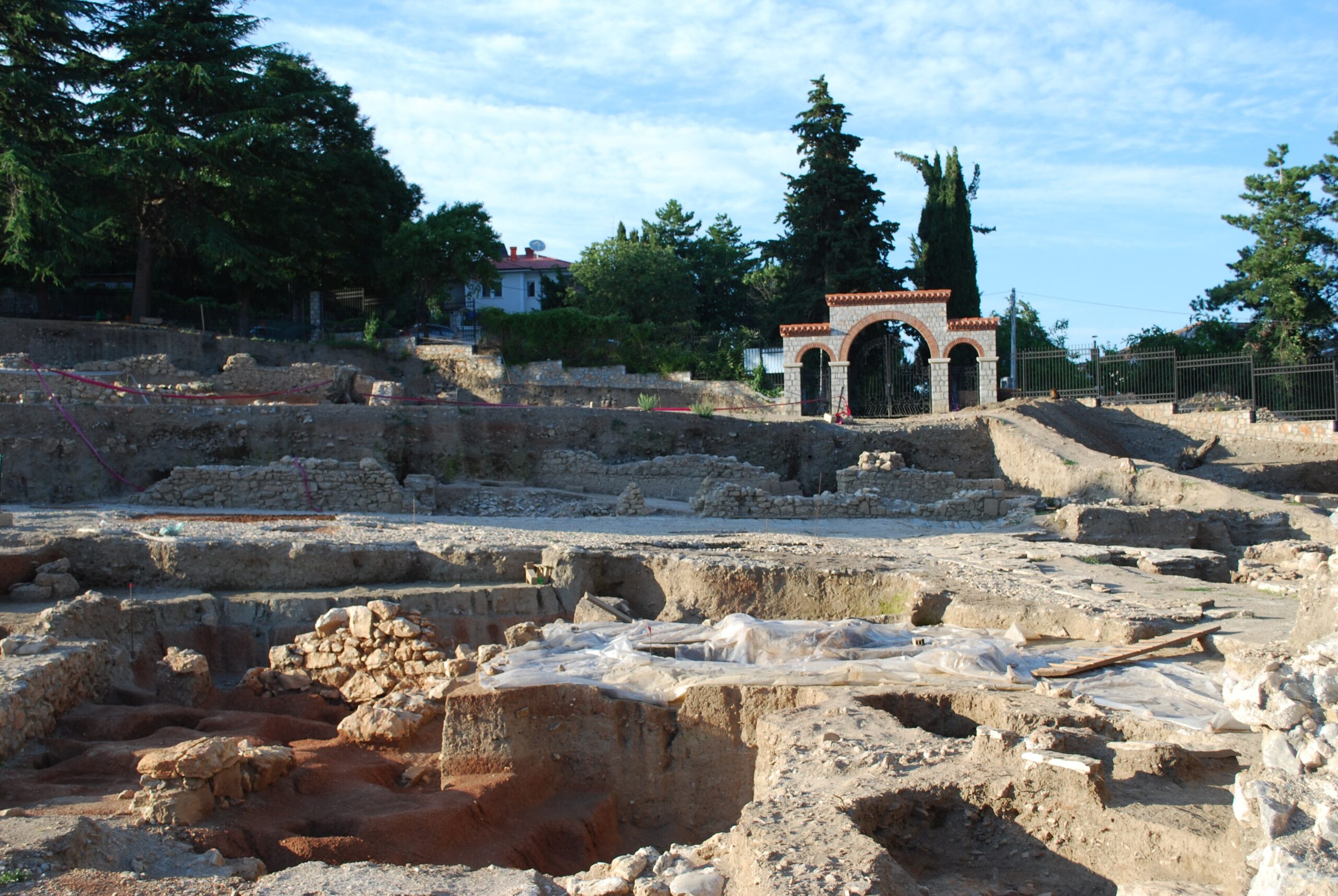
The Ohrid Old Town walking route from the bazaar to Kaneo is one of North Macedonia’s most memorable short walks. It climbs through layered history, from Roman-era stones to medieval ramparts, then descends to the lake beneath one of Ohrid’s best-known churches.
This is not a flat stroll. Ohrid’s old town rises sharply above Lake Ohrid, and its lanes include worn stone, steps and uneven surfaces. Yet the changing views make the effort worthwhile. Allow a relaxed half-day to explore the Ancient Theatre, Samuel’s Fortress, Plaošnik and the Church of St John at Kaneo without rushing.
Continue planning with Where to Stay in Ohrid: Best Areas for Visitors and Where to Eat in Ohrid: Local Food Guide.
The route at a glance
The most logical direction is uphill first and downhill later. Begin around the Ohrid Old Bazaar, walk up through the lower old town to the Ancient Theatre, continue to Samuel’s Fortress, then cross the archaeological hillside of Plaošnik. From there, descend towards Kaneo and finish at the Church of St John at Kaneo above the water.
This route creates a clear story of Ohrid. The bazaar introduces the living town, the theatre reveals its classical and Roman past, and the fortress frames its medieval power. Plaošnik adds Ohrid’s early Christian heritage, while Kaneo provides the dramatic lakeside finale.
- Old Bazaar and Čar Samoil street
- Church of Saint Sophia
- Ohrid Ancient Theatre
- Samuel’s Fortress
- Plaošnik and the Church of Saints Clement and Panteleimon
- Church of St John at Kaneo
- Kaneo Beach and the waterfront return
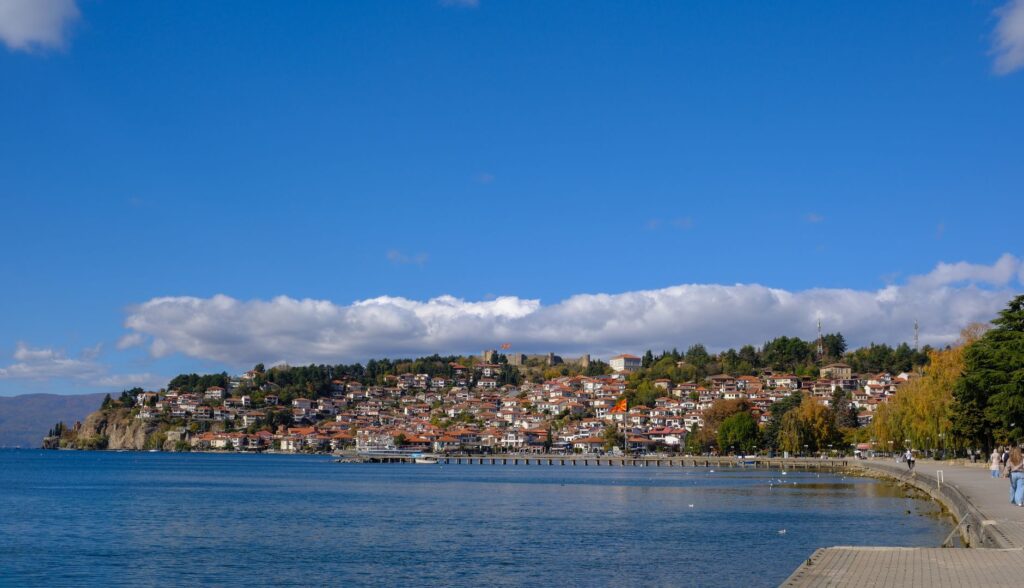
Begin in the Old Bazaar and lower old town
Ohrid Old Bazaar is the natural place to gather your bearings before the climb. Čar Samoil street runs through the historic commercial heart of town, with small shops, cafés and lanes that gradually lead towards the old town’s church quarter.
It is worth slowing down here rather than treating the bazaar as a simple starting point. The streets show Ohrid as a working town as well as a historic destination. Traditional buildings, shaded corners and everyday local life give the route a softer beginning before the more monumental sites above.
Make time for Saint Sophia
A short detour brings you to the Church of Saint Sophia, one of Ohrid’s major medieval landmarks. The church stands below the theatre and makes geographical as well as historical sense on this walk.
Saint Sophia has long served as an important episcopal church. Its frescoes are among the features that make it significant, although visitors should be respectful of interior rules, worshippers and any photography restrictions. Even if you only admire the building from outside, it gives a strong introduction to Ohrid’s sacred heritage.
See Ohrid Ancient Theatre before the upper-town climb
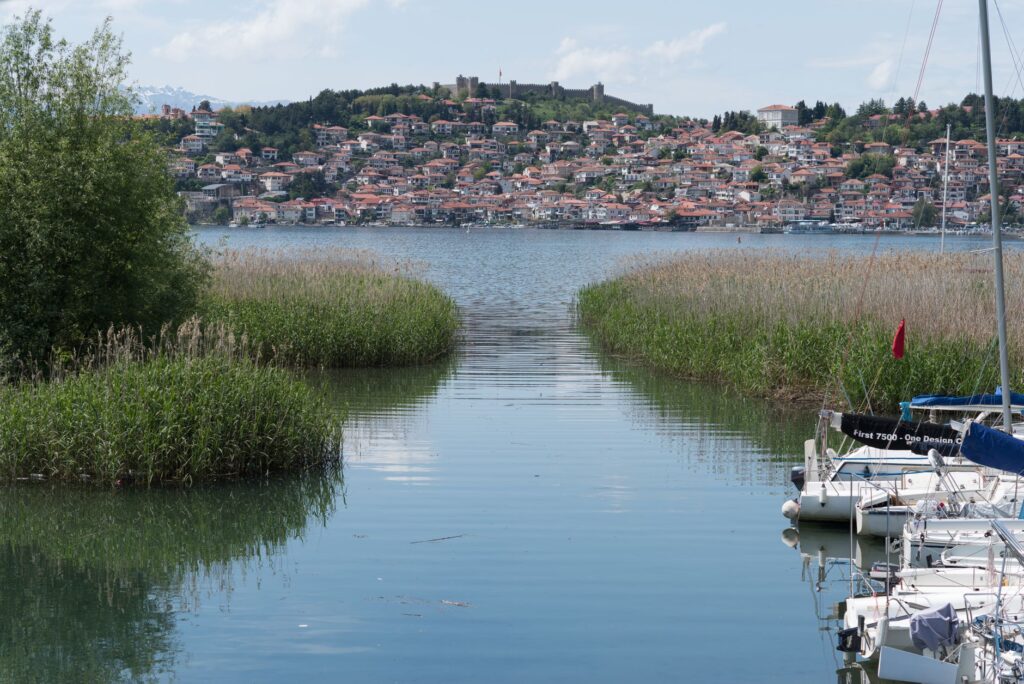
From Saint Sophia, the route rises towards the Ohrid Ancient Theatre. Set into the slope below the fortress, this is an especially satisfying stop because it places the town’s ancient past within its present-day landscape.
The theatre has Hellenistic origins and was later adapted during the Roman period. Its stone seating faces the hills rather than the lake, which creates a more enclosed and theatrical atmosphere than many coastal amphitheatres. Today, it also remains an open-air performance venue, so it still feels connected to public life rather than preserved as a silent ruin.
Take a moment to look uphill from the theatre. Samuel’s Fortress crowns the ridge above, and the visual link between the two sites explains why this is the best direction for the walk. You are moving through Ohrid’s history in layers, rather than doubling back between disconnected sights.
Samuel’s Fortress and the views over Lake Ohrid
The climb from the theatre to Samuel’s Fortress is the most demanding part of the route. The streets are steep, and stone surfaces can be awkward underfoot. However, this is also where Ohrid’s setting becomes most impressive.
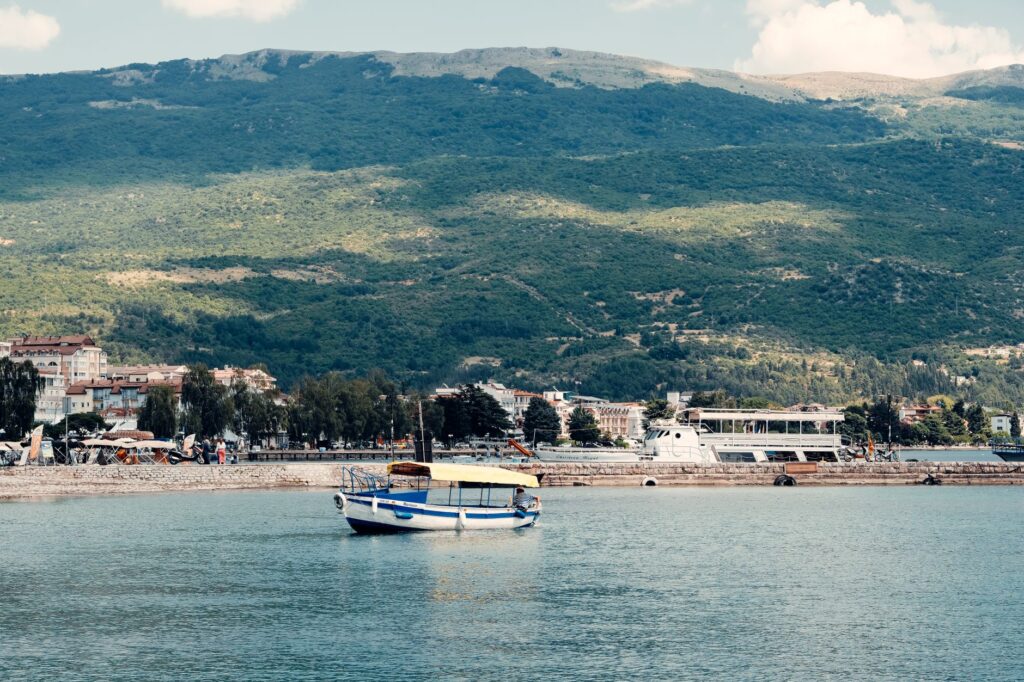
The fortress occupies the Upper Town, high above the old roofs and Lake Ohrid. Its surviving walls and towers reflect Ohrid’s medieval importance, when this hilltop position offered both defence and control over the settlement below.
A viewpoint that explains the city
From the fortress area, Ohrid spreads out beneath you: red-tiled roofs, church domes, the curve of the shoreline and the broad expanse of the lake. It is the best place on this route to understand how closely the town is tied to its landscape.
Do not rush the viewpoint. The fortress is not simply a photo stop; it gives context to every stage that follows. You can trace the descent towards Plaošnik and Kaneo, then see the lake that has shaped Ohrid’s identity for centuries.
Plaošnik: Ohrid’s early Christian hillside
Beyond the fortress, the route eases into the archaeological area of Plaošnik. This open hillside feels quieter than the lanes below, with archaeological remains spread across a prominent site above Lake Ohrid.
Plaošnik is closely associated with Clement of Ohrid, one of the most important figures in the region’s religious and literary history. The Church of Saints Clement and Panteleimon stands here, linking the site to Ohrid’s early Christian traditions.
The value of Plaošnik lies in its sense of continuity. You have just left medieval walls, but the site reaches further back through layers of worship and settlement. Its open position also gives you another chance to enjoy the lake views before the path turns downhill.
Choose the right pace on the descent
From Plaošnik, follow the paths and lanes descending towards Kaneo. The route becomes more scenic, but it also demands attention. Steps, polished stone and sloping paths can be slippery when wet, so supportive footwear is more useful than fashion footwear here.
If you want another historic pause, the Church of the Holy Mother of God Peribleptos is a worthwhile landmark in the upper old town. It works best as a brief stop for visitors who enjoy medieval architecture and sacred art, rather than as a reason to extend the walk too far.
Nearby, Robevci House offers a different layer of Ohrid history. This handsome 19th-century house is part of the National Museum and reflects the traditional domestic architecture of the old town. It is a good option if you want to break up the descent with a compact museum visit.
Arrive at the Church of St John at Kaneo
The Church of St John at Kaneo is the natural finish to this walk. Perched on a small cliff above Lake Ohrid, it combines a modest medieval church with an extraordinary setting. The approach is part of the experience: the town falls away behind you, while the water opens out in front.
Kaneo is often photographed because its location is so striking, but it is more than a viewpoint. The church’s compact form, lake-facing position and surrounding rocks create a peaceful contrast with the busier streets of the bazaar. After the climb to the fortress, arriving here feels earned.
Be considerate if you visit the church interior. It remains a place of worship, and expectations around dress, silence and photography may apply. The exterior alone is reason enough to include Kaneo on the route.
Finish beside the lake
Below the church, Kaneo Beach provides a simple place to pause beside the water. It is a small lakeside spot rather than a grand resort beach, but the view back towards the church makes it a rewarding end point.
From Kaneo, many walkers continue along the lakeside towards central Ohrid. The waterfront and boardwalk sections offer an easier, flatter return than retracing the steep upper-town lanes. It is an enjoyable way to let the walk unwind, with Lake Ohrid beside you and the old town rising behind.
Alternatively, return through the upper streets if you want more time among traditional houses, church façades and quieter corners. The waterfront route is better for an easy finish; the upper-town route suits travellers who still have energy for exploration.
Walking advice for this Ohrid route
This itinerary is manageable for most visitors with reasonable mobility, but it is not suitable for anyone expecting smooth, level pavements. The climb to Samuel’s Fortress is steep, while the descent towards Kaneo includes uneven stone and steps.
- Wear shoes with reliable grip, especially after rain.
- Carry water before heading up to the fortress.
- Leave time to pause at viewpoints rather than treating the walk as a race.
- Check access arrangements directly for the fortress, theatre and church interiors.
- Dress respectfully when entering active churches.
- Keep valuables secure in busier bazaar streets and on narrow paths.
Ohrid rewards travellers who walk slowly. By linking the Old Bazaar, Ancient Theatre, Samuel’s Fortress, Plaošnik and Kaneo in one downhill journey, you see the town in the order its landscape suggests: from lively streets, through ancient and medieval heights, to the calm edge of Lake Ohrid.
Tours & experiences for Ohrid
Popular experiences with current pricing and traveler ratings.
 Free cancellation
Ohrid cooking classes
 Free cancellation
The Ultimate Paris Private Sidecar Experience (2 Hours)
 Free cancellation
Ohrid Private City Tour
 Free cancellation
Paragliding above Ohrid
 Free cancellation
Ohrid Old Town Panoramic Boat Tour
 Free cancellation
1.5 Hour Ohrid Lake Sunset Cruise
ToursToBalkans may earn a commission when you book through our partner links.
Best places in Ohrid
Selected attractions and places to eat with Tripadvisor data, curated for a cleaner trip-planning experience.
Top attractions in Ohrid
