
Travnik Fortress and the Old Town: A Practical Half-Day Walking Route
Follow a relaxed 3–4 hour walk through Travnik’s spring-fed old town, Ottoman landmarks, hilltop fortress and classic ćevapi lunch stop.
Travnik Fortress and old town make an ideal half-day outing for travelers who want history, views and excellent Bosnian food without spending the day in transit. The historic center is compact, and its highlights connect naturally on foot. Allow around three to four hours, longer if you visit museum interiors or settle in for a leisurely meal.
This route begins beside the clear waters of Plava Voda, follows Travnik’s Ottoman-era streets, climbs to the fortress above the valley, and ends with the town’s famous ćevapi. It is a satisfying introduction to a place that once served as an Ottoman provincial capital.
Continue planning with Discover the Best of Bosnia: 7-Day Tour to Sarajevo, Mostar, Blagaj, Pocitelj, Travnik, and Jajce and Bosnia and Herzegovina.
Route at a glance
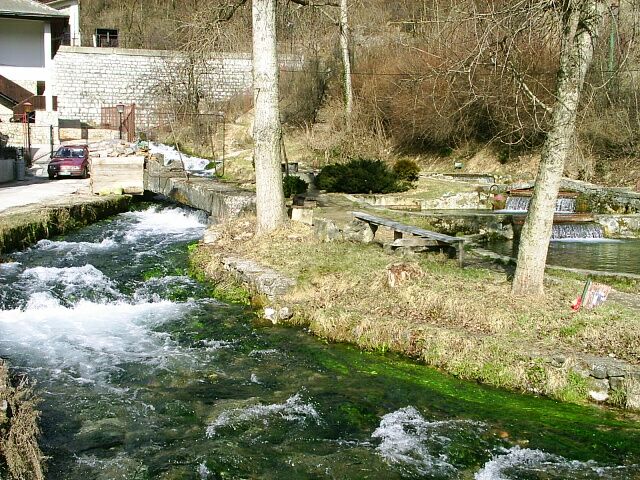
Begin at Plava Voda, where a spring-fed stream runs through one of Travnik’s most atmospheric corners. From here, the old town unfolds around the Sulejmanija Mosque, also known as Šarena Džamija, and a cluster of small streets beneath the fortress.
Continue through the center, pausing to spot the madrasa, clock tower and the birthplace of writer Ivo Andrić. Then allow the largest share of your time for Travnik Fortress. Its walls and towers provide the route’s strongest sense of place, as well as broad views over the Lašva Valley.
On the way up or down, add the Bosnian Vizier’s Residence, known as the Konak, if you would like more context on Travnik’s Ottoman past. Finish in the old town with Travnik-style ćevapi served in soft somun bread.
- Walking time: Short distances through the center, with an uphill section to the fortress.
- Best for: First-time visitors, history lovers and independent travelers.
- Main priority: Give the fortress enough time; it is more than a quick viewpoint.
- Good to know: The ascent and fortress surfaces can be uneven, so wear shoes with grip.
1. Begin beside Plava Voda
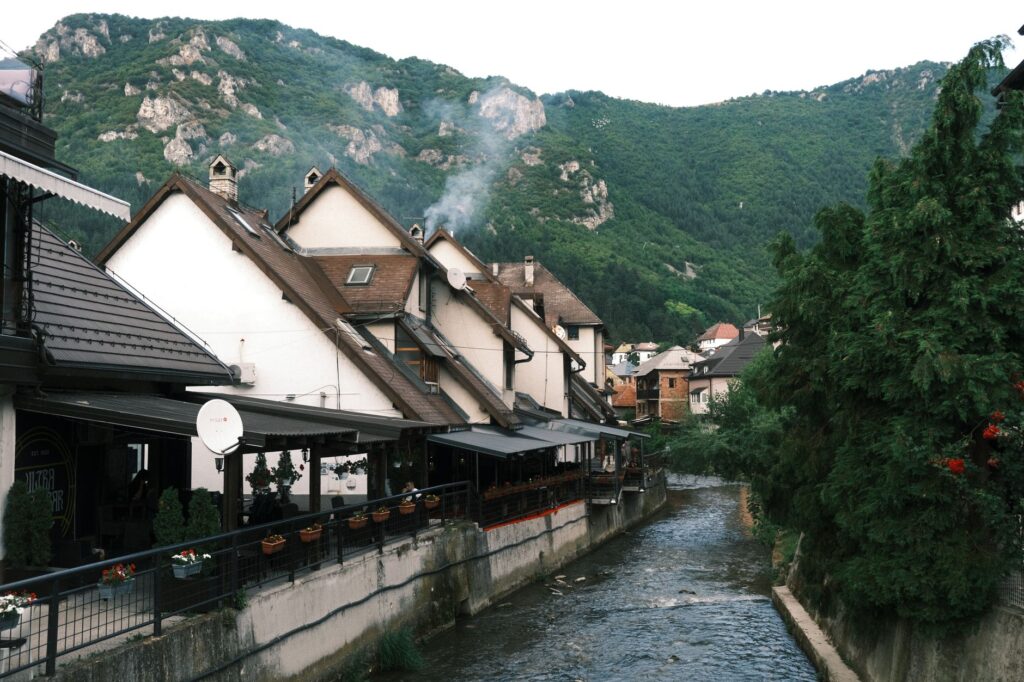
Plava Voda is the natural opening scene for Travnik. The spring-fed water brings a calm, almost village-like character to the edge of the historic center. Traditional cafés sit close to the stream, making this a pleasant place for coffee before walking uphill through the town.
Even if you only spend a few minutes here, pause to notice how water shapes Travnik’s setting. The fortress rises above the rooftops, while the valley presses close around the old town. It is a compact landscape, and Plava Voda helps make that geography easy to understand.
See Šarena Džamija in the heart of town
A short walk from the spring brings you toward Sulejmanija Mosque, widely called Šarena Džamija, or the Painted Mosque. This 18th-century mosque is one of Travnik’s defining Ottoman landmarks. Its decorative tradition gives it a more ornate character than many mosques visitors encounter elsewhere in Bosnia and Herzegovina.
The mosque stands at the center of daily life as well as the visitor route. Take time to appreciate its exterior and its place in the streetscape. If the interior is accessible, enter respectfully and dress modestly. Access can vary around prayer times and according to the season, so it is best to check locally rather than plan your route around a guaranteed visit.
From this point, Travnik feels less like a collection of individual sights. The mosque, cafés, shops and rising fortress walls all belong to one closely connected old-town scene.
2. Walk through the Ottoman center
Leave the mosque area slowly and follow the lanes toward the fortress zone. This is not a route that needs rigid navigation. Travnik rewards a little wandering, especially where older buildings, courtyards and hillside views appear between the main streets.
A madrasa and the clock tower
Look for the Elči Ibrahim-Pasha Madrasa, a historic Islamic school that adds another layer to the old town’s Ottoman architectural character. Its setting is worth seeing from the public areas around it, even if you do not enter. Together with the mosque, it recalls the educational and religious institutions that supported Travnik’s former role as an important administrative town.
Nearby, the Sahat-kula, or Clock Tower, is an easy landmark to spot on the way toward the fortress. It does not require a separate detour. Instead, treat it as part of the townscape: a vertical marker that links the lower streets with the fortified hill above.
A brief literary pause
The birthplace of Ivo Andrić, the Nobel Prize-winning writer, lies near the center and can be included as a short cultural stop. Andrić’s connection to Travnik adds a more personal thread to the walk. His writing often explored Bosnia’s layered history and the meeting of cultures, themes that feel especially tangible in this town.
The small museum exhibition is a worthwhile addition if it is open and you have time. However, it should not replace the fortress. On a short visit, the birthplace works best as a brief pause between the central streets and the uphill approach.
3. Climb to Travnik Fortress
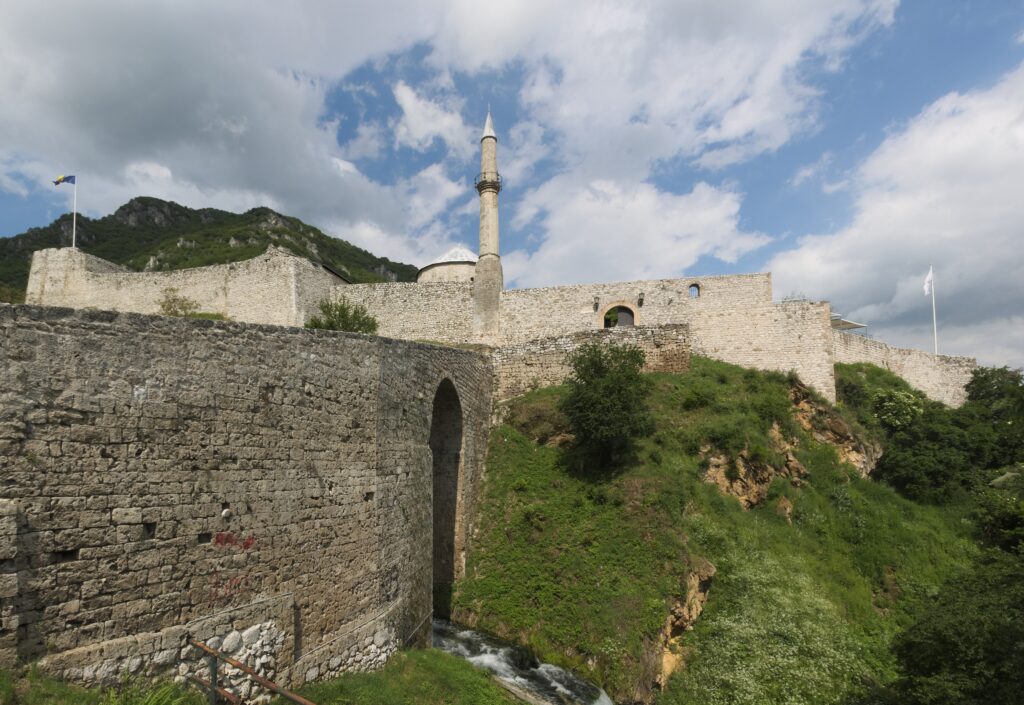
Travnik Fortress is the route’s high point in every sense. Rising directly above the town, this medieval citadel turns a pleasant old-town walk into a much fuller historical experience. Allow time to explore rather than simply take a photograph and leave.
The fortress predates Travnik’s period as an Ottoman provincial capital, which is part of what makes it so compelling. Its walls hold the town’s medieval story, while the view below reveals the Ottoman-era streets and buildings that later developed at its foot.
Walls, towers and the Lašva Valley
As you move through the fortifications, look across the rooftops toward the Lašva Valley. The viewpoint explains why this hill mattered strategically. The valley forms a natural corridor through central Bosnia, and the fortress commanded the settlement below.
Vezir’s Tower is among the features associated with the fortress complex and Travnik’s long administrative history. Take your time with the scale of the walls, gateways and towers. The best part of the visit is not one dramatic monument but the way the citadel lets you read the whole town at once.
Use local signs for the exact approach, as paths can vary. The climb is manageable for most active visitors, yet the terrain is uneven in places. A slower ascent also gives you more chances to look back over the old town.
4. Understand the vizier’s Travnik at the Konak
Travnik became especially important under Ottoman rule, when it served as the seat of Bosnian viziers. The Bosnian Vizier’s Residence, or Konak, gives this chapter of the town’s past a human scale. Located near the fortress approach, it fits naturally before or after your climb.
The Konak was an Ottoman administrative residence, not merely a decorative historic house. It helps explain why Travnik has such a rich concentration of Ottoman monuments despite its modest size today. Here, government, diplomacy and provincial power once shaped the rhythm of the town.
Museum collections associated with the Konak and the Travnik Regional Museum can add depth for travelers interested in local history. If interiors are available and your schedule allows, plan extra time. If not, the building and its location still strengthen the story told by the mosque, madrasa and fortress.
5. Finish with Travnik ćevapi
After the fortress, return toward the center for Travnik-style ćevapi. This is the right finish for the route: informal, local and deeply tied to the town’s identity. Old-town grill houses serve these small grilled minced-meat sausages with somun, the soft Bosnian flatbread.
Travnik ćevapi are often enjoyed with chopped onion and a simple dairy accompaniment. The pleasure lies in their directness. After a morning of mosques, towers and fortress walls, the meal brings the itinerary back to the everyday life of the town.
You can eat before the fortress climb if you prefer a late breakfast, but the meal feels especially rewarding afterward. Alternatively, return to Plava Voda for coffee beside the stream once lunch is finished. It creates a gentle end to a route that began in the same peaceful setting.
Timing and route notes
A focused half-day visit works well when you keep the route within the historic center. Spend around 30 minutes at Plava Voda and the mosque area, 20 to 30 minutes wandering through the Ottoman center, and at least an hour at Travnik Fortress. Add more time for the Konak, museum displays or a relaxed ćevapi meal.
Visitors with only limited time should prioritize Plava Voda, Šarena Džamija, the walk through the center, and the fortress. The Konak and Ivo Andrić’s birthplace are meaningful additions, but they are not substitutes for the views and historical perspective from the citadel.
Dress modestly if you hope to enter a mosque, and remain aware that religious and museum access can change. Avoid building the visit around interior access alone. Travnik’s strongest qualities are visible outdoors: spring water, Ottoman streets, a medieval fortress and a valley landscape that brings the town’s history into focus.