
Theth National Park for First-Time Visitors: Routes, Transfers and Overnight Planning
Plan a rewarding first trip to Theth with realistic transfer advice, walking routes, overnight suggestions and essential mountain travel preparation.
A Theth National Park guide should begin with one essential truth: this is not a destination for a rushed day trip. Theth sits deep in Albania’s northern mountains, in the dramatic Shala Valley, where the journey is part of the experience. Give yourself time to arrive, settle into village life and explore at a pace that suits the terrain.
For most first-time visitors, two nights in Theth is the sensible minimum. That allows time for the village, Grunas Waterfall and the Blue Eye. Add another night if you plan to hike across the Valbona Pass, prefer shorter walking days or want flexibility if mountain weather slows your plans.
Continue planning with Albania and Albania’s Winter Wonderland: Where to Go and What to See.
Why Theth deserves more than one night
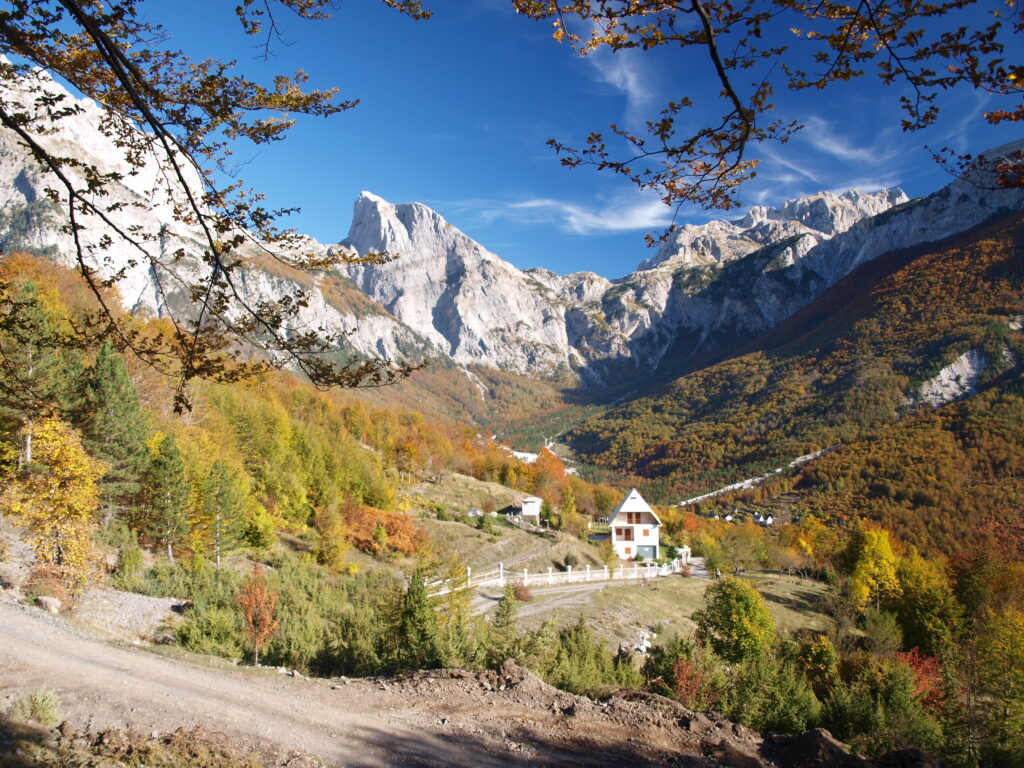
Theth National Park feels remote because it is remote. Steep limestone slopes rise above traditional stone houses, rivers run through the valley and many of the best sights require walking. Even the approach road makes clear that this is a mountain destination rather than a simple stop between cities.
Theth village is the natural base. It has the largest concentration of guesthouses, places to eat and practical transport connections. It is also where several walking routes begin, so staying near the village core makes your first visit easier.
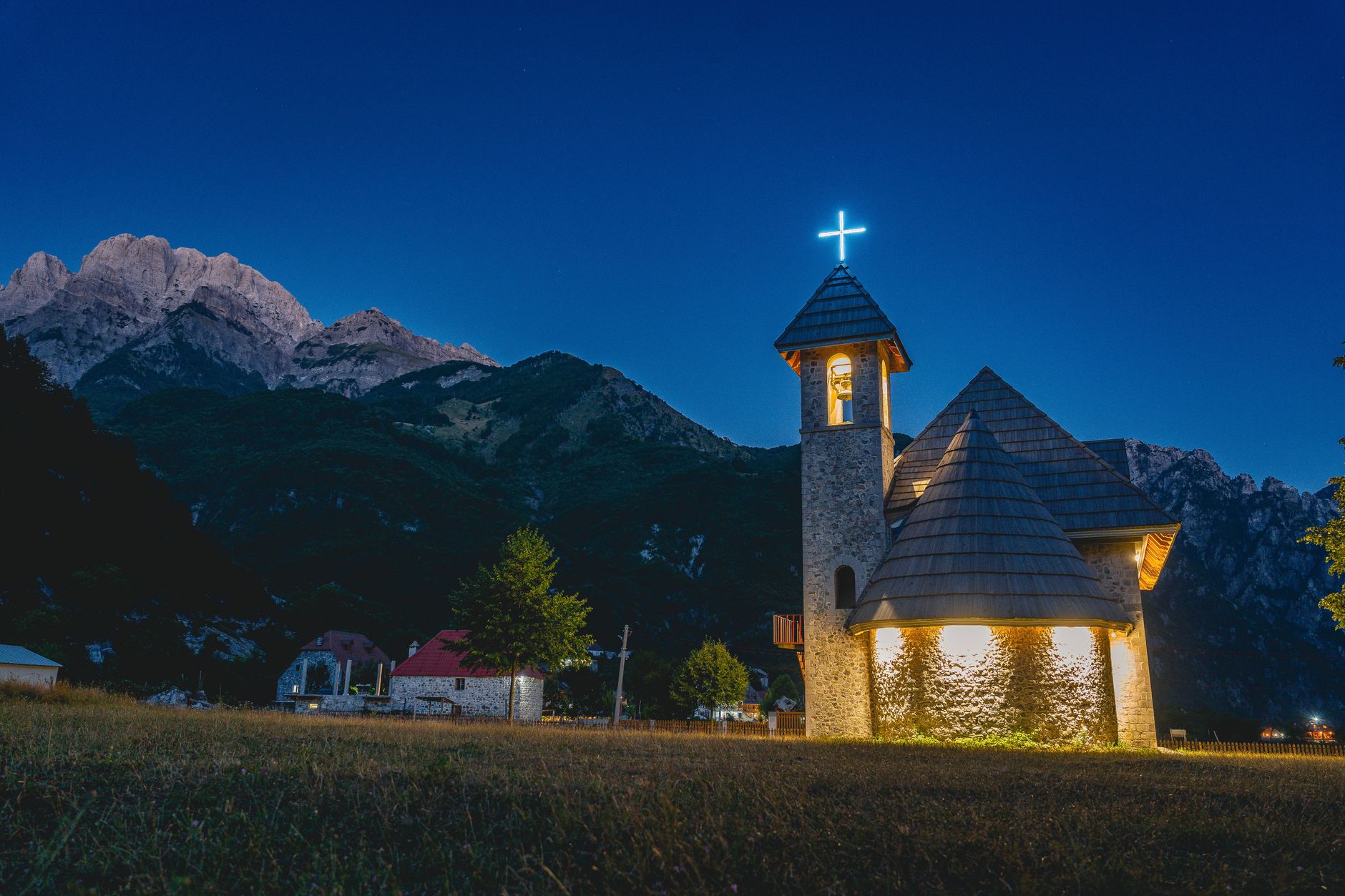
The village church is one of Theth’s most recognisable scenes. Its small white façade, mountain setting and open meadow create a quiet contrast with the rugged landscape. Nearby, the Lock-in Tower adds cultural depth to an itinerary otherwise shaped by trails and waterfalls.
The Lock-in Tower and Theth’s cultural story
The Lock-in Tower of Theth is a traditional stone structure associated with the Kanun, a historic set of customary laws in northern Albania. These towers are often discussed in connection with blood-feud traditions, although the wider history of the Kanun is far more complex than the popular image suggests.
It is a compact stop, but it helps visitors understand that Theth is a lived-in mountain community, not simply a hiking base. Visit it alongside the church and village lanes rather than treating it as a major standalone excursion.
Getting to Theth via Shkodër
Shkodër is the main staging point for travel to Theth. It is well placed for arriving from other parts of Albania and gives you a practical place to organise supplies, cash and onward transport before entering the mountains.
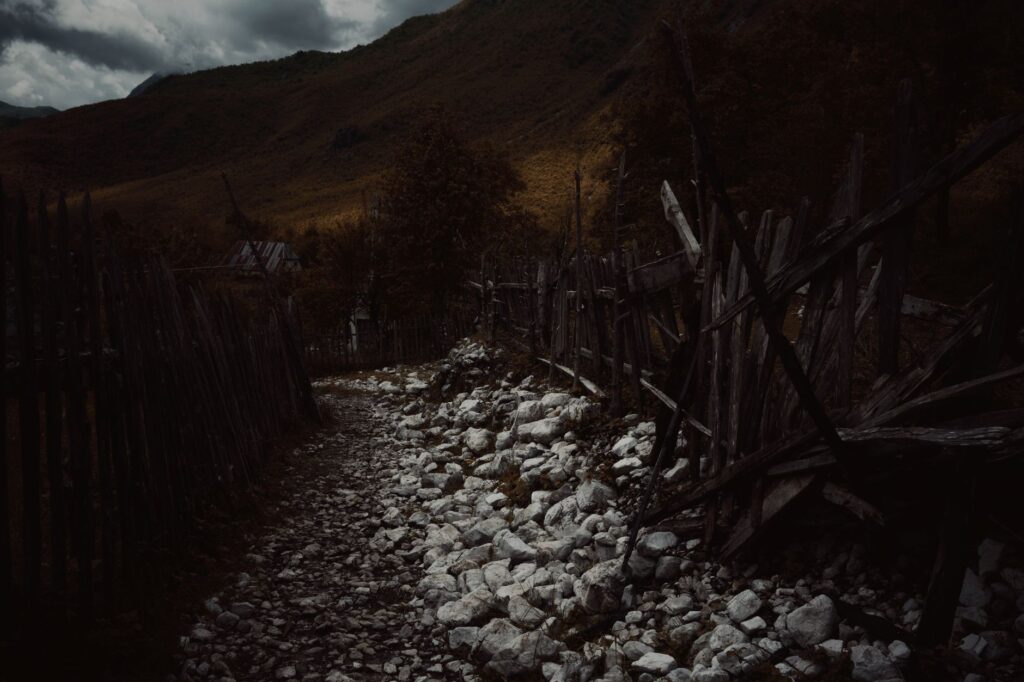
The route from Shkodër climbs towards the Qafa e Thores Pass before descending into the Shala Valley. This mountain-road approach is spectacular, with wide views across ridges and valleys. It also explains why Theth requires flexibility. Conditions can change with the season, weather and road maintenance.
Shared transfers and private vehicles are commonly used for the journey, but arrangements should be confirmed locally before you rely on them. Do not build an itinerary around an assumed departure time, especially if you have a flight, ferry or long-distance bus connection on the same day.
Driving and road expectations
The road to Theth has improved greatly compared with its former reputation, yet it remains a mountain route. Drivers should be comfortable with steep, winding roads and changing conditions. In colder months, snow, ice or temporary disruption may affect access.
If you rent a car, check its suitability for mountain travel and avoid treating the route as an ordinary highway. Visitors without their own vehicle often find it easier to use a transfer from Shkodër and walk once they reach the valley.
Where to stay: Theth village or Nderlysaj?
For a first visit, Theth village is usually the best overnight base. It provides the clearest access to the church, Lock-in Tower, Grunas Waterfall route and the trail towards Valbona. It also gives you more flexibility if you arrive later than planned or need to adjust a walking day.
Nderlysaj lies farther along the valley and is especially useful for travelers focused on the Blue Eye of Theth. It is a small hamlet and a practical starting point for the final walk to the spring. Some visitors reach Nderlysaj by local vehicle, while others walk from Theth as part of a longer day.
Staying in Nderlysaj can shorten the Blue Eye outing, but it makes less sense if you want easy access to the village and several different trails. For most people, Theth village offers the better all-round base.
A simple two-night framework
- Day one: Arrive from Shkodër, check in, explore Theth village, visit the church and see the Lock-in Tower.
- Day two: Walk to Grunas Waterfall and explore the surrounding valley scenery. If energy and conditions allow, continue with further local walking.
- Day three: Travel or walk towards Nderlysaj, then hike to the Blue Eye before returning or continuing onward.
This outline works best when you do not need to leave Theth immediately after the Blue Eye walk. The day can be longer than it first appears, particularly if you walk from the village rather than arranging vehicle access to Nderlysaj.

First walks from Theth: waterfall, canyon and village trails
Grunas Waterfall is one of the most rewarding first walks from Theth. The route follows the valley through a landscape of woodland, limestone and rushing water before reaching the waterfall. It is a natural fit for an arrival day with time to spare or a relaxed full morning.
Allow enough time for an unhurried return. Mountain paths can be uneven, and wet ground near water needs care. Good footwear matters more than speed here, especially after rain.
Grunas Canyon adds drama to the route
The Grunas area is more than a waterfall destination. The nearby canyon reveals the force of water in this limestone landscape, with the river cutting through steep rock walls. It gives the walk a stronger sense of place and makes the route feel like a genuine introduction to Theth National Park.
Keep to established paths and viewpoints. The gorge is beautiful, but unstable edges, slippery rock and high water can turn a casual detour into an unnecessary risk.
The Blue Eye of Theth: plan it as a full walking day
The Blue Eye of Theth is the park’s most famous natural attraction. Its clear blue-green water rises from a cold mountain spring beneath forested slopes. The colour is striking, but the setting is equally memorable: this is a place reached through the valley on foot, not an attraction beside a main road.
Nderlysaj is the practical gateway. Local vehicle access may bring visitors closer to the trailhead, but the Blue Eye itself still requires a walk. Treat that distinction seriously when planning your day. A ride to Nderlysaj does not mean a quick roadside visit.
The spring water is extremely cold. Some travelers may choose to enter it briefly, but swimming should never be assumed to be comfortable or appropriate in changing conditions. Enjoying the view from the bank is often the wiser choice.
What to bring for the Blue Eye trail
- Sturdy walking shoes with grip
- Water, snacks and a light layer for changing mountain temperatures
- Offline maps or downloaded navigation, as signal can be unreliable
- Cash for small purchases, transport arrangements or guesthouse needs
- A waterproof layer if the forecast looks unsettled
Begin early enough to return in daylight. The path is not a technical alpine climb, but it is still a mountain walk. Mud, rain and fatigue can make the return slower than expected.
Theth to Valbona: a real mountain crossing
The Theth–Valbona Pass hike is one of Albania’s defining mountain routes. It links Theth with Valbona Valley National Park, crossing an alpine pass between two of the country’s most beautiful valleys. For capable walkers, it can be the highlight of a northern Albania itinerary.
However, it is a full-day point-to-point hike, not a casual add-on after sightseeing. You need sound fitness, suitable footwear, enough water, daylight and stable conditions. The ascent is sustained, and the descent into Valbona can be long and tiring.
Most travelers stay overnight in Theth before the hike and continue to Valbona afterward. That means coordinating luggage and onward transport in advance. Pack only what you need for the trail, and ensure you know where you will sleep after reaching the other side.
Who should choose the Valbona Pass?
This route suits hikers who enjoy long mountain days and are comfortable on uneven terrain. It is best approached with respect rather than ambition. If cloud, storms, snow, poor visibility or fatigue are concerns, remain in Theth and choose a lower valley walk instead.
Families with young children, travelers with limited hiking experience and visitors on a tight transport schedule may enjoy Theth more by focusing on the village, Grunas Waterfall and the Blue Eye. There is no need to cross the pass to have a memorable stay.
Safety, season and transfer planning
Theth rewards preparation. Weather can change quickly in the Albanian Alps, and rain can make trails muddy, streams stronger and exposed sections less comfortable. Check conditions locally before heading out, especially for the Valbona Pass or any longer route.
Carry cash, because card use can be limited in remote mountain areas. Keep enough drinking water with you, wear sturdy footwear and download maps before leaving Shkodër or your guesthouse. A charged phone is useful, but it should not be your only navigation plan.
Season matters greatly. Theth has a short, busy hiking period and a much quieter cold-weather character. Snow and winter conditions can restrict roads and trails, while spring runoff can affect streams and path conditions. If visiting outside the usual hiking season, build extra flexibility into every transfer and overnight plan.
The best first visit is not the one that fits the most sights into a day. It is the one that leaves room for the mountain road, the long valley walks and the pleasure of waking up in Theth itself.