
The Roman Forum, Temple of Augustus and Old Town: A Short Walking Route in Pula
Follow Pula’s ancient civic centre through Roman monuments, medieval layers and atmospheric old-town lanes, ending at the city’s great amphitheatre.
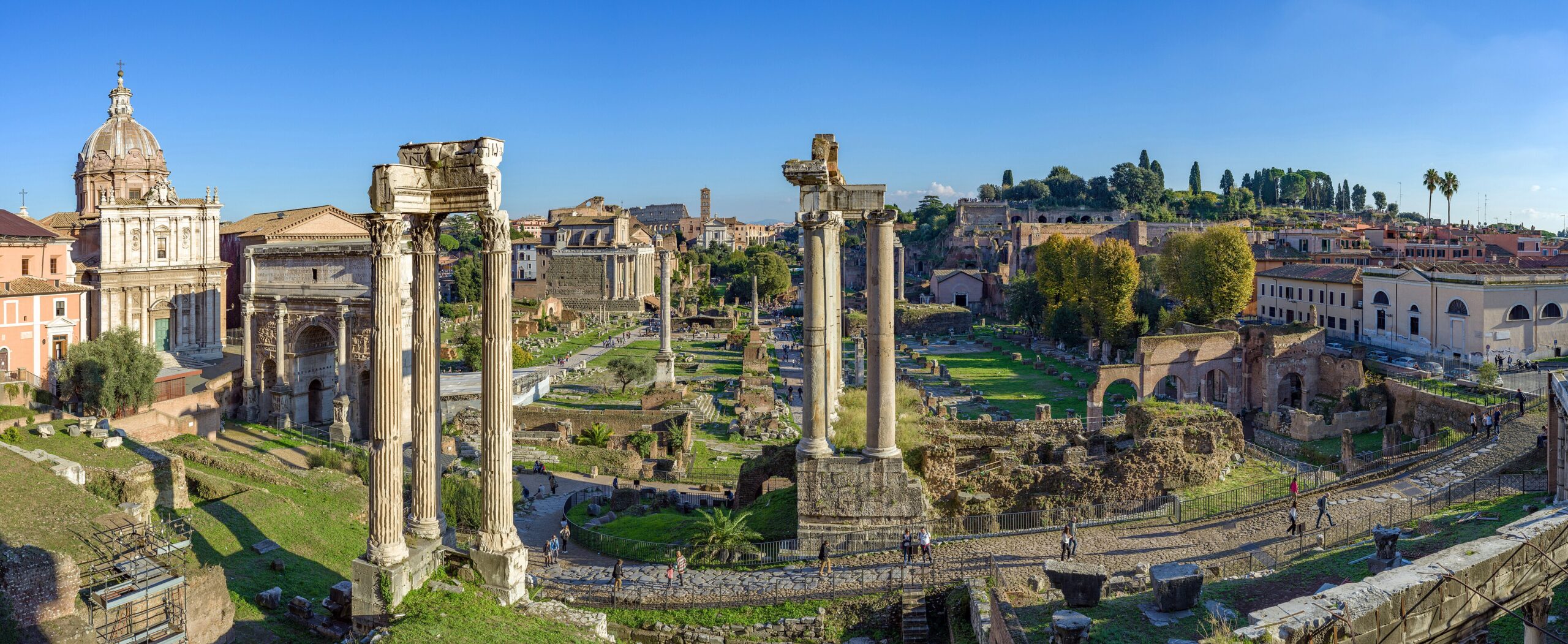
This Pula Roman Forum walking route traces the city’s public life from the Roman Empire to the Venetian era and beyond. It is a compact, self-guided walk for first-time visitors who want more than a quick photograph of the Arena. Begin at the Forum, where Pula’s civic story is easiest to read, then follow narrow streets towards the Arch of the Sergii and the amphitheatre.
The route is comfortably manageable within half a day, even with time to pause at the Temple of Augustus, enter the Cathedral, and seek out a hidden Roman mosaic. The old town is compact, but its stone lanes can be uneven and occasionally sloping. Wear supportive shoes and allow room for unplanned stops.
The route at a glance
Begin at the Roman Forum, Pula’s ancient public square beside the waterfront. Spend time with the Temple of Augustus, then look across to the Communal Palace before walking a short distance to Pula Cathedral.
From there, continue into the older lanes behind the Forum. A small detour leads to the Mosaic of the Punishment of Dirce. Then make your way towards the Arch of the Sergii, which stands close to the former Porta Aurea, or Golden Gate. From the arch, walk east through the historic centre, passing Hercules Gate on the way to the Pula Arena.
This order matters. The Forum introduces Roman Pula as a working civic and religious centre. The Cathedral and palace reveal how the same district remained important after antiquity. The arch and Arena then broaden the story, showing both private ambition and the scale of Roman urban life.
The Forum: Pula’s ancient civic heart
The Roman Forum remains the best place to begin because it explains the shape of the city. In Roman times, this was Pula’s principal public square. Citizens gathered here for civic business, commerce, ceremonies, and religious observances. The surviving space does not present a complete Roman forum, yet its position and proportions still make sense.
Stand facing the Temple of Augustus and imagine the square as part of a Capitolium setting. Roman forums were not merely open spaces. They projected order, authority, and loyalty to Rome. Temples, administrative buildings, and monuments shaped how residents understood their place in the city.
Today, the Forum has a calmer, more open character, with cafés and later buildings framing the square. That contrast is part of its appeal. Pula did not freeze in antiquity. It continued to change, while the Forum remained a recognisable civic focus.
The Communal Palace and the continuity of power
Opposite the temple, the Communal Palace shows how later rulers reused the prestige of the Forum. This medieval civic building has a layered appearance, reflecting centuries of alteration rather than a single architectural moment. Its façades belong to a different world from the Roman temple, yet its location is no accident.
Medieval authorities also wanted to govern from the city’s symbolic centre. Looking between the palace and temple is one of the simplest ways to understand Pula’s long continuity. Public power changed hands, but the Forum retained its importance.
The Temple of Augustus: Rome in stone
The Temple of Augustus is the Forum’s defining monument and one of the clearest reminders of Pula’s Roman past. Built in the early first century, it was dedicated to Augustus, Rome’s first emperor. Its elegant façade, with tall Corinthian columns and a triangular pediment, still commands the square.
Although modest in size, the temple carried a large political message. Honouring Augustus was not simply an act of personal devotion. It expressed Pula’s membership in the Roman world and its connection to imperial authority. The temple belonged to public life, not private worship.
Take a moment to study its classical proportions. The deep porch draws the eye inward, while the columns create a formal boundary between the square and the sacred interior. This balance of restraint and ceremony explains why the building remains so memorable.
The interior contains a small lapidarium collection, with Roman stone fragments and inscriptions. Access arrangements can change, so confirm monument entry details locally if seeing the collection matters to your visit. Even from outside, however, the temple is essential.
From the Roman Forum to Pula Cathedral
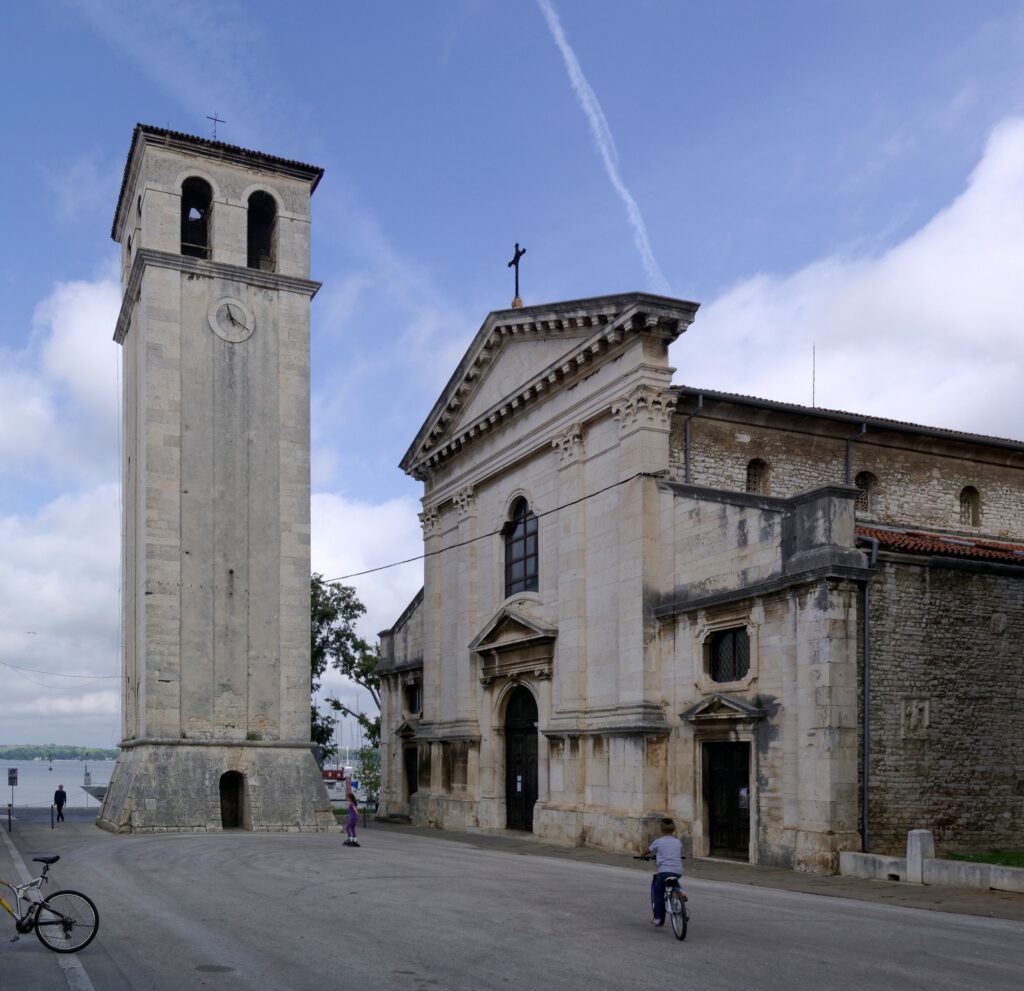
From the Forum, walk towards Pula Cathedral, close to the ancient civic centre. The transition is short, but it spans centuries. The cathedral stands on a site with early Christian origins, showing how the city’s religious geography developed alongside its Roman foundations.
Its exterior is more restrained than the Temple of Augustus. That difference is useful. The temple was designed as an imperial statement in a Roman public square. The cathedral grew through a long Christian history, shaped by rebuilding, adaptation, and changing styles.
Look for reused Roman material
Pula Cathedral contains examples of spolia, meaning architectural material reused from earlier buildings. Roman stone was valuable, durable, and readily available in a city full of ancient structures. Reusing it was practical, but it also created a visible link between Roman Pula and the Christian city that followed.
This is not a place to rush through. Notice the mixture of older stonework and later interventions. Pula’s history often appears in layers rather than neat chapters, and the cathedral is one of the clearest examples.
A hidden mosaic and the Arch of the Sergii
Leave the cathedral area and enter the old-town lanes leading inland. These streets are less monumental than the Forum, but they reveal Pula’s lived-in texture. Among them lies the Mosaic of the Punishment of Dirce, a Roman floor mosaic discovered beneath later urban layers.
The scene refers to the myth of Dirce, punished by being tied to a bull. It is a dramatic subject for a domestic mosaic, and it offers a glimpse of the decoration once found in a Roman house. The mosaic is easy to overlook, which makes it a rewarding detour for travellers who enjoy details rather than only grand monuments.
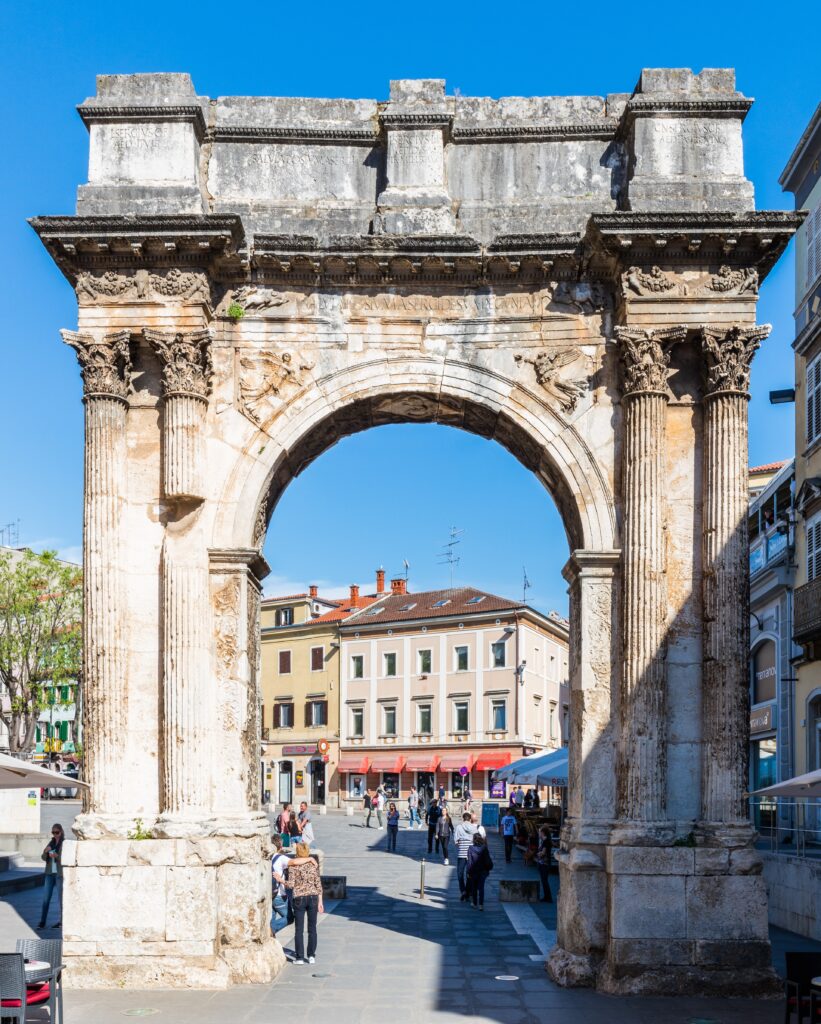
Continue towards the Arch of the Sergii, one of Pula’s most photographed Roman landmarks. Built in the late first century BC, the arch commemorated members of the Sergii family. It stood by the Porta Aurea, a principal entrance through the ancient city walls.
A family monument at the Golden Gate
The Arch of the Sergii was not an imperial triumphal arch in the grandest Roman sense. It was a family memorial, created to celebrate status, military service, and public reputation. Its carved decoration gives it a richer, more theatrical character than the simple gateway it once accompanied.
Approach it slowly from the old-town side if you can. The arch emerges between later buildings, which makes its survival feel especially striking. Look up at the sculpted details, then consider the ancient street that once passed beneath it. Pula’s Roman walls have largely disappeared, but this monument still marks their former line.
Hercules Gate and the final walk to Pula Arena
From the Arch of the Sergii, continue east towards the Arena. On the way, look for Hercules Gate, a modest Roman city gate that is easy to miss after the visual drama of the arch. Its importance lies in its understatement. This was part of the ancient street network, rather than a monument built for spectacle.
A relief of Hercules appears above the gate, recalling the hero associated with strength and protection. The surviving gateway helps you picture Pula as a walled Roman town, with controlled entrances, busy streets, and districts beyond the civic centre.
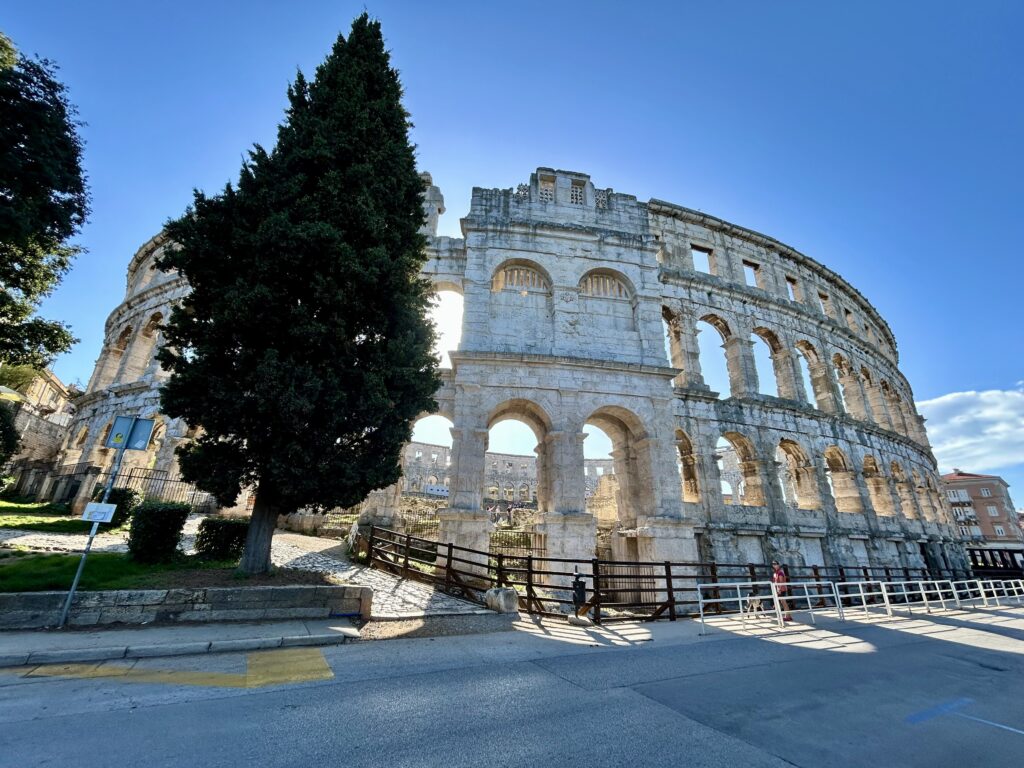
The route reaches its grand conclusion at the Pula Arena. Built during the second century, this Roman amphitheatre is among the city’s most impressive surviving structures. Its near-complete outer shell makes it easy to understand the scale of the building, even before stepping inside.
Why the Arena works best as the endpoint
Many visitors naturally begin with the Arena. However, reaching it after the Forum, temple, cathedral, and arch gives it stronger context. You have already seen the political, religious, domestic, and ceremonial sides of Roman Pula. The amphitheatre then reveals the city at its most monumental.
Walk around the exterior before entering. The repeating arches, three visible levels, and massive limestone construction demonstrate the technical confidence of Roman builders. Inside, the space once held crowds for public spectacles. Its later history has been equally complex, with changing uses and careful preservation shaping what visitors see today.
Helpful notes for this short Pula walk
This route suits travellers who want a focused cultural introduction rather than a full survey of Pula. It can be done slowly, with time for photographs and monument interiors, without becoming an all-day commitment.
- Begin at the Forum: it gives the walk a clear historical logic and makes the Arena feel like a finale.
- Expect uneven paving: old-town stone streets can be slippery when wet and are not always ideal for wheels or limited mobility.
- Check access before entering monuments: the Temple of Augustus, Cathedral, mosaic area, and Arena may have different visiting arrangements.
- Allow time for the details: the Dirce mosaic and Hercules Gate are small stops, but they make the route feel connected rather than rushed.
- Keep the focus narrow: Pula has museums, fortifications, and underground spaces, but this walk works best as a concentrated journey through the ancient core.
By the time you reach the Arena, Pula should feel less like a city with one famous monument and more like a place built over a Roman framework. The Forum, temple, cathedral, arch, gate, and amphitheatre each reveal a different chapter. Together, they make a short walk through Pula remarkably rich.
Tours & experiences for Pula
Popular experiences with current pricing and traveler ratings.
 Free cancellation
Medulin: All-Inclusive Pirate Boat Tour to Kamenjak Cave & Levan
 Free cancellation
Dolphin Watching & Sunset Boat Tour With Drinks & optional Dinner
 Free cancellation
Pula: Cave Kayak Tour and Snorkeling
 Free cancellation
Medulin-Kamenjak 5h boat trip ALL-INCLUSIVE drinks on Sandra Boat
 Free cancellation
Pula Private Walking Tour
 Free cancellation
Istrian Olive Oil Guided Tasting in Pula
ToursToBalkans may earn a commission when you book through our partner links.


