
Split Travel Guide for First-Time Visitors
Discover Split’s Roman heart, lively waterfront, beaches, Marjan viewpoints and the best ways to shape a first visit to central Dalmatia.
This split travel guide is designed for first-time visitors who want more than a quick look at the waterfront. Split is a compact city where Roman walls hold apartments, cafés and small squares, while ferries, beaches and a wooded peninsula sit close by. It works brilliantly as a two-day city break and as a base for exploring central Dalmatia.
The key is to treat Split as a lived-in place rather than an open-air museum. Spend time inside Diocletian’s Palace, linger along the Riva, then head west towards Marjan or east to the beach. With a little planning, the city offers history, sea views and day-trip options without constant transfers.
Continue planning with Where to Stay in Split: Best Areas for Visitors and Best Day Trips from Split.
A Roman palace that became a city
Diocletian’s Palace is the reason Split feels unlike most Adriatic destinations. Built as the retirement residence of the Roman emperor Diocletian, it was never left as a static ruin. Over centuries, homes, shops, religious buildings and narrow lanes developed within its fortified walls.
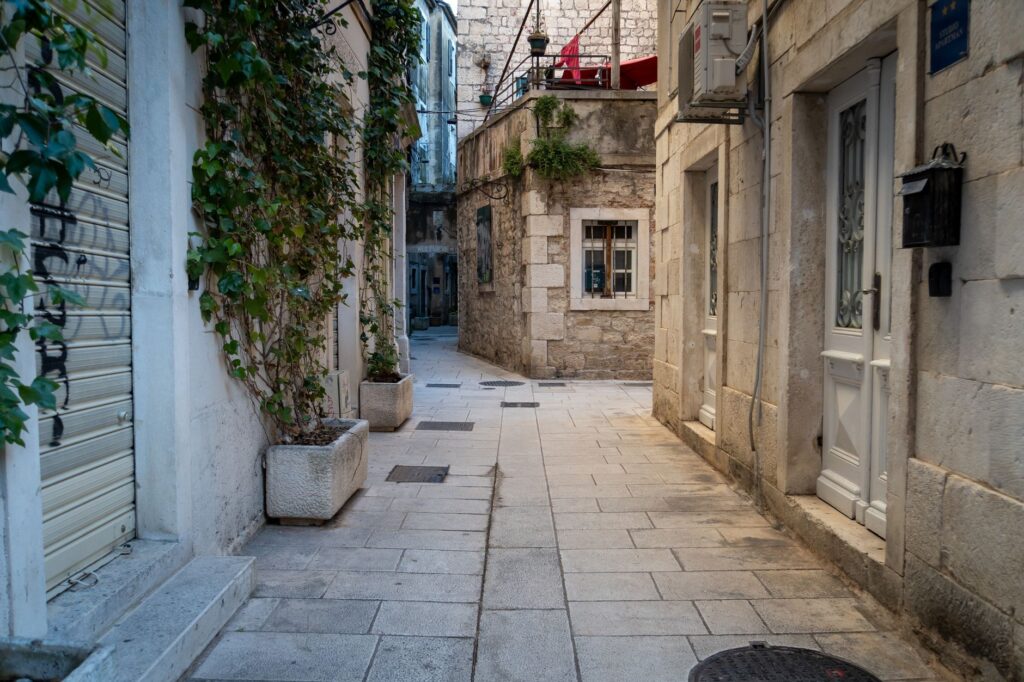
That makes the palace less like a single monument and more like the historic core of the city. You may enter through the Golden Gate and soon find yourself passing laundry lines, restaurant terraces and stone stairways. Take time to wander without a fixed route; many of Split’s best details appear in the passages between the major landmarks.
The Peristyle and Cathedral of Saint Domnius
The Peristyle is the palace’s ceremonial heart. Tall columns and imposing stone facades give this square its unmistakable Roman character, yet it remains part of everyday Split. It is a natural place to pause, look upward and notice how closely ancient architecture and modern city life coexist.
Beside it stands the Cathedral of Saint Domnius, formed from what was once Diocletian’s mausoleum. Its layered history captures the city’s transformation from a Roman imperial residence into a Christian and medieval settlement. The bell tower is one of Split’s defining features, visible from many corners of the old town.
Below ground, the palace basements reveal the scale and structure of the original complex. Their vaulted stone spaces are particularly helpful for understanding how the palace was arranged above. Even visitors who are not devoted to archaeology often find them a memorable contrast to the busy lanes overhead.
Split Old Town beyond the palace walls
Although the palace dominates any first visit, Split Old Town extends beyond its Roman boundaries. The surrounding streets show later Venetian and medieval influences, with more open squares, civic buildings and a slower local rhythm.
People’s Square, also called Pjaca, is one of the best places to see this change in atmosphere. Its architecture feels more Venetian than Roman, and its café tables encourage an unhurried break from sightseeing. The square also offers a useful orientation point between the palace, shopping streets and the western side of the centre.
Browse the Green Market
Near the eastern edge of the old town, the Green Market, known locally as Pazar, brings a daily dose of colour and noise. Stalls typically feature seasonal produce, herbs, dried goods and local specialities. It is a worthwhile detour if you want to see a more ordinary side of Split before the waterfront takes over the day.
For meals, look for a konoba, the traditional Dalmatian-style tavern. Menus often focus on seafood, grilled meat, olive oil, vegetables and simple regional dishes. The best approach is to eat well but keep your schedule loose; Split is a city that rewards long lunches and evening strolls.
The Riva: Split’s social waterfront
The Riva Promenade runs along the harbourfront below the palace walls. It is Split’s public living room: a broad, palm-lined place for coffee, conversation and watching the city move. Locals, day-trippers, ferry passengers and evening walkers all pass through here.
Its position beside Split Ferry Port gives the Riva a sense of anticipation. Boats come and go for the islands, while the old town rises immediately behind the promenade. Even if you are leaving on an early ferry, return later in the day when the waterfront becomes a relaxed meeting place.
Evenings are especially enjoyable here. The light softens across the harbour, and the palace façades seem to glow above the cafés. You do not need an elaborate plan: walk the full length of the promenade, choose a seat, and enjoy Split’s sociable pace.
Beaches, coastal paths and Marjan Forest Park
Split is not only a historic city. Its coastline is close enough to make swimming and sea views an easy part of a first visit. Bacvice Beach is the most accessible introduction, lying within walking distance of the centre.
Bacvice and the picigin tradition
Bacvice is known for its shallow water, sandy seabed and lively summer atmosphere. It is also associated with picigin, a local ball game played in the shallows. Players try to keep a small ball in the air using acrobatic strikes, often to the delight of spectators.
Come here for the social energy rather than solitude. If you prefer a more scenic, less urban beach setting, continue west towards Marjan instead. Bacvice is only one part of Split’s coastal character.
Walk out to Marjan
Marjan Forest Park rises from the western side of the city like a green escape hatch. This wooded peninsula provides a welcome change after the close stone lanes of the palace. Coastal paths, pine shade and lookout points make it one of the best reasons to stay in Split for more than a single night.
Telegrin viewpoint offers the classic outlook over Split, the harbour and the islands beyond. The climb requires some effort, but the reward is a clear sense of the city’s geography: palace and port at one side, Adriatic water in front, and mountains inland.
Lower down, the paths around Sustipan provide quieter sea views and a more contemplative mood. Kasjuni Beach, on the far side of Marjan, is a handsome option for a swim framed by pine-covered slopes. It feels noticeably removed from the central waterfront, even though it remains part of the city.
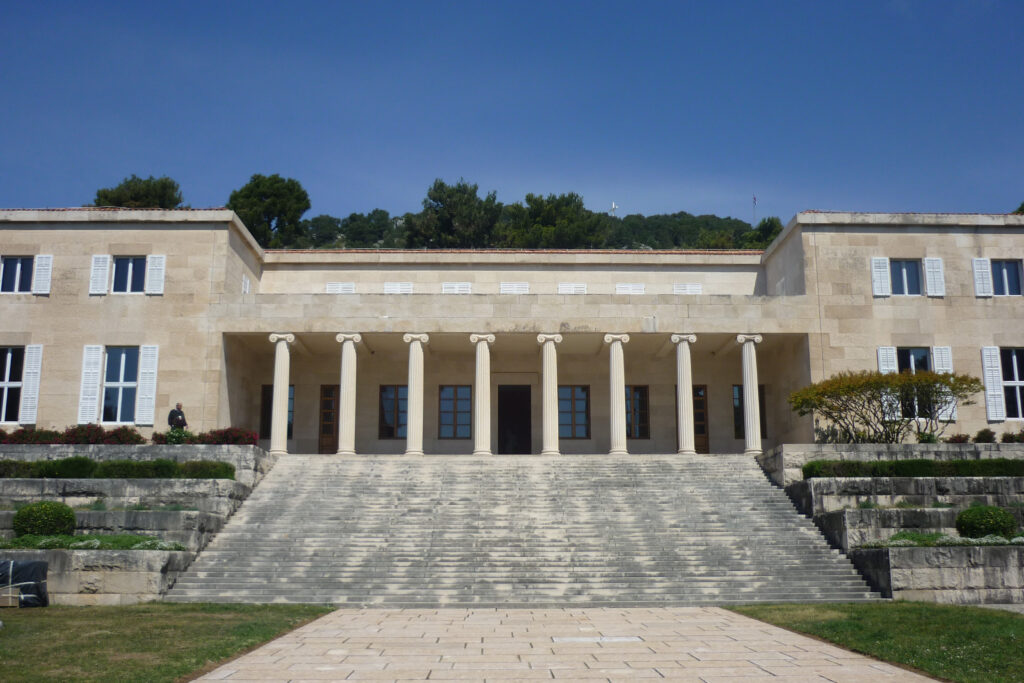
Near Marjan, the Ivan Meštrović Gallery adds an artistic stop to a west-side exploration. Set in the former residence of Croatia’s most celebrated modern sculptor, it displays works in a villa and garden setting. It suits visitors who want a calmer cultural experience away from the busiest old-town streets.
How many days should you spend in Split?
Two full days is a strong minimum for a first visit. On the first day, explore Diocletian’s Palace, the cathedral area, Pjaca, the market and the Riva. Save the evening for a slow walk through the palace lanes and along the harbour.
Use the second day for Marjan Forest Park, a beach stop and the Meštrović Gallery if art interests you. This rhythm gives Split room to breathe. You will see the major sights without treating the city as a checklist between ferry departures.
Add a third day if you want an island outing or a mainland excursion. Split is one of Dalmatia’s best transport hubs, but it is wise to plan sea travel ahead during the busiest travel periods. Island connections vary by season, so avoid building a tightly packed itinerary around assumptions.
Day trips from Split: islands and inland views
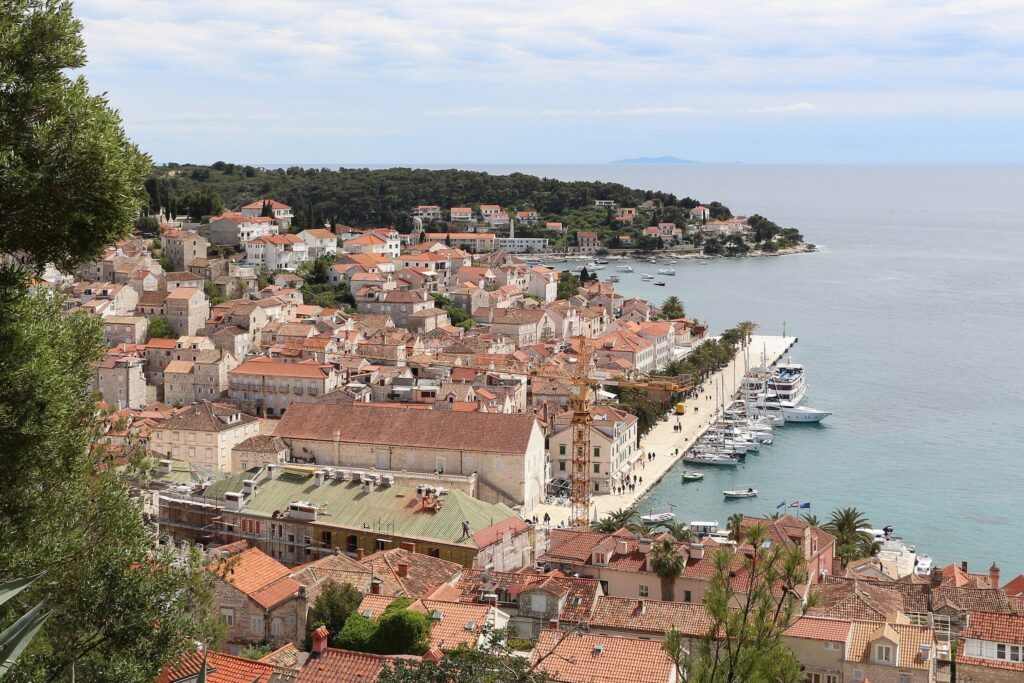
Hvar is a classic extension from Split, especially for travellers who want historic streets, a polished harbour setting and onward access towards the Pakleni Islands. Hvar Town has a very different feel from Split: smaller, more island-focused and shaped by its waterfront life. It works best when you have enough time to enjoy it rather than rush back immediately.
Brač is another appealing island choice. It is known for its stone-built villages, rugged scenery and beaches, and it can suit visitors looking for a more laid-back island day. Sea trips are dependent on seasonal connections and conditions, so keep your plans flexible.
For history without taking to the water, Trogir makes an excellent cultural outing west of Split. Its compact UNESCO-listed historic core is easy to explore on foot, with medieval lanes and the Cathedral of St. Lawrence as major highlights. It complements Split well because its atmosphere is intimate and distinctly medieval.
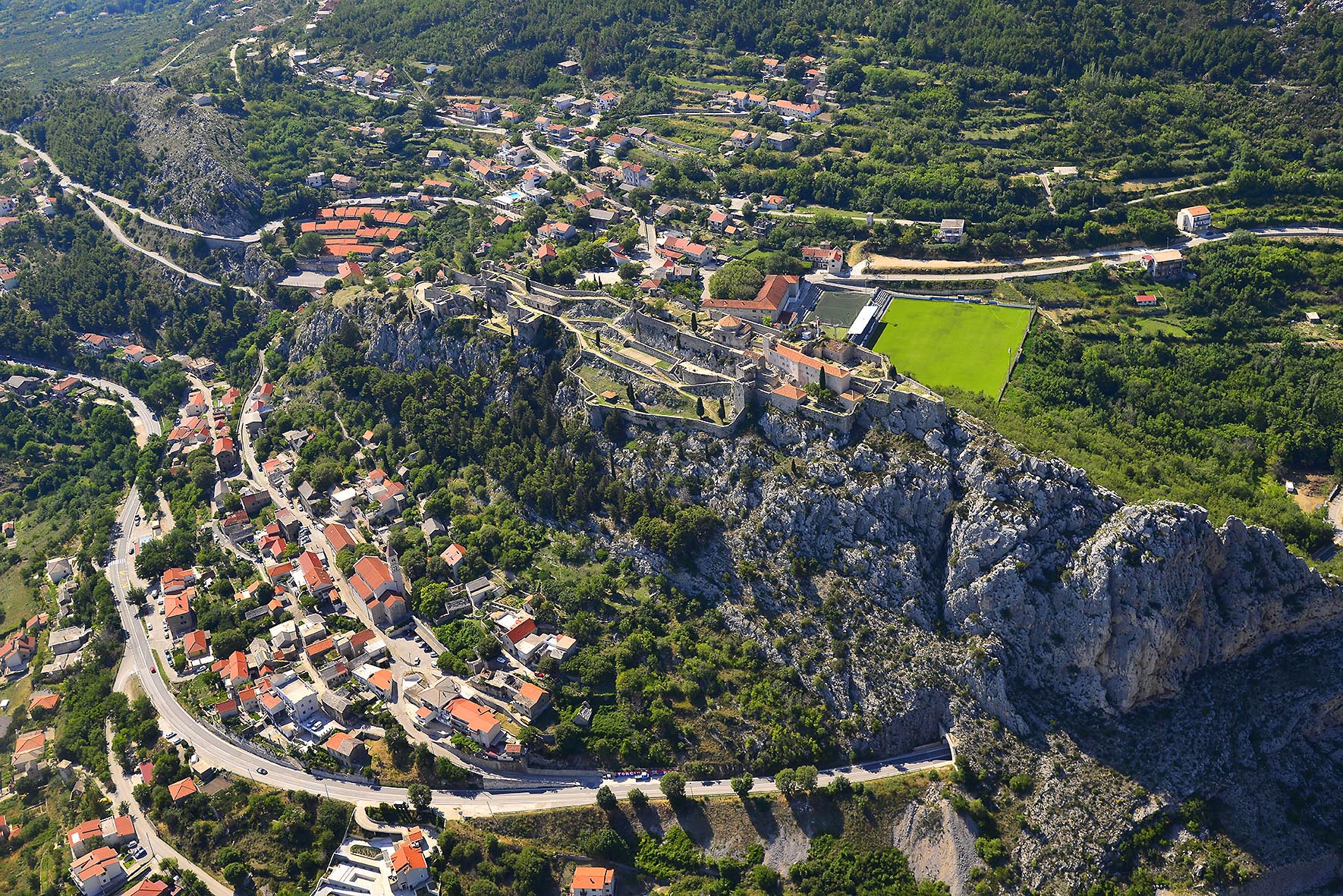
Klis Fortress offers a dramatic inland contrast. This medieval stronghold sits high above the city and looks out across Split, the coast and nearby islands. Go for the views as much as the fortifications; it gives you a striking perspective on the landscape behind the Adriatic.
Omiš is another worthwhile option for active travellers. Set where the Cetina River meets the sea, it combines steep limestone scenery with an old-town setting. It is a good choice if you want a break from city sightseeing and beach lounging.
Arrival, getting around and choosing a base
Split Airport lies outside the centre, while the ferry port sits beside the old town and Riva. This makes Split especially convenient for travellers combining flights, city time and island travel. Keep transfer time in mind when booking onward journeys, particularly if you arrive with luggage or have a close connection.
For sightseeing, walking is the best method. The palace, old town, Riva and Bacvice are close together, while Marjan can be reached on foot if you enjoy longer walks. Stone paving and stairs are common in the historic centre, so travellers with limited mobility should choose accommodation and routes carefully.
Staying close to Split Old Town puts the palace and waterfront on your doorstep, though it can feel busy. Veli Varoš, on the western side of the centre, has a more residential, village-like character and sits conveniently for Marjan. Choose according to whether your priority is nightlife and ferry access, or quieter evenings and easy walks.
Above all, remember that people live inside the palace lanes. Keep noise down late at night, respect private entrances, and allow the city’s ordinary routines to remain part of its charm. Split’s greatest appeal lies in that blend of Roman grandeur, Adriatic ease and real daily life.
Tours & experiences for Split
Popular experiences with current pricing and traveler ratings.
 Free cancellation
Blue Cave and Hvar Tour - 5 Islands Tour from Split and Trogir
 Free cancellation
Split Tuk Tuk Tour – Diocletian’s Palace & City Highlights
 Free cancellation
Blue Cave, Mamma Mia and Hvar, 5 Islands Speed boat Small group
 Free cancellation
Blue Lagoon & 3 Islands Small-Group Speedboat Tour
 Free cancellation
From Split: Krka Waterfalls, Food & Wine Tasting Tour
 Free cancellation
Blue Lagoon & 3 Islands Cruise with Lunch, Wine & Swim from Split
ToursToBalkans may earn a commission when you book through our partner links.


