
Prizren Old Town: Complete Visitor Guide
Discover Prizren’s old town through its riverside squares, Ottoman landmarks, medieval churches and the fortress rising above Kosovo’s most atmospheric historic centre.
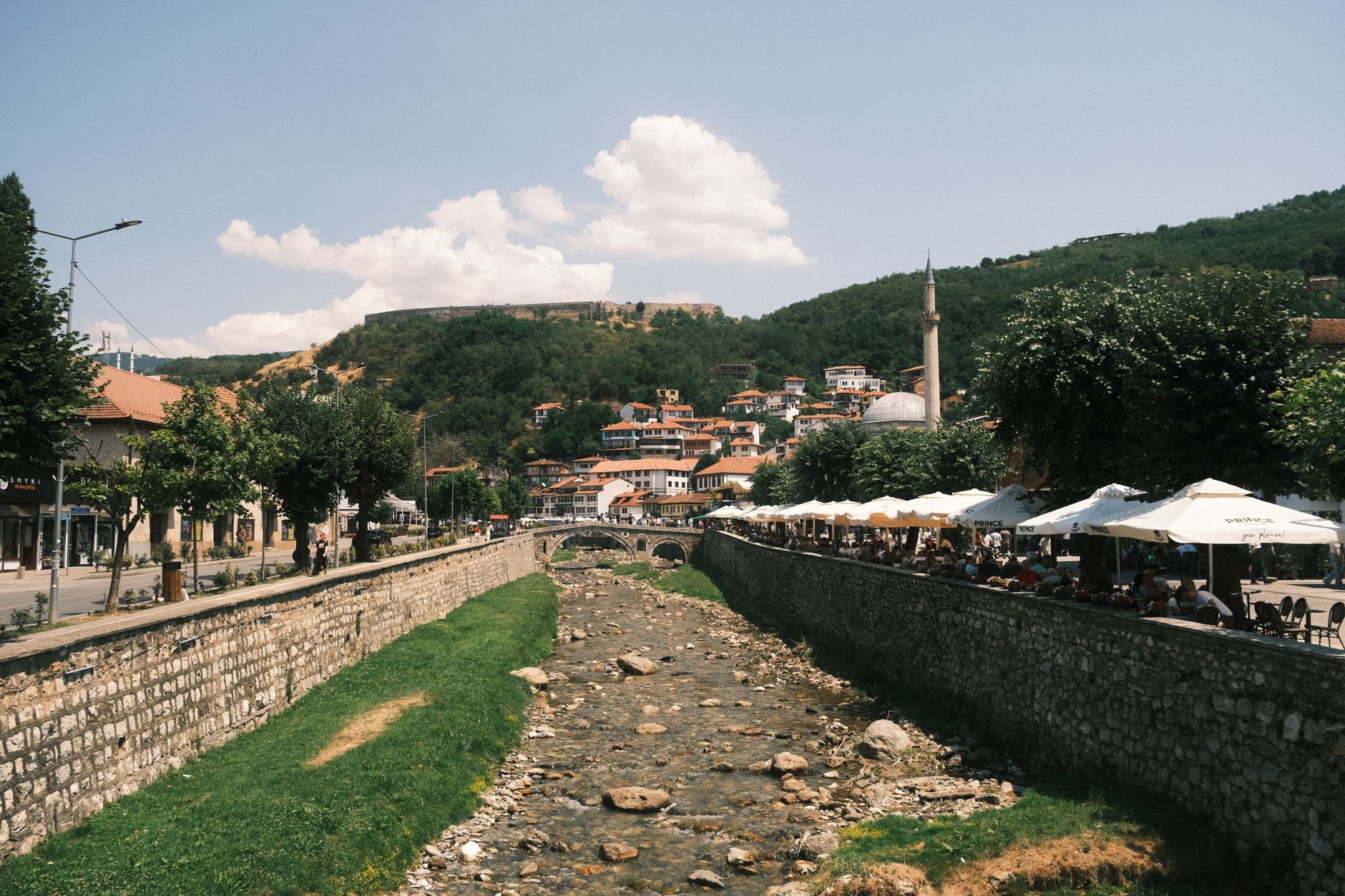
Prizren Old Town is Kosovo’s most rewarding place for a heritage walk. Its appeal lies in the way several historical worlds meet within a compact riverside setting: Ottoman mosques and baths, medieval Orthodox churches, old trading streets, and a fortress watching over the Bistrica River.
This is not a town best understood through a rushed monument checklist. Walk slowly from Shadervan Square, follow the river crossings, look up at the minaret of Sinan Pasha Mosque, and then climb towards the citadel. The route reveals why Prizren has long been one of the Balkans’ most culturally layered towns.
Continue planning with Best Things to Do in Prizren and Prizren Travel Guide for First-Time Visitors.
What gives Prizren Old Town its character?
Prizren sits beneath the foothills of the Šar Mountains, with the Bistrica River cutting through its historic core. The old town spreads along both riverbanks and climbs gently towards Prizren Fortress. Its narrow streets, tiled roofs, stone bridges and religious monuments create a townscape that feels coherent even though its buildings come from different centuries.
The Ottoman period left the strongest visual mark. Mosques, a former public bath, traditional commercial streets and the social rhythm around fountains all reflect Prizren’s role as an important urban centre in Ottoman Kosovo. Yet the town’s story reaches further back. Medieval Serbian Orthodox monuments preserve remarkable Byzantine artistic traditions, while the Prizren League House recalls a defining chapter in Albanian political history.
That mixture is the real reason to visit. Prizren is not simply an Ottoman town, a medieval town, or a national memorial site. It is all three at once.
Shadervan Square: the social heart of the old town
Shadervan Square is the natural place to begin. This compact square belongs to the old Ottoman commercial quarter and remains the point where Prizren’s historic streets meet. Its stone fountain gives the square its name and provides a visual anchor amid the surrounding cafés, shops and restored facades.
From here, the town is easy to read. Sinan Pasha Mosque rises immediately above the square, while the Bistrica River and Stone Bridge sit only a short walk away. The slope behind the mosque leads towards the fortress, and the lanes around the square open into older bazaar streets.
Spend a little time observing the setting before moving on. Shadervan is less important for one grand building than for its atmosphere: the sound of water, the changing view of the mosque, and the steady movement between the river and the old market quarter.
Following the river: Stone Bridge, Sinan Pasha Mosque and Arasta
The Stone Bridge over the Bistrica
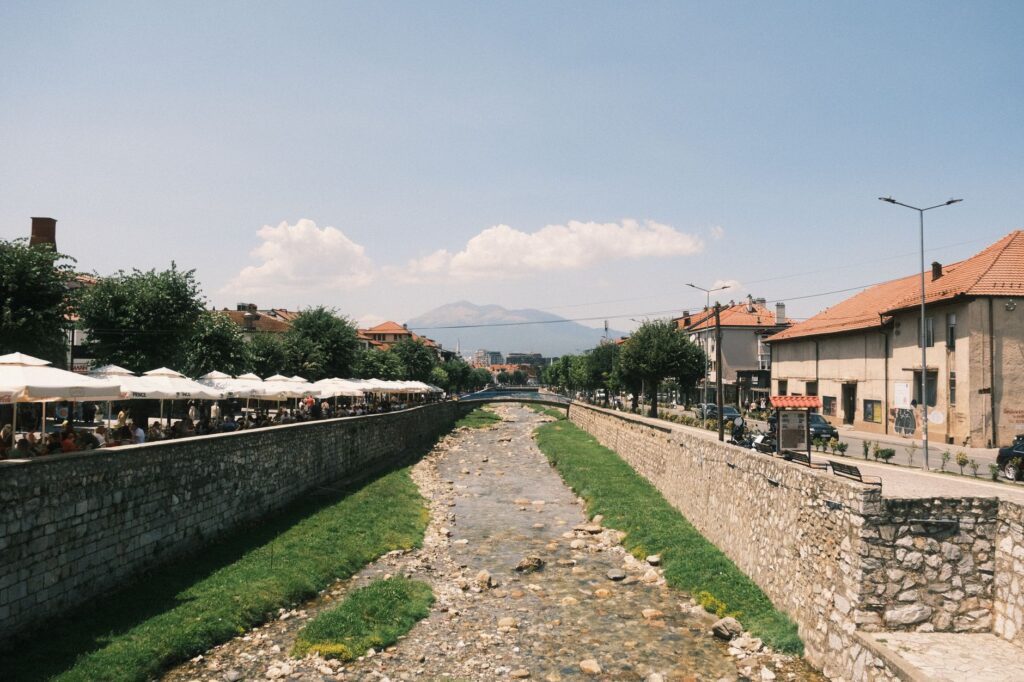
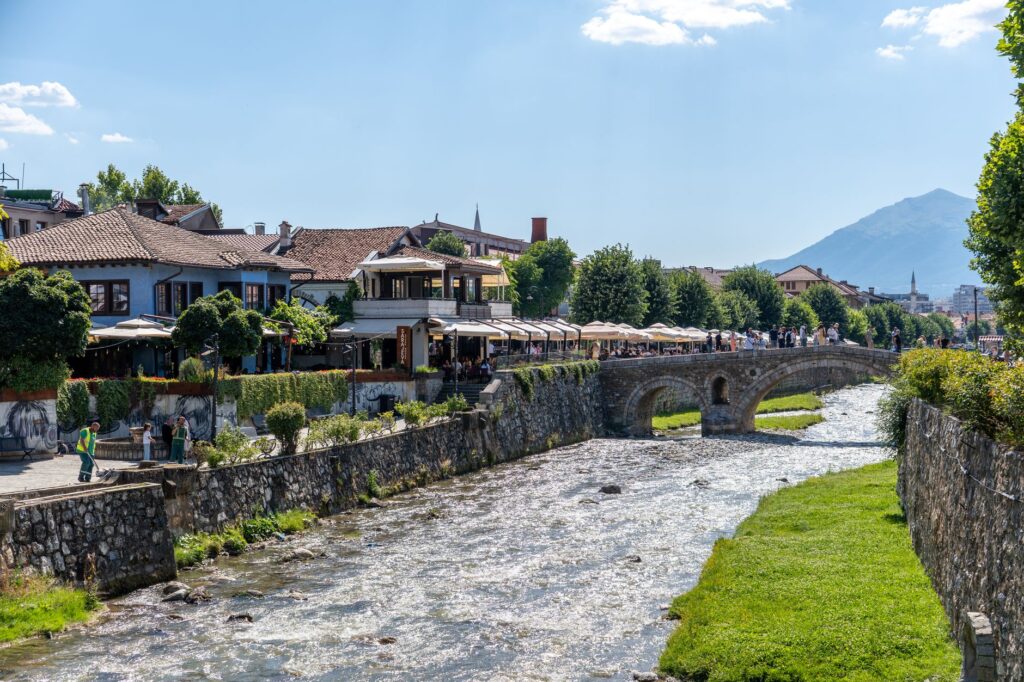
The Stone Bridge is one of Prizren’s most familiar images. It crosses the Bistrica close to Shadervan and frames the mosque, river and fortress slope in a single view. The bridge is especially significant because it shows how closely Prizren’s public spaces developed around the river.
Although the bridge suffered severe flood damage and was rebuilt, it remains an essential part of the historic townscape. Pause in the middle for a view along the riverbanks, then look back towards the old roofs and the hill above. It is a small crossing, but it captures Prizren’s scale and character.
Sinan Pasha Mosque
Above Shadervan stands Sinan Pasha Mosque, the dominant Ottoman monument in Prizren Old Town. Built in 1615, it is instantly recognisable by its large dome and tall minaret. Its elevated position makes it visible from many points around the centre and from the path towards the fortress.
The mosque’s exterior is part of the town’s everyday visual language, but the interior deserves attention when it is accessible to visitors. Decorative work inside reflects the artistic richness expected in a major Ottoman religious building. Details are best appreciated quietly, rather than as a quick stop between photographs outside.
As an active place of worship, the mosque calls for respectful behaviour. Dress modestly, remove shoes if requested, and avoid entering during prayer or disturbing worshippers. Ask before taking photographs of people or interior spaces.
Arasta Bridge and the former bazaar quarter
Continue along the river towards Arasta Bridge, another stone crossing near the old commercial district. It is smaller and less theatrical than the Stone Bridge, yet it offers a pleasing perspective on the Bistrica and the tightly packed historic streets.
The name Arasta recalls the bazaar tradition that once shaped this part of town. Ottoman cities depended on market streets, workshops and caravan trade as much as they depended on mosques. Walking around this area helps place Shadervan in its wider urban context: it was a meeting point within a working commercial neighbourhood, not an isolated square.
Ottoman civic life beyond the mosque
The Hammam of Gazi Mehmet Pasha
The Hammam of Gazi Mehmet Pasha offers a different view of Ottoman Prizren. Dating from the 16th century, this former public bath shows that civic life depended on communal institutions as well as religious ones. A hammam was a place for washing, but it also served as a social space within the life of the town.
Its architecture is designed around the ritual of bathing. Domed chambers, carefully controlled light and changing room sequences were practical features, yet they also created an ordered experience. Even from outside, the low domes distinguish the hammam from the taller vertical forms of Prizren’s mosques.
This monument is worth seeking out because it broadens the story of the old town. It reveals how urban life was organised in the Ottoman period and adds depth to a walk otherwise dominated by religious landmarks.
Prizren League House
The Prizren League House introduces a later historical layer. The memorial complex is associated with the League of Prizren, founded in 1878 during the final decades of Ottoman rule. The League became a major moment in the Albanian national movement, making this site central to understanding modern Albanian political history.
Its museum interpretation adds meaning to the streets around it. By the late 19th century, Prizren was still an Ottoman town, but political ideas and national movements were changing the Balkans rapidly. The League House gives visitors a way to connect the town’s built heritage with those wider transformations.
If time allows, Emin Pasha Mosque is another worthwhile Ottoman-era landmark to notice in the wider centre. It does not need to dominate a first walking route, but it reinforces the density of historic Islamic architecture in Prizren.
Medieval Christian monuments in the old town
Church of Our Lady of Ljeviš
The Church of Our Lady of Ljeviš is Prizren’s most important medieval Christian monument. This 14th-century church preserves the legacy of Byzantine and Serbian medieval art, particularly through its fresco decoration. It stands apart from the Ottoman skyline, yet it is equally vital to the identity of the old town.
The church is part of a UNESCO World Heritage property, reflecting its exceptional artistic and historical importance. Its architecture carries traces of changing religious use over the centuries, while its painted interior remains especially sensitive. Visitors should approach it as a place of worship and conservation, not simply as a photo stop.
Access arrangements can change, so verify conditions locally before planning an interior visit. If entry is not possible, the exterior still deserves a careful look. Its setting in the town centre underlines an important truth about Prizren: major Christian and Islamic monuments stand within a very short walk of each other.
Church of the Holy Saviour
On the old town slope, near the route towards the fortress, the Church of the Holy Saviour offers a quieter medieval stop. This 14th-century Serbian Orthodox church is modest in scale when compared with Ljeviš, but it has notable surviving wall paintings and a powerful hillside setting.
The church feels more secluded than the monuments around Shadervan. That makes it a useful pause before the ascent, especially for visitors interested in how Prizren’s medieval religious landscape extended beyond the commercial centre.
St. George Cathedral is another important Orthodox presence in Prizren. It can be included by visitors with more time, although Ljeviš and the Church of the Holy Saviour give a stronger introduction to the medieval layers of this particular walk.
The climb to Prizren Fortress
Prizren Fortress crowns the hill above the old town. The climb is steep, but it provides the perspective that makes the rest of the visit fall into place. From below, the fortress looks like a dramatic backdrop. From above, it explains why this site mattered for centuries.
The fortifications reflect medieval and Ottoman phases of construction and use. Their strategic position gave control over the town, the river corridor and routes through the surrounding landscape. Do not expect a fully furnished castle experience. The value lies in the walls, the elevated setting and the sense of Prizren’s long defensive history.
The ascent requires sturdy footwear. Cobblestones, uneven surfaces and exposed paths can be demanding, particularly for anyone with limited mobility. Take water, allow time for the climb, and avoid treating it as a minor detour after a full day of walking.
A view that ties the town together
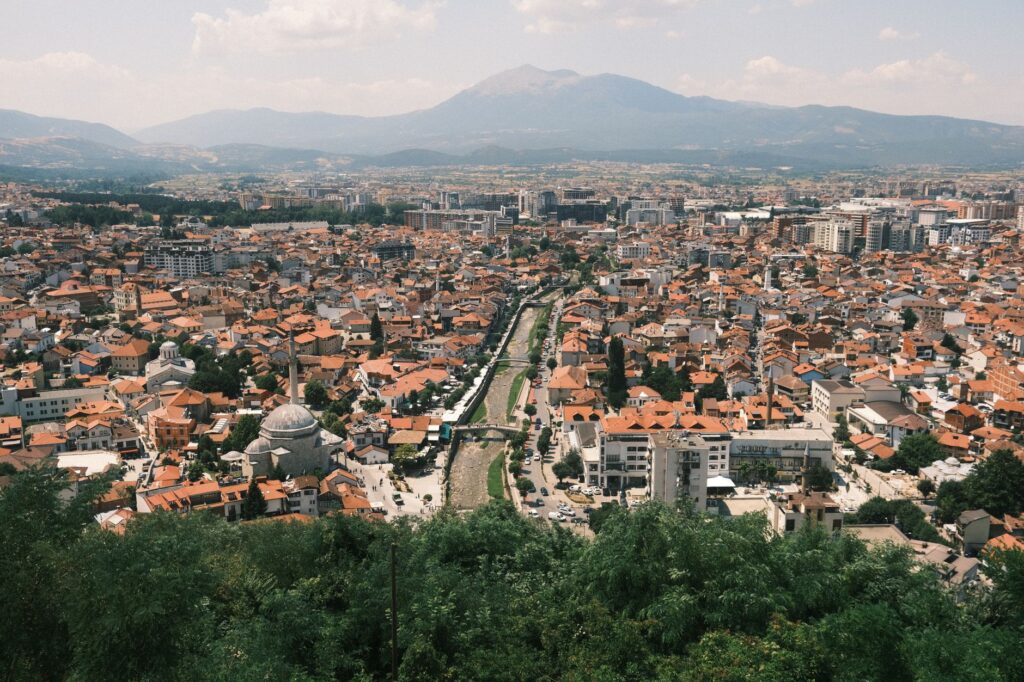
From the fortress, look down towards the Bistrica and trace the landmarks below. Shadervan’s compact streets, the dome and minaret of Sinan Pasha Mosque, the river crossings, church roofs and newer parts of Prizren all appear in the same panorama.
This is the best place to understand the old town as a living valley settlement rather than a cluster of monuments. The fortress gives scale to Prizren’s religious diversity, trade history and urban growth. It is the fitting final stop on a heritage walk.
A respectful and rewarding way to explore
Prizren Old Town is compact enough to explore on foot, but it benefits from an unhurried approach. A sensible route begins at Shadervan, crosses the Stone Bridge, explores the riverside and former bazaar area, then includes the hammam and Prizren League House. Visit Ljeviš and the slope-side Church of the Holy Saviour before tackling the fortress.
Religious buildings require particular care. Wear clothing that covers shoulders and knees where appropriate, speak quietly, and follow any instructions at entrances. Avoid photographing worshippers, and remember that access to sensitive monuments, especially the Church of Our Lady of Ljeviš, may be restricted.
Prizren rewards attention to smaller details: carved stone, timber balconies, domes behind rooflines, water moving beneath old bridges, and the changing silhouette of the fortress above. For broader ideas beyond the historic centre, explore our Best Things to Do in Prizren and the Prizren Travel Guide for First-Time Visitors. Prizren also makes an excellent introduction to the wider cultural landscapes of Kosovo.