
Osijek’s Tvrđa and Drava Promenade: A Self-Guided Walking Route
Follow Osijek’s historic fortress streets to the Drava riverfront, with baroque landmarks, museum stops, green spaces and the city’s neo-Gothic cathedral.
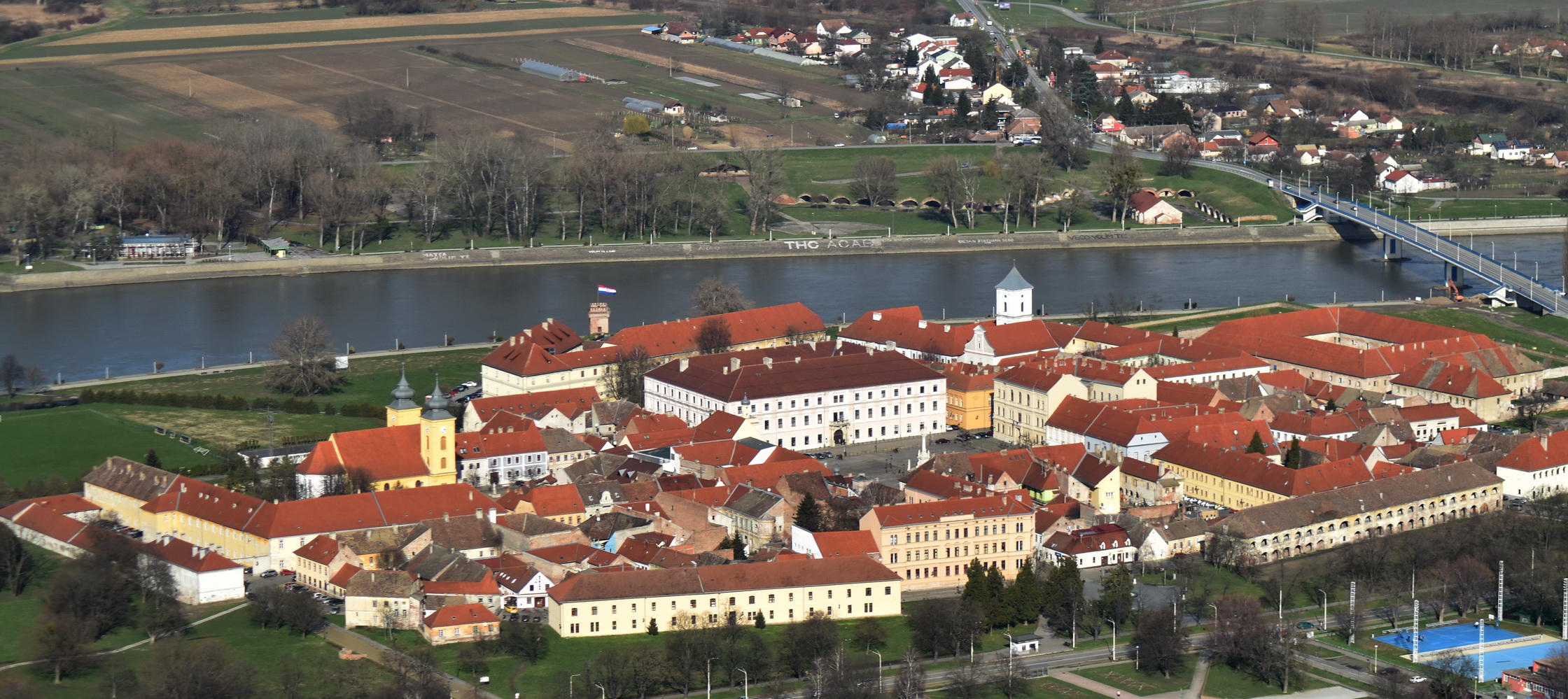
The Osijek Tvrđa walking route is one of the best ways to understand eastern Croatia’s most characterful city. This mostly flat urban walk joins the baroque fortress quarter with the broad banks of the Drava, then continues west towards Osijek’s central square and landmark cathedral.
Allow yourself a relaxed half-day rather than treating it as a checklist. Tvrđa rewards slow wandering, while the river promenade invites pauses at cafés, public spaces and viewpoints over the water.
Continue planning with Croatia.
The route at a glance
Begin in Tvrđa, Osijek’s remarkably intact Habsburg-era fortress district. Explore its cobbled lanes and main square, then make your way to the Water Gate on the river-facing side of the old fortifications.
From there, follow the Drava Promenade west towards central Osijek. Sakuntala Park provides a green break along the way, and the route concludes at Trg Ante Starčevića, where the soaring Osijek Co-Cathedral dominates the square.
The walk is easy to adapt. Spend longer in Tvrđa if you enjoy architecture and museums, or keep moving beside the river if you prefer open views and a more leisurely city stroll.
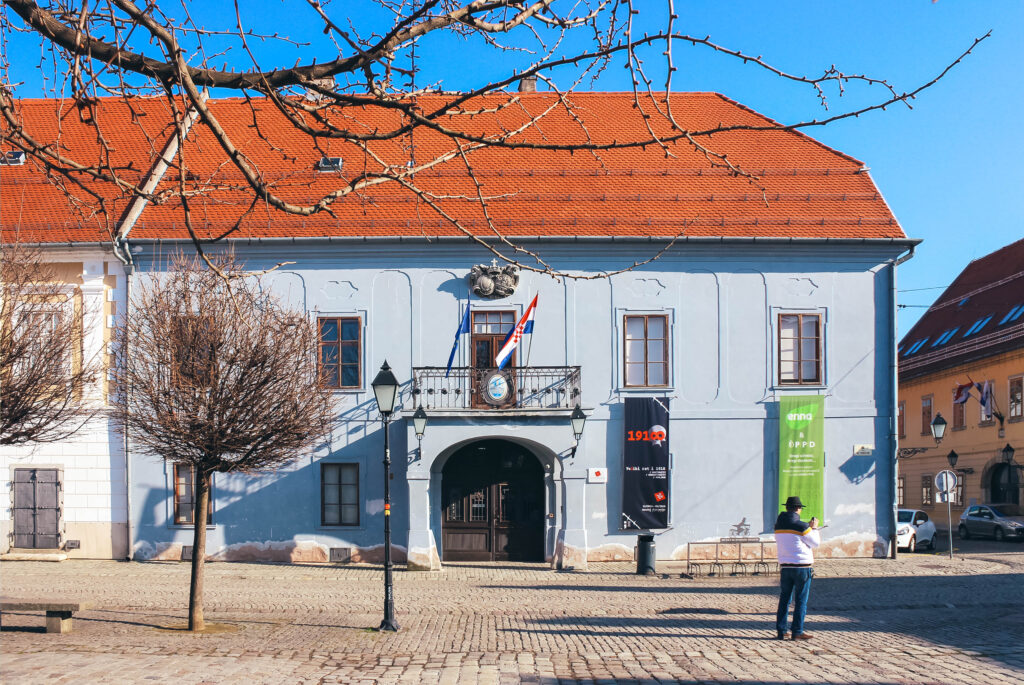
Enter Osijek’s baroque fortress quarter
Tvrđa is the historic heart of this route and the part of Osijek that feels most distinct. The Habsburgs developed it as a planned military stronghold, and its orderly streets, defensive remnants and substantial civic buildings still reveal that purpose.
Although it was once a guarded fortress, Tvrđa now has a lived-in character. Cafés occupy handsome old buildings, galleries bring contemporary life to the quarter, and students and local residents give its streets an everyday rhythm.
Trg Svetog Trojstva: the fortress’s main stage
Make Trg Svetog Trojstva your first real pause. This broad square was the civic centre of the fortress, framed by richly proportioned baroque façades that make it feel more like a small Central European town than a conventional Croatian city centre.
At its centre stands the Votive Statue of the Holy Trinity, an 18th-century plague monument. Its theatrical baroque form is the square’s defining feature and a reminder that public monuments once expressed both faith and civic survival.
Take time to look beyond the statue. The square’s appeal lies in its ensemble: the paving, the formal façades and the calm sense of enclosure created by the old fortress plan.
Church of St Michael and the Museum of Slavonia
On the edge of the square, the Church of St Michael deserves a short stop. This former Jesuit church has an imposing baroque presence outside, while its ornate interior provides a more decorative contrast to Tvrđa’s disciplined military streets.
Nearby, the Museum of Slavonia adds depth to what you see outdoors. Housed in a historic fortress building, it explores the archaeology, history and cultural life of Osijek and the wider Slavonia region.
It is a particularly good indoor option if you want context for the region rather than simply a scenic walk. Church and museum access can vary, so check locally if an interior visit matters to your plans.

Follow the old fortress towards the Drava
From Trg Svetog Trojstva, continue through Tvrđa towards its river-facing edge. Watch for the shift in atmosphere: the dense baroque streets begin to open up, and the Drava becomes the natural focus.
The Water Gate
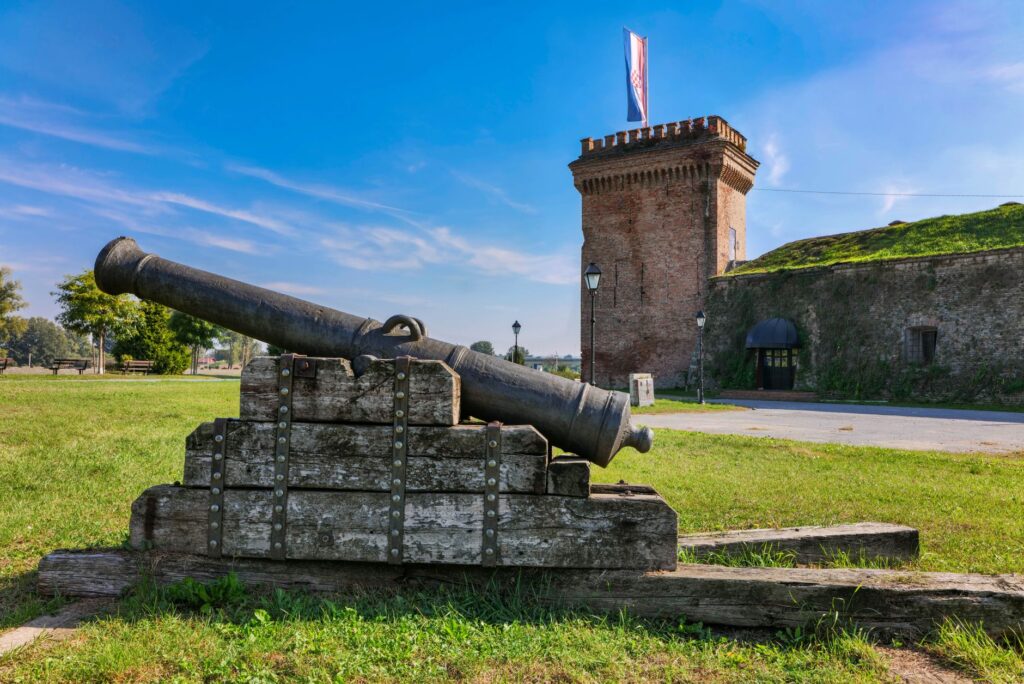
The Water Gate is one of the most evocative remnants of the old defensive system. It was the fortress entrance facing the river, where the military town connected with the waterway that shaped Osijek’s trade, transport and strategic importance.
This is more than a photogenic stone gateway. It explains the logic of Tvrđa itself. The fortress was designed to control movement, and the river was both a defensive boundary and an essential route beyond the walls.
Use marked crossings as you move between the fortress area and the riverfront. Once you reach the promenade, the walk changes from historic enclosure to open riverside space.
Walk the Drava Promenade west
The Drava Promenade is Osijek’s social spine. Its long, open path follows the river and links Tvrđa with central neighbourhoods, giving you wide views of the Drava and a welcome sense of space after the close-set fortress streets.
Walk west at your own pace, stopping wherever the view appeals. The river changes character with the light, while the promenade’s cafés and public spaces make it easy to linger rather than march directly to the next landmark.
The route also works well by bicycle. Cyclists should still expect a shared urban environment, especially around popular gathering areas and crossings.
A pause in Sakuntala Park
Sakuntala Park is a pleasant green detour near the riverside route. It is not a major sightseeing stop, and that is exactly its charm. After Tvrđa’s stone streets and the exposed riverbank, the park offers a quieter place to sit beneath mature trees.
If you are walking in strong sun, wind or rain, adjust the pace accordingly. The promenade is open to the elements, while Tvrđa’s streets and indoor attractions provide more shelter.
Finish at Trg Ante Starčevića and the Co-Cathedral
Continue west until the city’s central area takes over from the riverfront. Trg Ante Starčevića is a natural final stop, with broad urban space, shops and the visual drama of Osijek’s best-known church.
Osijek Co-Cathedral
The Osijek Co-Cathedral, formally the Church of St Peter and St Paul, rises above the square with its tall neo-Gothic tower. Its vertical lines and dark brickwork make a striking contrast with Tvrđa’s lower, softer baroque architecture.
The cathedral gives this route a satisfying conclusion because it shows another chapter in Osijek’s identity. Tvrđa speaks of imperial military planning; the cathedral reflects the city’s later civic confidence and urban growth.
Step back across the square to appreciate the tower in full. If the church is accessible, an interior visit can round out the walk, but the exterior and its setting are reason enough to include it.
Flexible detours and route notes
If you have extra time in Tvrđa, the Shell Museum and Water World can be an unusual addition for travellers who enjoy specialist collections. It is best treated as an optional stop, not a reason to rush the fortress quarter.
The Pannonian Peace Bridge is another possible riverside extension. Consider it if you want to stay longer by the Drava or see more of Osijek’s contemporary river crossings.
Kopački rit Nature Park is often associated with a visit to Osijek, but it is a separate outing rather than part of this city walk. Save it for another day, when you can give its wetlands and birdlife proper attention.
How to enjoy the walk
- Follow the route east to west: beginning in Tvrđa makes the historic story clear before the city opens onto the river.
- Keep the plan flexible: linger in Trg Svetog Trojstva, visit the Museum of Slavonia, or focus on the promenade depending on your interests.
- Wear comfortable shoes: Tvrđa includes uneven cobbles, even though the overall route is largely level.
- Bring water and protection from the elements: the Drava riverfront is broad and exposed.
- Look up as well as ahead: Tvrđa’s gates, church details and façades often reveal themselves above street level.
This route captures Osijek at its best: a fortified baroque quarter, a generous riverfront and a centre anchored by a dramatic cathedral. It is not a city to race through. Give its streets, squares and Drava views room to unfold.
Tours & experiences for Osijek
Popular experiences with current pricing and traveler ratings.
 Free cancellation
Transfer to Zagreb airport
 Free cancellation
Transfer from Osijek to Zagreb
 Free cancellation
Transfer from Osijek to Belgrade
Free cancellationTransfer from Osijek to Vienna
ToursToBalkans may earn a commission when you book through our partner links.