
One Day in Zagreb: A Practical Itinerary
Explore Zagreb in one well-paced day, from Dolac Market and Upper Town lanes to a memorable museum, parks and evening cafés.
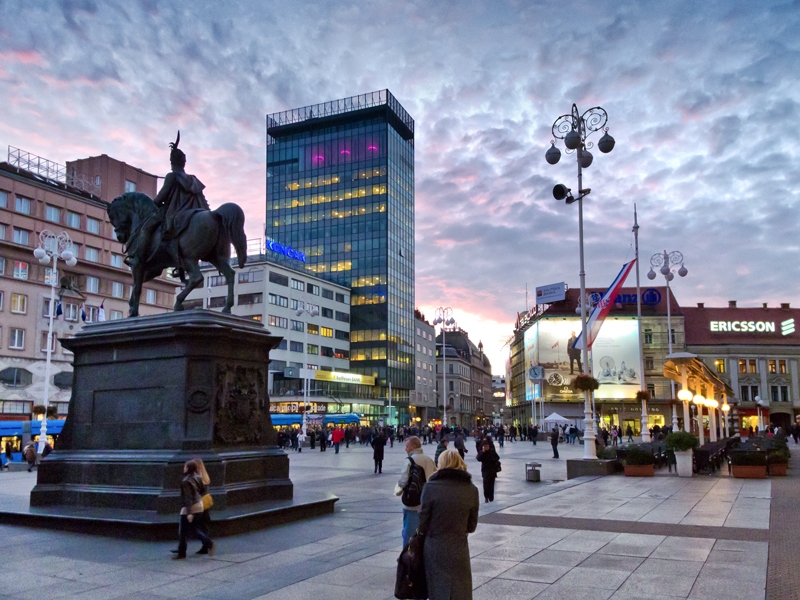
Spending one day in Zagreb is enough to understand the city’s character: a lively central square, a traditional market, hilltop streets, Austro-Hungarian boulevards and an unhurried café scene. This itinerary follows a sensible walking route through the historic core, while leaving room for lunch, one museum and a relaxed evening.
Zagreb is best explored in layers. Begin among the market stalls and landmarks around the old Kaptol district, then climb to Upper Town for its cobbled lanes and viewpoints. In the afternoon, descend to the grander Lower Town before returning to the old centre for dinner and drinks.
Continue planning with Where to Eat in Zagreb: Local Food Guide and Things to Do in Zagreb: A Guide to the Top Attractions and Activities.
Your Zagreb route at a glance
The day begins at Ban Jelačić Square, Zagreb’s natural meeting point and the clearest place to get your bearings. From here, Dolac Market and the cathedral are only a short walk uphill. Tkalčićeva Street then leads you towards Upper Town, where the city’s oldest streets and civic landmarks sit above the modern centre.
After exploring Upper Town and visiting one museum, take the funicular or walk down into Lower Town. A short stroll through Zrinjevac Park and towards the Croatian National Theatre shows a different side of Zagreb: broad avenues, formal parks and late-19th-century architecture. Finish near Tkalčićeva Street, where the evening atmosphere feels local and easy-going.
- Morning: Ban Jelačić Square, Dolac Market, Zagreb Cathedral and Tkalčićeva Street
- Midday: Zagreb Funicular, Stone Gate, St. Mark’s Church and Strossmayer Promenade
- Afternoon: Museum of Broken Relationships, then Lower Town and Zrinjevac Park
- Evening: Dinner and drinks around Tkalčićeva Street or the central square
Morning: Dolac Market and old Zagreb
Begin at Ban Jelačić Square
Arrive at Ban Jelačić Square in the morning, when the centre is beginning to stir. The square links Zagreb’s Lower Town with the streets that rise to Kaptol and Upper Town. It is also a major tram hub, so it makes an easy starting point whether you are arriving from your hotel, the station or another part of the city.
Take a few minutes to look around before heading north towards Dolac. The square may be busy, but it offers a quick introduction to Zagreb’s everyday rhythm. Locals cross it on their way to work, meet beneath the statue of Ban Jelačić, or stop for coffee nearby.
Visit Dolac while it still feels like a market
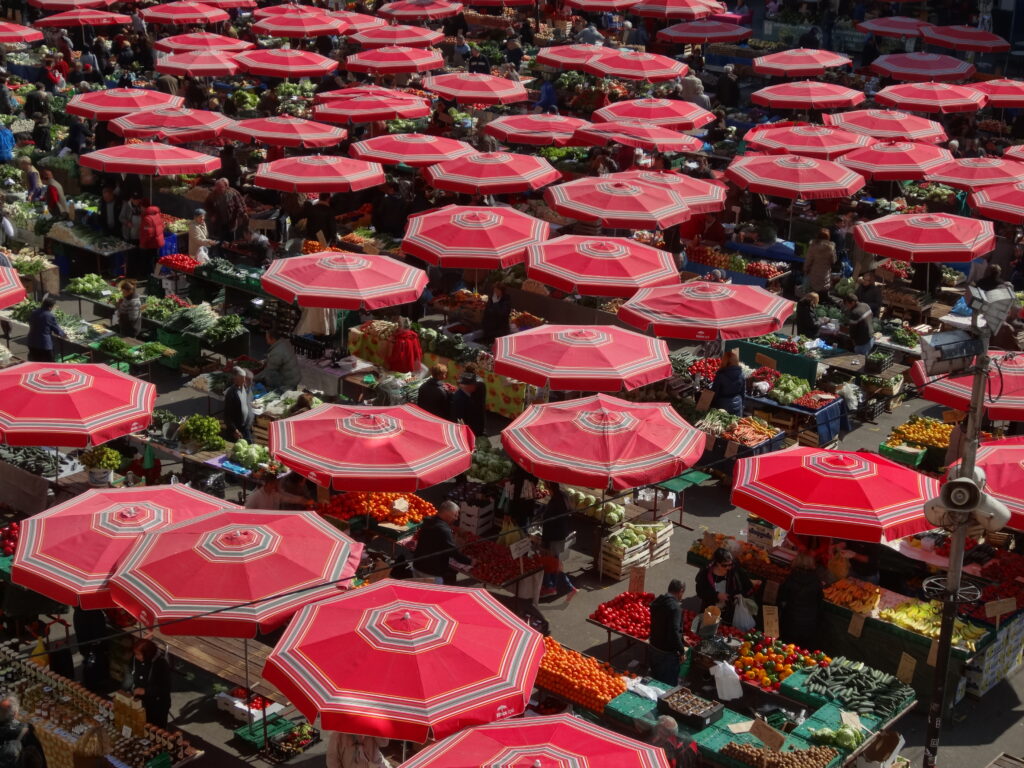
Just behind the square, Dolac Market is one of Zagreb’s essential morning stops. Its red umbrellas have become a visual symbol of the city, sheltering stalls stacked with seasonal fruit, vegetables, herbs, flowers and regional produce. The lower indoor section traditionally adds cheese, meat, fish and other pantry staples to the mix.
This is not a museum-like attraction. Dolac matters because it shows Zagreb as a lived-in capital, not just a historic backdrop. Browse slowly, try a small local snack if something appeals, and enjoy the contrast between the bustle of the market and the quieter lanes above it. Later in the day, the market loses much of its energy, so this stop deserves an early place in the itinerary.
See Zagreb Cathedral from Kaptol
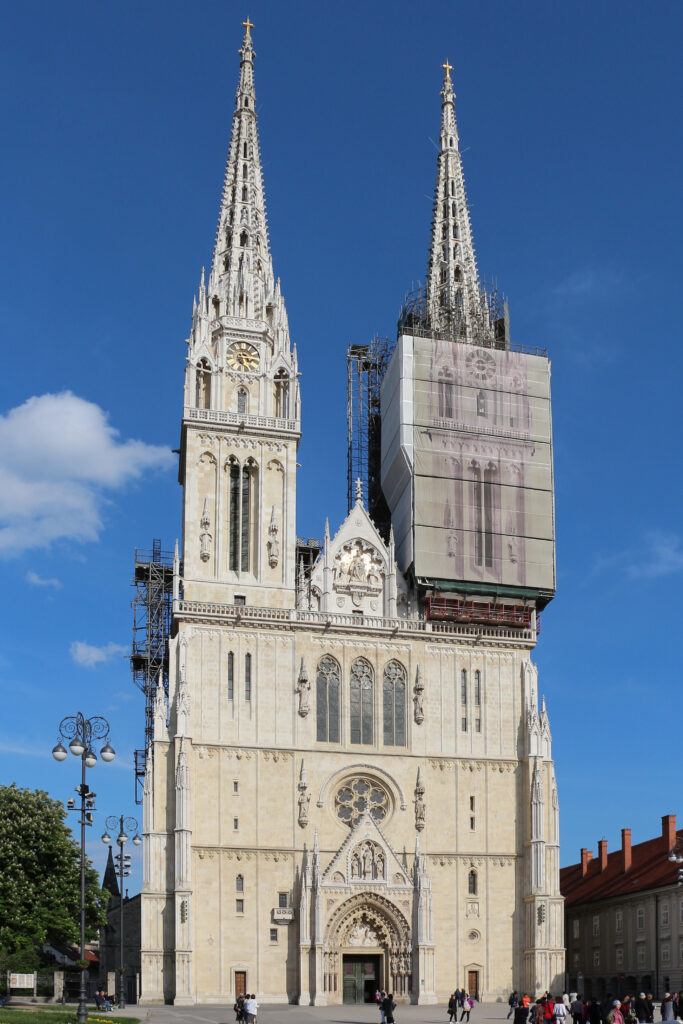
From Dolac, continue a few steps to Zagreb Cathedral in the Kaptol district. Its twin-spired silhouette is among the city’s defining sights and has long shaped the skyline above the old centre. The cathedral is Gothic in origin, although its appearance reflects a long history of rebuilding and restoration.
For a one-day visit, treat the exterior and surrounding square as the priority. Access arrangements and restoration conditions can change, but the building remains worthwhile as a landmark even when viewed from outside. Notice how quickly the setting shifts here: Zagreb’s commercial centre lies only moments away, yet Kaptol feels older and more enclosed.
Pause on Tkalčićeva Street
Walk back towards Tkalčićeva Street, the pedestrian lane running between Kaptol and Upper Town. Its terraces, cafés and restaurants make it an excellent place for a coffee or an early lunch. Although it is popular with visitors, it still reflects one of Zagreb’s defining habits: taking time over conversation.
If you want to sample Croatian flavours without turning lunch into a long formal meal, this is a good area to do so. Choose a table, watch the passing crowd and save enough time for the hilltop part of the day. Zagreb rewards lingering, but Upper Town should remain the main priority.
Midday: Upper Town’s historic heart
Ride the Zagreb Funicular
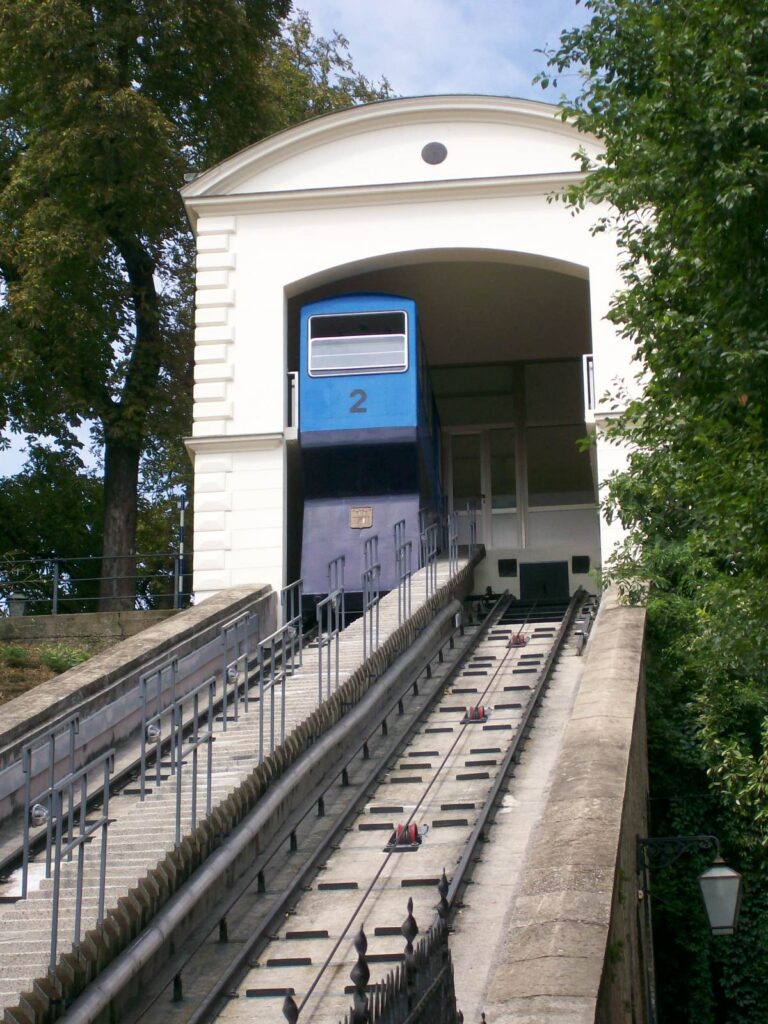
Make your way to Tomićeva Street for the Zagreb Funicular, a remarkably short but memorable connection between Lower Town and Upper Town. The ride itself is brief, yet it saves a steep climb and gives the transition between the two parts of the city a sense of occasion.
If the funicular is not operating during your visit, simply use the nearby streets and stairways. Upper Town is compact, and the real pleasure comes after you arrive: narrow lanes, quiet courtyards and changing views over roofs and parks below.
Walk through Stone Gate and towards St. Mark’s
At the top, head to Stone Gate, one of the surviving medieval entrances to Gradec, the historic settlement that later became part of Zagreb. The passageway has a calm, devotional atmosphere, with a revered image of the Virgin Mary inside. Pass through respectfully, then continue into the streets beyond.
From here, walk towards St. Mark’s Church, known for its colourful tiled roof bearing Zagreb and Croatian heraldic emblems. It stands on St. Mark’s Square, surrounded by important civic buildings. The church is one of the city’s most recognisable images, but the square also reveals Upper Town’s political and administrative role.
Do not rush this section. Zagreb’s historic centre is less about a checklist of monuments and more about its intimate scale. Turn down a side street, look for iron lamps and old façades, and notice how the pace softens once you leave the central square behind.
Take in the view from Strossmayer Promenade
Continue to the Strossmayer Promenade, a tree-lined walkway along the southern edge of Upper Town. It opens towards views of Lower Town’s rooftops, parks and grand buildings. This is a fine place to pause before your museum visit, especially if you have been on your feet since the market.
Nearby, Lotrščak Tower is an optional addition for travelers who want another Upper Town landmark. However, do not force it into the schedule if you prefer a slower walk or want more time in the museum.
Afternoon: choose one museum
Make the Museum of Broken Relationships your main indoor stop
The Museum of Broken Relationships is the best museum choice for most first-time visitors with limited time. Located in Upper Town, it displays personal objects donated alongside stories of love, separation, friendship and loss. The objects may be ordinary, but the narratives often are not.
Its appeal lies in the human scale of the collection. Rather than trying to explain Croatian history in a single afternoon, the museum gives you an unexpected emotional experience that is distinctly associated with Zagreb. Allow yourself time to read rather than racing from display to display.
If art is your greater interest, the Strossmayer Gallery of Old Masters offers an alternative museum stop in Lower Town. Choose it instead of the Museum of Broken Relationships, rather than attempting both. One thoughtful museum visit will make the day feel richer than a hurried circuit of several collections.
Late afternoon: Lower Town parks and architecture
Stroll through Zrinjevac Park
After your museum, descend into Lower Town and walk through Zrinjevac Park. This elegant green space forms part of the Lenuci Horseshoe, the sequence of landscaped squares and parks that gives central Zagreb its refined, planned appearance.
The shaded promenade provides a welcome contrast to Upper Town’s stone streets. Look up at the surrounding façades, then slow down near the fountains and mature trees. It is a simple stop, but it explains why Zagreb often feels more like a city of parks and café terraces than a capital defined by grand spectacle.
Continue to the Croatian National Theatre
If you still have energy, continue southwest towards Marshal Tito Square and the Croatian National Theatre. Its ornate yellow façade is one of Lower Town’s clearest architectural highlights. You do not need to attend a performance for the building to earn a place on this itinerary; it works well as an exterior stop on a gentle afternoon walk.
From here, you can return towards the centre on foot, passing more of Lower Town’s broad streets and historic buildings. The walk is pleasant, but it is also the easiest part of the route to shorten if you are tired. Zagreb’s core is walkable, and trams are useful when you want to save your legs.
Evening: dinner and drinks near the old town
Return to Tkalčićeva Street for dinner, especially if you enjoyed its atmosphere earlier in the day. By evening, its outdoor tables, bars and restaurants become a natural gathering point. It is close enough to the major sights that you can wander back through Upper Town or towards Ban Jelačić Square after your meal.
For a quieter end to the day, choose a side street near the old centre rather than the busiest terrace. For a livelier finish, remain around Tkalčićeva and let the evening unfold at its own pace. Zagreb rarely demands a rigid nightlife plan; a good meal, a local drink and a final walk through the illuminated centre are enough.
How to make the day fit your pace
This itinerary works because it keeps the focus on central Zagreb. Comfortable shoes matter, as Upper Town has slopes, steps and uneven stone streets. Keep the morning flexible too: markets invite browsing, and the museum can take longer than expected.
If you have little interest in museums, replace the afternoon indoor stop with more time in Lower Town or a tram ride east to Maksimir Park. It is a large city park and a rewarding green escape, but it makes more sense for travelers who prefer outdoor time to galleries and architecture.
Mirogoj Cemetery is another worthwhile alternative for those interested in Zagreb’s cultural history and monumental architecture. It lies beyond the central walking route, so choose it only if you are happy to use public transport or a taxi and reduce time elsewhere.
For most first visits, however, the strongest version of one day in Zagreb remains simple: market breakfast, old-town wandering, Upper Town views, one memorable museum, Lower Town parks and a long evening meal near Tkalčićeva Street.
Tours & experiences for Zagreb
Popular experiences with current pricing and traveler ratings.
 Free cancellation
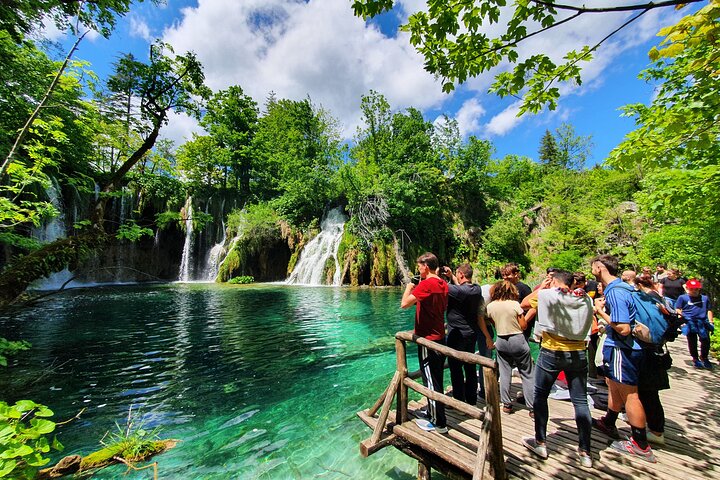
Zagreb: Plitvice Lakes & Rastoke Guided Day Trip with Ticket
 Free cancellation
From Zagreb: Ljubljana and Lake Bled Guided Day Tour
 Free cancellation
From Zagreb: Ljubljana & Lake Bled Day Trip
 Free cancellation
Rastoke and Plitvice Lakes Guided Day Tour from Zagreb
 Free cancellation
Plitvice Lakes with Ticket & Rastoke Guided Tour from Zagreb
 Free cancellation
Zagreb: Restaurants, Food & Old Town Walking Tour
ToursToBalkans may earn a commission when you book through our partner links.
Best places in Zagreb
Selected attractions and places to eat with Tripadvisor data, curated for a cleaner trip-planning experience.
Top attractions in Zagreb


