Montenegro Travel Guide – Essential Information for Visitors
Montenegro is a stunning Balkan destination where dramatic mountains meet crystal‑clear seas,
rich cultural history blends with outdoor adventure, and charming old towns rest beside
medieval fortresses and deep river canyons. This compact country promises intense
diversity and unforgettable travel experiences. :contentReference[oaicite:1]{index=1}
Essential Country Facts
- Official Name: Montenegro
- Capital: Podgorica
- Currency: Euro (€) — unilaterally used despite not being in the EU :contentReference[oaicite:2]{index=2}
- Time Zone: Central European Time (GMT +1) :contentReference[oaicite:3]{index=3}
- Official Language: Montenegrin (local dialects include Serbian, Bosnian, Albanian)
- Emergency Number: 112
- UNESCO Sites: Kotor Old Town; Durmitor National Park & Tara Canyon :contentReference[oaicite:4]{index=4}
Where Is Montenegro?
Montenegro is located in Southeast Europe on the Balkan Peninsula. It is bordered by Croatia
to the west, Bosnia and Herzegovina to the northwest, Serbia to the north, Kosovo to the
northeast, Albania to the southeast, and the Adriatic Sea to the southwest. :contentReference[oaicite:5]{index=5}
Why Visit Montenegro?
- Unforgettable natural diversity — from Adriatic beaches to alpine mountains
- Medieval coastal towns with Venetian heritage
- Rare outdoor experiences — deep canyons, glacial lakes, scenic hiking
- Strong cultural mix influenced by Illyrian, Roman, Byzantine, and Ottoman histories
- Compact size makes multi‑region travel easy
Best Time to Visit Montenegro
- May–June: Warm weather and fewer summer crowds
- July–August: Peak summer — perfect for Riviera beaches
- September–October: Milder temperatures and excellent hiking
- Winter: Snow sports in northern mountain regions
Main Regions & Key Destinations
Podgorica
The capital blends historic sites with modern urban life, lively cafés, and scenic river walks. :contentReference[oaicite:6]{index=6}
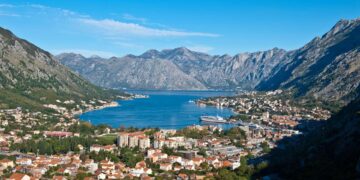
Kotor & Bay of Kotor
A UNESCO World Heritage site with medieval walls, cobbled streets, and panoramic bay views. :contentReference[oaicite:7]{index=7}
Durmitor National Park
Mountain wilderness with glacial lakes, adventure trails, and Europe’s deepest canyon — Tara. :contentReference[oaicite:8]{index=8}
Montenegrin Coast & Riviera
From Budva’s nightlife to hidden coves near Petrovac and Sveti Stefan, the coast is diverse and scenic. :contentReference[oaicite:9]{index=9}
Getting to & Around Montenegro
Airports
- Tivat Airport (TIV) — closest to the coastal region
- Podgorica Airport (TGD) — main international gateway
Transport
- Buses connect major towns and cities
- Car rental is ideal for flexible travel and mountain routes
- Ferries and boats operate along parts of the coast
Montenegrin Cuisine & Local Culture
Montenegro’s food culture blends Mediterranean and Balkan influences.
Try fresh seafood, grilled meats, local cheeses, hearty stews, and rakija —
a traditional fruit brandy enjoyed across the region. :contentReference[oaicite:10]{index=10}
Safety & Practical Travel Tips
- Generally safe for tourists
- Carry cash (EUR) for small vendors and rural areas
- English and Italian widely spoken in coastal tourist spots
- Tap water is safe in most urban areas
How Long to Stay in Montenegro
- 3–5 days: Coast & Kotor Bay
- 7 days: Coast + Durmitor + Podgorica
- 10–14 days: Full exploration including inland villages and national parks
Frequently Asked Questions
Is Montenegro part of the European Union?
No, Montenegro is not an EU member, but it uses the Euro and has visa‑free travel for many nationalities.
Do I need a visa to visit Montenegro?
Many nationalities, including EU, UK, USA, and Canada, can enter visa‑free for short stays.
Is Montenegro safe for tourists?
Yes, Montenegro is generally safe for visitors, though standard travel precautions are advised.