
Marko’s Towers in Prilep: Hiking to North Macedonia’s Dramatic Medieval Fortress
Hike through Prilep’s granite hills to Marko’s Towers, explore medieval ruins, and extend your day with old-town sights and Treskavec Monastery.
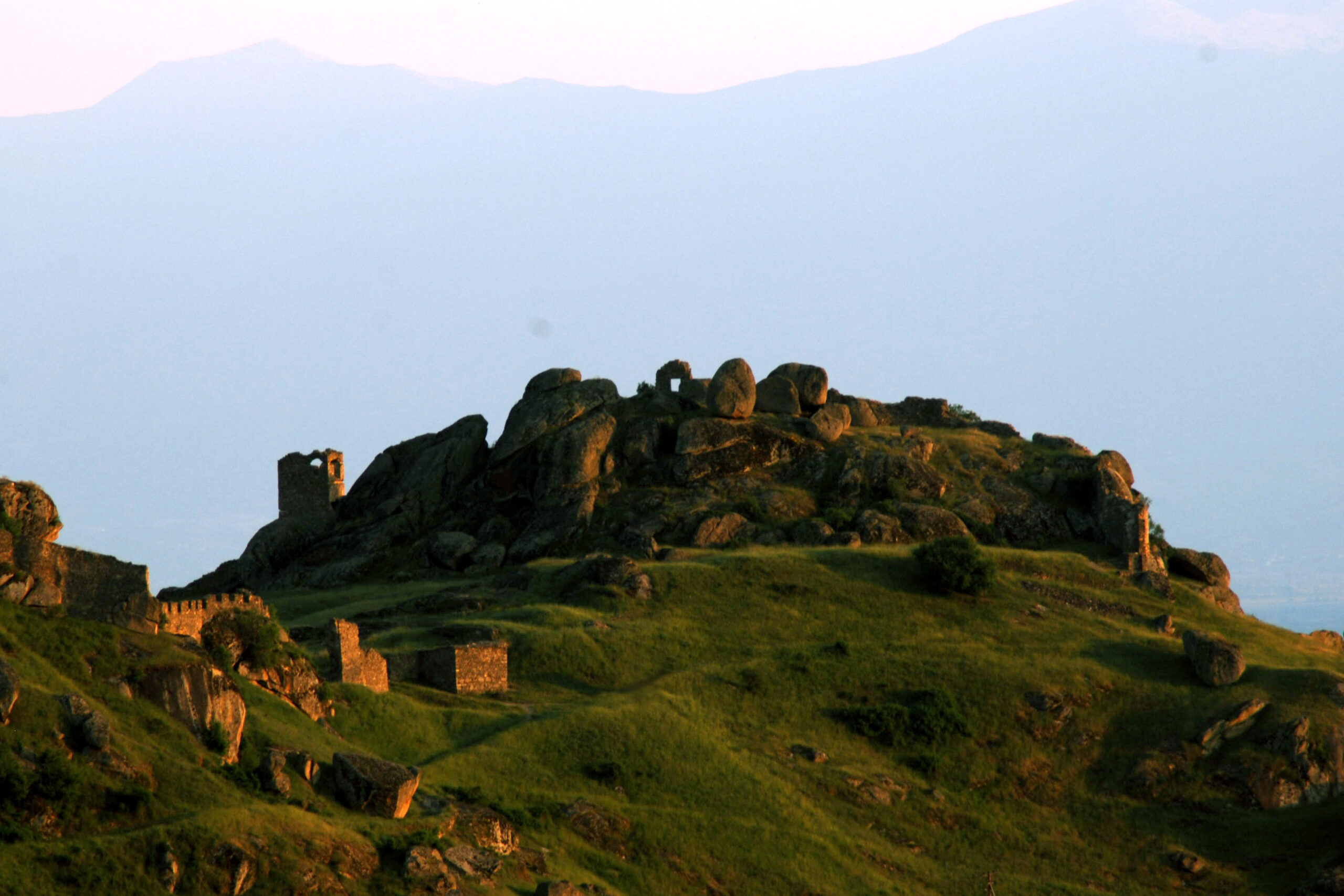
The Marko’s Towers Prilep hike is one of North Macedonia’s most memorable short mountain outings. Above the town, medieval walls cling to a ridge of huge granite boulders, while the Pelagonia plain opens below in a broad sweep of fields, villages and distant mountains.
This is not a polished castle visit with paved paths and interpretive rooms. It is a real hillside walk through exposed rock, scrub and fortress remains. That raw setting is exactly what makes Marko’s Towers so compelling. The hike offers history, landscape and a strong sense of place within easy reach of Prilep.
Continue planning with Things to Do in Prilep: From Exploring the Old Town to Visiting Monasteries.
Why Marko’s Towers is Prilep’s defining hike
Marko’s Towers, known locally as Markovi Kuli, rises above Prilep on the lower slopes of the mountain massif beneath Zlatovrv. The fortress once guarded an important medieval centre, and its surviving walls still follow the defensive logic of the terrain. Steep slopes and massive natural rocks made the ridge difficult to approach long before stone ramparts were added.
What visitors see today is a dramatic combination of ruin and geology. Sections of wall emerge between rounded granite blocks, narrow passages thread through the rocks, and high points reveal the scale of the fortress landscape. Rather than focusing on a single preserved tower, the experience lies in walking through a broad defensive complex shaped by the mountain itself.
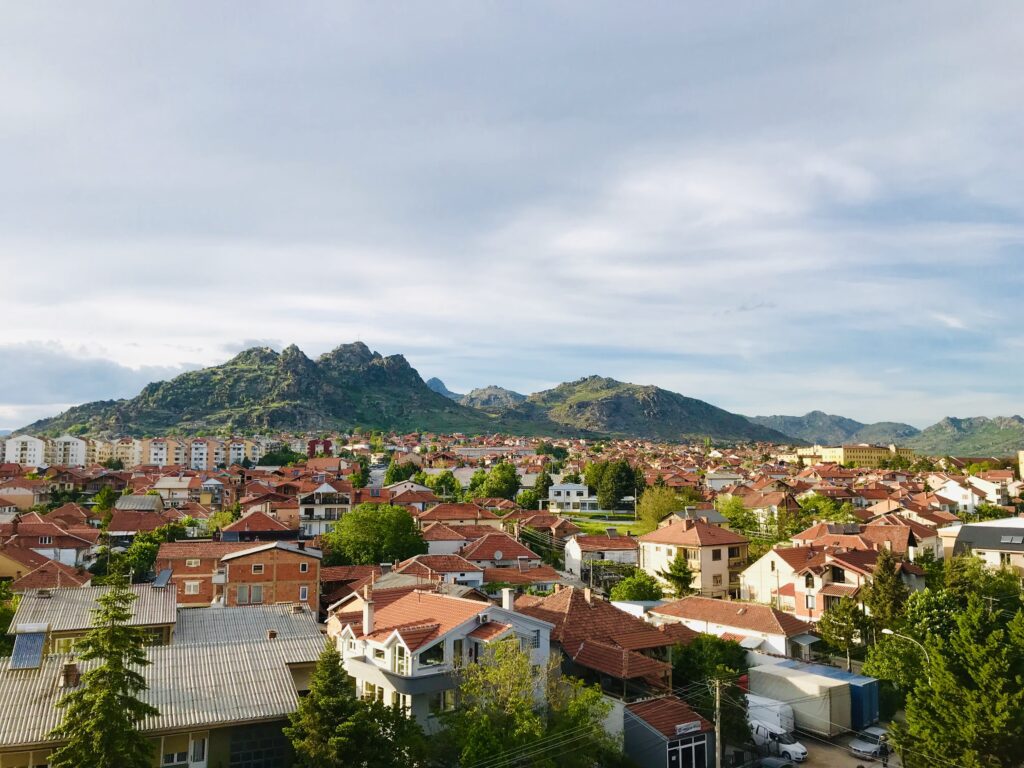
Prilep sits immediately below, making the contrast especially striking. One moment you are among boulders and wind-sculpted slopes; the next, the whole town spreads beneath you. Beyond it lies Pelagonia, one of the Balkans’ great agricultural plains.
Walking the Markovi Kuli trail
A hike rather than a technical climb
The approach to Marko’s Towers begins from the outskirts of Prilep and climbs steadily into the rocky hills. It is best treated as a proper hike, even though the fortress is close to town. The ground can be uneven, loose and steep in places, and some sections feel exposed because the route crosses open slopes and rock formations.
You do not need climbing equipment. However, sturdy shoes with reliable grip make a real difference. Sandals and smooth-soled city shoes are a poor match for the granite, especially after rain. Rock surfaces can become slippery when wet or icy.
Trail markings and route choices can change, so it is wise to download an offline map before leaving town or ask locally about the most suitable current approach. The reward comes quickly: as you gain height, Prilep falls away and the strange granite landscape becomes the main attraction.
What the terrain feels like
The Markovi Kuli trail passes through a terrain that seems designed for legend. Giant blocks appear balanced on ridges, scattered across slopes or piled into natural gateways. Some formations resemble walls before you even reach the man-made fortifications.
Take your time through the upper sections. The best moments often come between the obvious viewpoints: a glimpse of masonry behind a boulder, a narrow rocky corridor, or a quiet perch overlooking the plain. This is a place for walking attentively, not rushing toward a single summit photograph.
- Wear firm walking shoes or light hiking boots.
- Carry enough water, as facilities on the heights are limited.
- Bring sun protection for exposed sections of the route.
- Keep clear of unstable edges and avoid scrambling beyond your comfort level.
- Turn back if rain, ice, strong wind or poor visibility makes the rocks unsafe.
A fortress linked to King Marko
The name Marko’s Towers recalls Marko Kraljević, the medieval ruler and heroic figure celebrated across South Slavic oral tradition. He is closely associated with Prilep, where he ruled during the later medieval period. His historical importance and his legendary status have become deeply intertwined over centuries.
That distinction matters when visiting the site. The fortress is a genuine medieval stronghold, shaped by the politics and warfare of the period. Yet many of the most colourful stories around King Marko belong to folklore, where he appears as an almost superhuman rider, defender and trickster. The boulders of Markovi Kuli seem perfectly suited to those tales.
You do not need to untangle every legend to appreciate the setting. The landscape explains why the fortress mattered. Its builders used high ground, natural barriers and long views across Pelagonia to create a formidable defensive position.
Views over Pelagonia and the Zlatovrv slopes
The wide view is one of the strongest reasons to make the climb. From the fortress heights, Prilep appears framed by its surrounding hills, while the Pelagonia plain stretches south and west. In clear conditions, the scale of the valley gives the ruins a much larger context.
Look upward as well as outward. The slopes rise toward Zlatovrv, a prominent peak in the wider mountain landscape above Prilep. This is monastery country as much as fortress country, with old religious sites positioned on high ground beyond the urban edge.
For many travellers, Marko’s Towers works best as a half-day activity. Walk up with unhurried pauses, explore the fortress area carefully, then return to town for food and a slower look at Prilep. If you have a full day, the surrounding monastery landscape adds a rewarding second chapter.
Prilep beyond the fortress ridge
The old bazaar and St. Demetrius
After the open rock of Markovi Kuli, Prilep’s old bazaar provides a welcome change of atmosphere. Its Čaršija streets preserve elements of the town’s Ottoman-era fabric, with small businesses, cafés and everyday local life beneath the fortress massif.
Spend time wandering rather than treating the bazaar as a quick stop. It helps explain the relationship between the high fortress and the town below: one belonged to defence and power, while the streets beneath sustained trade, worship and daily life.
The Church of St. Demetrius is a worthwhile stop in the old-town area. Its Orthodox interior, with frescoes and iconography, offers a more intimate encounter with Prilep’s religious heritage than the vast views of the fortress. Be respectful of worshippers and the church setting when you visit.
A different chapter at Mogila of the Undefeated
For a broader sense of Prilep’s past, visit the Mogila of the Undefeated in a town park. This memorial complex honours partisan fighters and reflects the bold sculptural language of Yugoslav modernism.
It is not connected to the medieval fortress, but that contrast is meaningful. Marko’s Towers speaks of medieval rule and frontier defence; Mogila of the Undefeated speaks of twentieth-century conflict, remembrance and the former Yugoslav era. Together, they show how many historical layers meet in a relatively compact town.
Turn the hike into a day with Treskavec Monastery
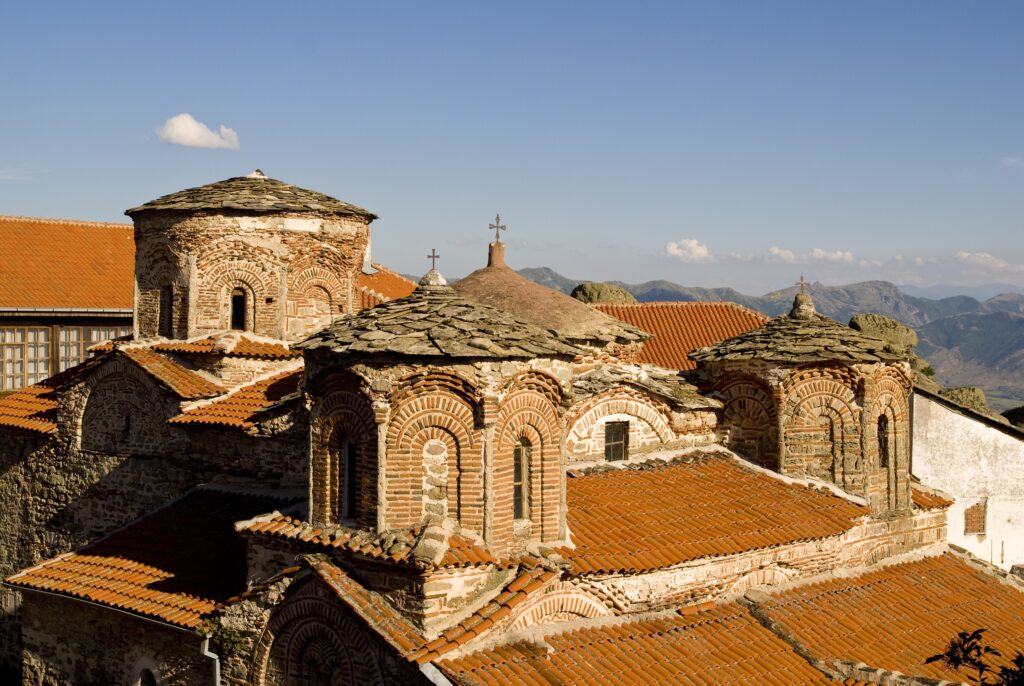
Treskavec Monastery is the natural extension for travellers who want to see more than Marko’s Towers. Set high on the slopes below Zlatovrv, the medieval monastic complex occupies a remote and beautiful position above the plain. Its isolation is part of its appeal.
The monastery can be approached by road or incorporated into longer hiking routes, depending on your transport and confidence in the mountains. It deserves a different pace from the fortress. Markovi Kuli is about exposed rock, walls and commanding views; Treskavec feels quieter, more contemplative and more closely tied to the mountain.
The monastery has a long religious and artistic history, including important medieval fresco traditions. Even for visitors without a specialist interest in sacred art, the setting alone makes the journey worthwhile. The view back toward Prilep and across Pelagonia gives a new perspective on the landscape you saw from the fortress.
A full-day Prilep plan can combine the morning hike at Marko’s Towers with time in the old bazaar, followed by an afternoon visit to Treskavec if you have suitable transport or a well-planned walking route. Keep expectations flexible: mountain roads and trails require more care than central-town sightseeing.
How to prepare for Marko’s Towers
Choose the hike for stable conditions and allow room for unplanned stops. The terrain is most enjoyable when you can move carefully and look around, rather than watching every step in a hurry. Early or later daylight can also make the exposed slopes feel more comfortable than the middle of a hot day.
Bring water, a charged phone, offline navigation and a light extra layer for the ridge. There is little shelter once you are above town. If you are travelling with children or anyone uneasy on steep ground, judge the route conservatively and stay on the clearest paths.
Marko’s Towers is at its best when approached with respect for both the mountain and the history. It is not a museum piece separated from its surroundings. The wind, granite, old walls and open plain all form part of the experience.
For travellers seeking an active and meaningful day in Prilep, few places offer more. Walk up through the boulders, pause over Pelagonia, then return to the bazaar with the fortress still visible above the town. Add Treskavec Monastery, and Prilep becomes one of North Macedonia’s richest small-city escapes.