
Kotor Old Town: Complete Walking Guide
Explore Kotor Old Town on foot, from Sea Gate and grand squares to Romanesque churches, maritime heritage and the fortress high above the bay.
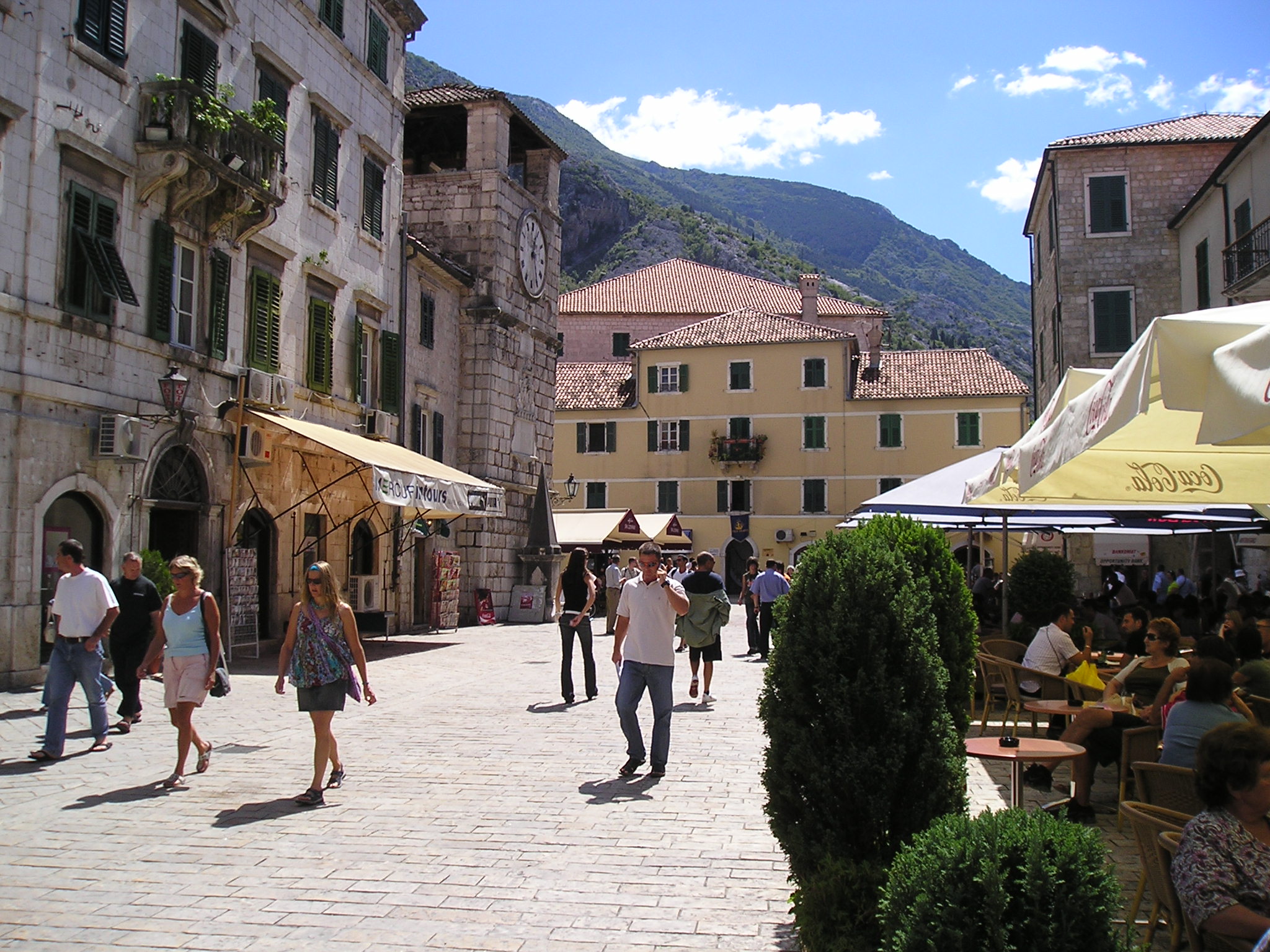
Kotor Old Town is compact enough to explore on foot, yet rich enough to reward a slow and observant walk. Behind its powerful walls, narrow lanes lead from civic squares to Romanesque churches, palaces and the steep fortress route above the town.
This guide follows a natural route from the waterfront Sea Gate to Gurdic Gate at the southern edge. Allow a half-day for the level historic centre. If you plan to climb Saint John’s Fortress, give yourself extra time and energy.
Continue planning with Kotor Travel Guide: What to See and Do and Best Kotor Tours & Experiences.
Enter through Sea Gate and Arms Square
Sea Gate is the most fitting entrance to Kotor’s enclosed historic centre. This Renaissance gateway faces the waterfront and brings you directly into Arms Square, the town’s broadest and most public space.
The gate also introduces a central theme of Kotor’s history. For centuries, the town was shaped by its position on the Bay of Kotor and by its relationship with the Republic of Venice. Venetian rule left a deep mark on Kotor’s fortifications, institutions and urban character, although the old town is not simply a Venetian creation. Its roots reach back through medieval local rule and earlier Adriatic traditions.
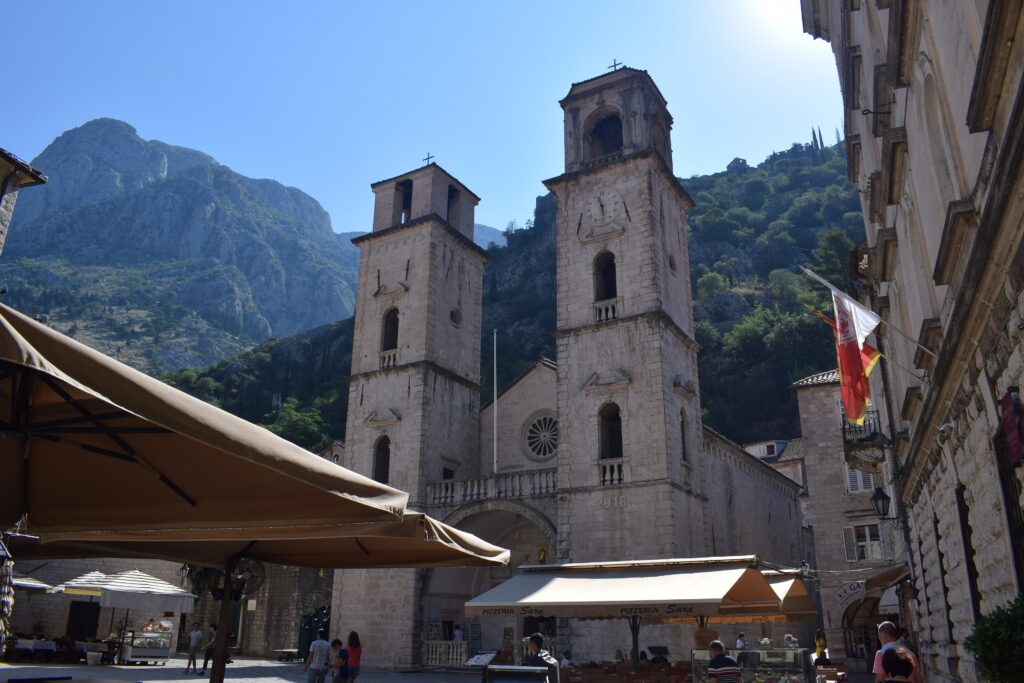
Arms Square was the former civic heart of the town. Look up rather than rushing through it. The Clock Tower, with its sturdy stone form, anchors the square and reflects the importance of public order and trade in this walled port.
Nearby, Pima Palace presents one of Kotor’s most recognisable noble façades. Its details hint at the wealth and influence of families whose fortunes were tied to seaborne commerce. The square may feel like a threshold today, but it was once a working stage for administration, exchange and ceremony.
Follow the lanes into Kotor’s noble quarters
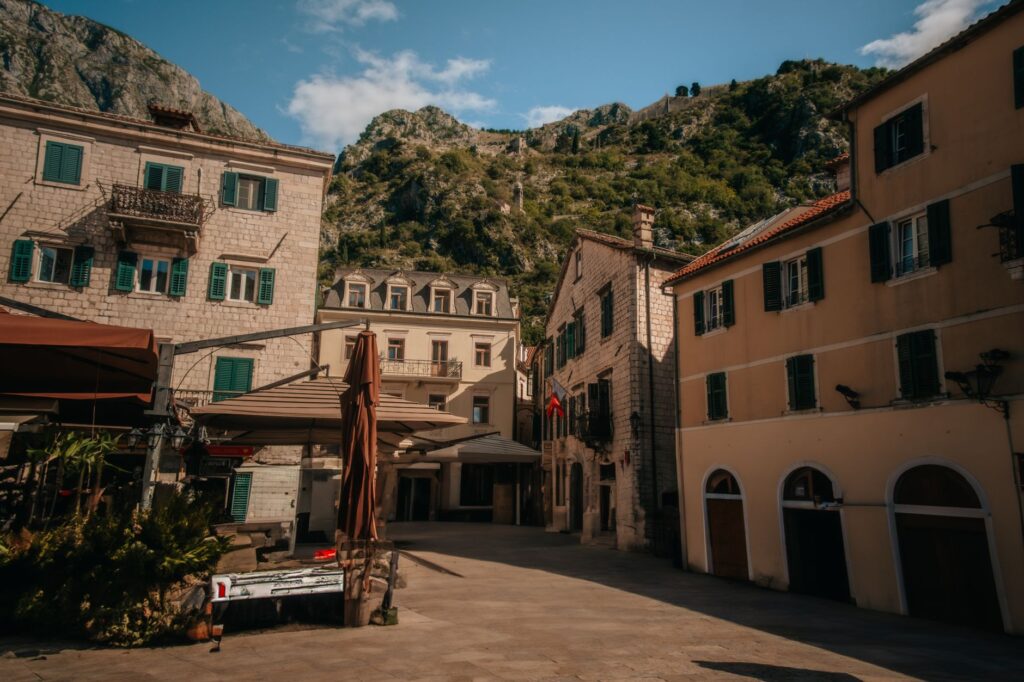
From Arms Square, let the smaller streets pull you deeper into the old town. Kotor is best understood through these transitions: a busy square gives way to a shaded passage, then opens onto a quiet pocket of stone houses and churches.
Flour Square and its aristocratic façades
Flour Square is a worthwhile early detour. It is smaller and more enclosed than Arms Square, which makes its palaces feel especially close. Pima Palace extends its presence here, while Buća Palace adds another layer of noble and civic history.
The Buća complex once included a prison, a reminder that Kotor’s stone architecture served practical purposes as well as decorative ones. These buildings were part of a functioning medieval town, where powerful families, church authorities and Venetian administrators all held influence.
Many palaces remain private or are used for purposes that do not invite casual visits. Their value lies in the streetscape itself. Carved portals, balconies and coats of arms reveal how status was expressed in a compact city where every frontage faced a public lane or square.
Visit the churches that define Kotor’s spiritual history
Kotor’s churches are not side notes on a sightseeing route. They show how religious life, local identity and Adriatic connections shaped the town over many centuries. Dress respectfully and remember that these remain meaningful places of worship.
Cathedral of Saint Tryphon
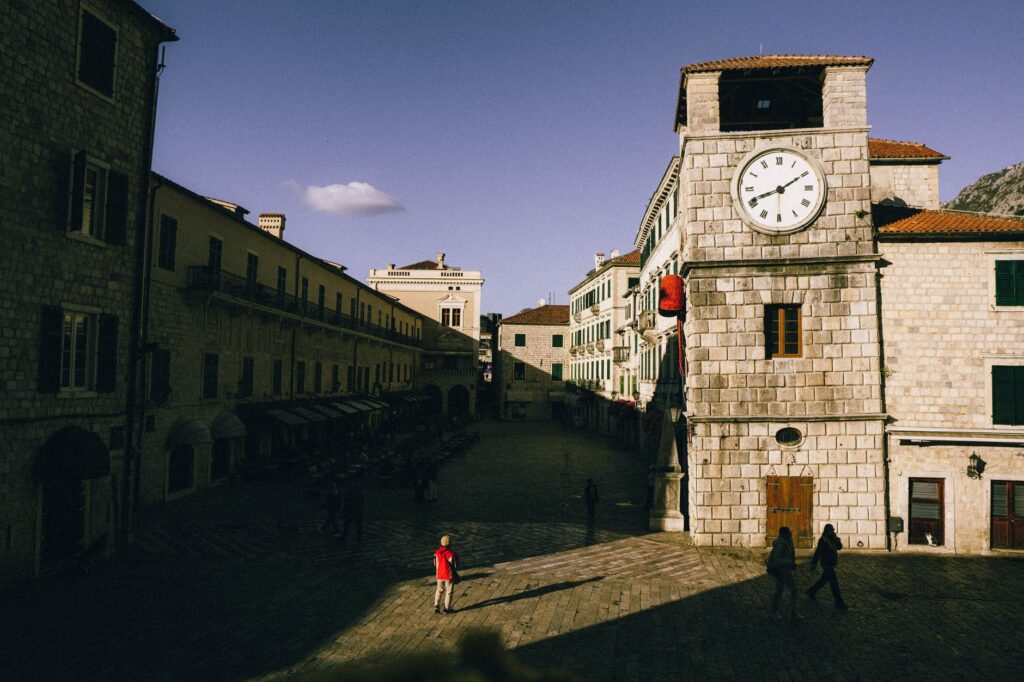
The Cathedral of Saint Tryphon is the essential religious stop in Kotor Old Town. Consecrated in 1166, it stands as one of Montenegro’s most important Romanesque monuments and is dedicated to Kotor’s patron saint.
Its twin towers make it easy to spot from surrounding lanes, but the cathedral deserves more than a photograph from the square. Notice the solidity of its Romanesque design and the way later changes sit within its long history. Like much of Kotor, the building reflects endurance as much as elegance.
The cathedral has long safeguarded relics associated with Saint Tryphon. Their presence helped establish Kotor as a significant spiritual centre, while the cathedral’s scale shows the confidence of a medieval port connected to the wider Adriatic world.
Saint Luke’s Church and Saint Nicholas Church
Continue to Saint Luke’s Square for a quieter but equally revealing chapter of Kotor’s past. Saint Luke’s Church was built in 1195 and retains the restrained character of a Romanesque church. Its importance lies not only in its age, but also in its remarkable shared religious history.
For a long period, Saint Luke’s served both Orthodox and Catholic worshippers. That dual-confessional use offers a powerful insight into Kotor’s mixed community and the practical coexistence that shaped life in this small walled town.
Across the square, Saint Nicholas Church represents Kotor’s continuing Orthodox tradition. Built in the early 20th century, it is much younger than Saint Luke’s, yet its prominent presence makes the contrast clear. Kotor is a layered town, not a frozen medieval scene.
If your route takes you toward the northern side of the old town, the Church of Saint Mary of the River is another modest historic landmark. It rewards those who enjoy noticing the smaller sacred buildings that once structured neighbourhood life.
See the maritime city behind the walls
Kotor’s mountains and walls make the strongest visual impression, but the town’s history was always maritime. Its sheltered bay supported trade, shipbuilding and naval service, while local families developed connections across the Adriatic and beyond.
Maritime Museum of Montenegro
The Maritime Museum of Montenegro, housed in Grgurin Palace, provides the clearest introduction to this seafaring heritage. The palace setting matters. It places the story of navigation, merchant life and naval tradition within the type of residence associated with Kotor’s prosperous maritime families.
A visit helps explain why Kotor’s civic buildings and churches became so ambitious. Wealth did not come from the town’s small streets alone. It came through the bay, from ships, trade networks and the skills of sailors who worked far from home.
Even if you do not visit every interior, pause outside Grgurin Palace and consider its setting. The old town was both a defensive enclosure and a port community. Its walls protected people and goods, while its links to the sea brought culture, influence and income.
Climb to Saint John’s Fortress for the full picture
The ascent to Saint John’s Fortress is the great physical and visual experience of Kotor. It turns a walk through medieval lanes into a clear lesson in military geography. From below, the walls seem to climb almost impossibly high up the mountainside. From above, Kotor’s defensive logic becomes obvious.
The route follows the city-wall system toward the summit known as San Giovanni. It is steep, uneven and exposed in places, so sturdy footwear, water and a measured pace make a real difference. This is not an extension of the flat old-town stroll; treat it as a separate hike.
Our Lady of Remedy on the hillside
Partway up, the Church of Our Lady of Remedy offers a meaningful pause. This small Catholic chapel is more than a convenient photo stop. Its bay-facing position captures the relationship between faith, danger and seafaring life in Kotor.
Continue only as far as feels comfortable. The higher you climb, the more fully the panorama opens: the old town becomes a tight grid of roofs, the walls reveal their scale, and the bay curves away beneath the mountains.
At Saint John’s Fortress, the view explains why Kotor was so valuable and so difficult to take. The mountains form a dramatic natural barrier, while the fortified slope defended the town’s vulnerable landward side. It is one of the finest places to understand Kotor as a fortified port rather than simply a beautiful historic centre.
Leave by Gurdic Gate and complete the circuit
After returning to the old town, continue south toward Gurdic Gate. This less celebrated entrance makes a satisfying finish because it reveals another side of Kotor’s defensive system. Its drawbridge setting and close relationship with the walls feel far removed from the open civic space of Arms Square.
Gurdic Gate also shows why a Sea Gate-to-Gurdic Gate route works so well. You begin with Kotor facing the water and its commercial life. You end where the town’s fortifications become more immediate, closed and defensive.
If you have time, the North Gate offers another perspective on the enclosing walls and waterways. Yet there is no need to turn the walk into a hunt for every landmark. Kotor rewards attention to texture: a worn threshold, a quiet courtyard, a carved window, or the sudden glimpse of a mountain above a narrow lane.
Kotor Old Town heritage in context
Kotor belongs to the Natural and Culturo-Historical Region of Kotor, recognised for the exceptional relationship between the bay, the town and its fortifications. The distinction is important because Kotor cannot be separated from its landscape. The mountains, water and walls formed one defensive and cultural system.
Venetian influence is central to the story, especially in the town’s fortifications and civic culture. Still, the cathedral, Saint Luke’s Church, Orthodox landmarks and noble palaces show a more complex past. Kotor developed through overlapping medieval, Adriatic, Catholic, Orthodox and Venetian worlds.
Walk it slowly, and the old town feels less like a collection of monuments. It becomes what it has long been: a lived port city, tightly contained by stone walls and opened to the world by the bay.
Tours & experiences for Kotor
Popular experiences with current pricing and traveler ratings.
 Free cancellation
Best of Montenegro – Budva, Cetinje, Kotor Bay Tour
 Free cancellation
Kotor: #1 Rated Blue Cave, Secret Tunnels & Lady of the Rocks
 Free cancellation
Kotor: Perast & Our Lady of the Rocks Island - Every 2 Hours
 Free cancellation
North Montenegro, Durmitor, Tara & Ostrog Tour
 Free cancellation
Kotor 3-Hour Boat tour to Blue Caves and Kotor Bay Adventure
ToursToBalkans may earn a commission when you book through our partner links.
Best places in Kotor
Selected attractions and places to eat with Tripadvisor data, curated for a cleaner trip-planning experience.
Top attractions in Kotor

Kotor Old Town
Explore Kotor’s UNESCO-listed medieval core, stone lanes, squares and centuries-old architecture.

City Walls
Climb the historic fortifications above Kotor for sweeping views over the Old Town and bay.
Explore this place Tripadvisor ↗
St. Tryphon Cathedral
A landmark Romanesque cathedral in the heart of Kotor Old Town with a small museum and bell-tower views.
Explore this place Tripadvisor ↗Top restaurants in Kotor

Konoba Scala Santa
A popular Old Town konoba known for seafood, risotto and traditional Mediterranean dishes.
Explore this place Tripadvisor ↗
Galion
Waterfront dining with views toward Kotor marina and the Old Town, focused on seafood and Mediterranean cuisine.

BBQ Tanjga
A casual local favorite for grilled meat, generous portions and excellent value.
Explore this place Tripadvisor ↗


