
Durres Amphitheatre, Venetian Tower and Seafront: A Practical Half-Day Walking Route
Explore Durres on foot, from its Roman amphitheatre and old fortifications to the Venetian Tower, Sfinksi steps and Adriatic promenade.
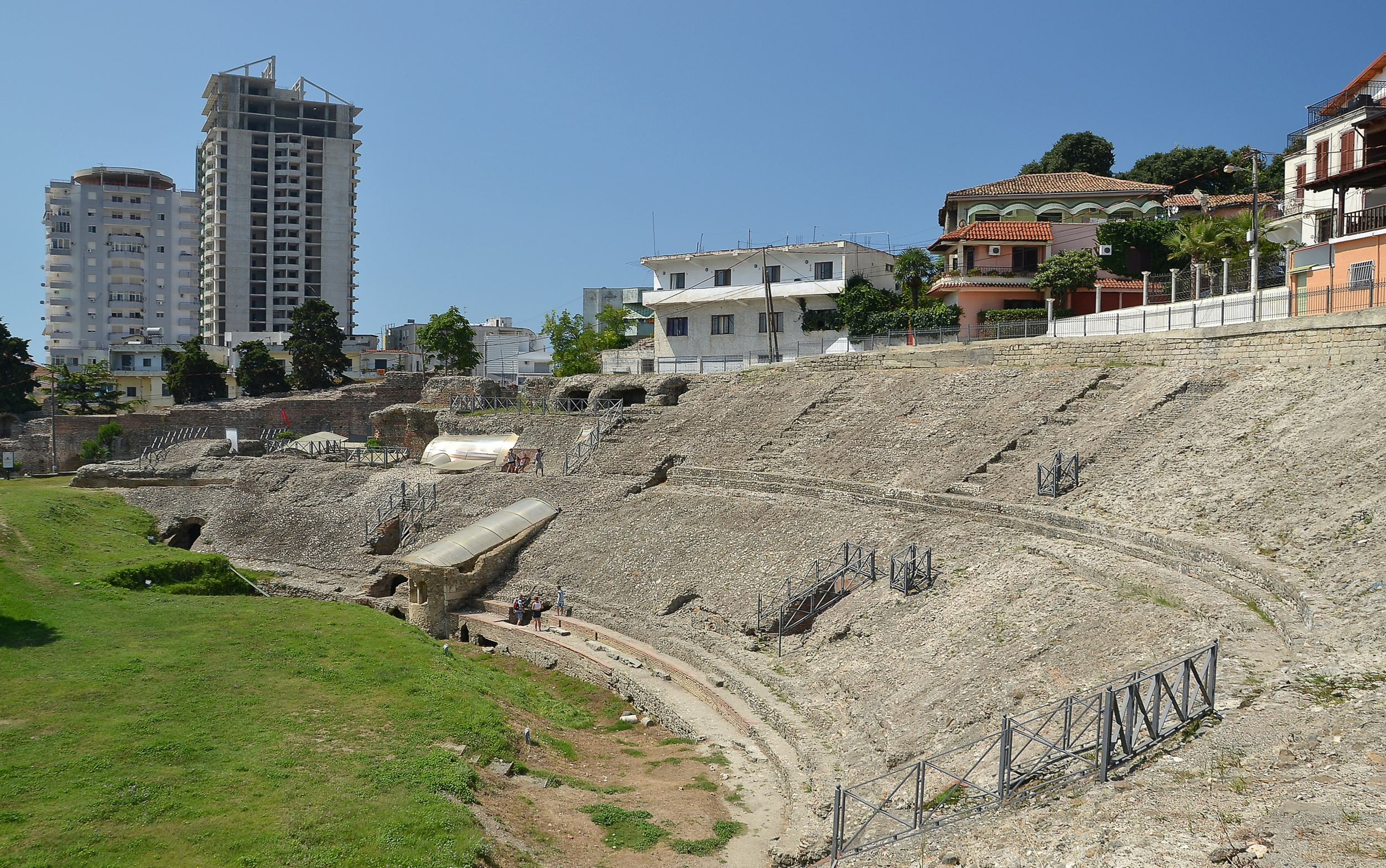
A Durres amphitheatre walking route offers one of Albania’s easiest introductions to layered history. In a single half-day, you can move from a Roman arena beneath the modern city to remnants of medieval defences, then finish beside the Adriatic. The route is compact, mostly level between major stops, and leaves room for a relaxed coffee or lunch by the water.
Begin at the Durrës Amphitheatre, continue through the historic centre to the Venetian Tower and surviving castle walls, then turn towards Vollga Promenade. The sea-facing steps at Sfinksi make a fitting final stop. Wear comfortable shoes, as the amphitheatre includes uneven surfaces and steps, and bring sun protection for the exposed waterfront.
Continue planning with Things to Do in Durres: A Guide to the Best Places to Visit in Albania's Second-Largest City.
The half-day route at a glance
This walk follows the natural shape of central Durrës rather than trying to tick off every sight in town. The Roman amphitheatre provides the strongest historical opening. From there, the old centre reveals traces of the city’s later Byzantine, Venetian and Ottoman chapters.
- Durrës Amphitheatre: the essential first stop and the route’s main historic highlight.
- Fatih Mosque: a brief, respectful detour in the central streets.
- Venetian Tower and castle walls: a quick look at Durrës as a fortified port city.
- Vollga Promenade: the easy transition from the historic core to the sea.
- Sfinksi: a modern stepped landmark with broad Adriatic views.
The core walk does not need a rigid timetable. Give the amphitheatre the most attention, pause briefly around the tower, then let the waterfront set the pace. That balance keeps the route enjoyable rather than rushed.
Begin with the Durrës Amphitheatre
The Durrës Amphitheatre is the reason to start early and the landmark that gives this itinerary its focus. Built in the 2nd century during the Roman period, it once held large crowds for public spectacles. Today, its partially excavated form feels especially striking because modern Durrës grew around it.
Approach the site with time to look beyond the arena itself. The visible tiers, passageways and curved structure offer a clear sense of its scale, even where excavation remains incomplete. It is not a polished, fully reconstructed monument, and that is part of its appeal. You are seeing a major ancient site embedded within a living port city.
Look for the late-antique chapel
One of the amphitheatre’s most important details lies in its later history. A chapel was created within the structure in late antiquity, and its mosaics reveal how the building changed after the Roman spectacles had ended. This small religious space gives the site a deeper story than its arena alone suggests.
Take care on the steps and rougher ground. The terrain is part of the archaeological experience, but it is less forgiving than a smooth museum floor. Access arrangements can change, so confirm site access before making the amphitheatre the centrepiece of your day.

Through the old centre: mosque, walls and Venetian Tower
Leaving the amphitheatre, make your way through the nearby central streets. This section is short, but it adds several centuries to the route. Durrës was an important Adriatic city long after Rome, and its defensive remains help explain why so many powers valued it.
A brief pause at Fatih Mosque
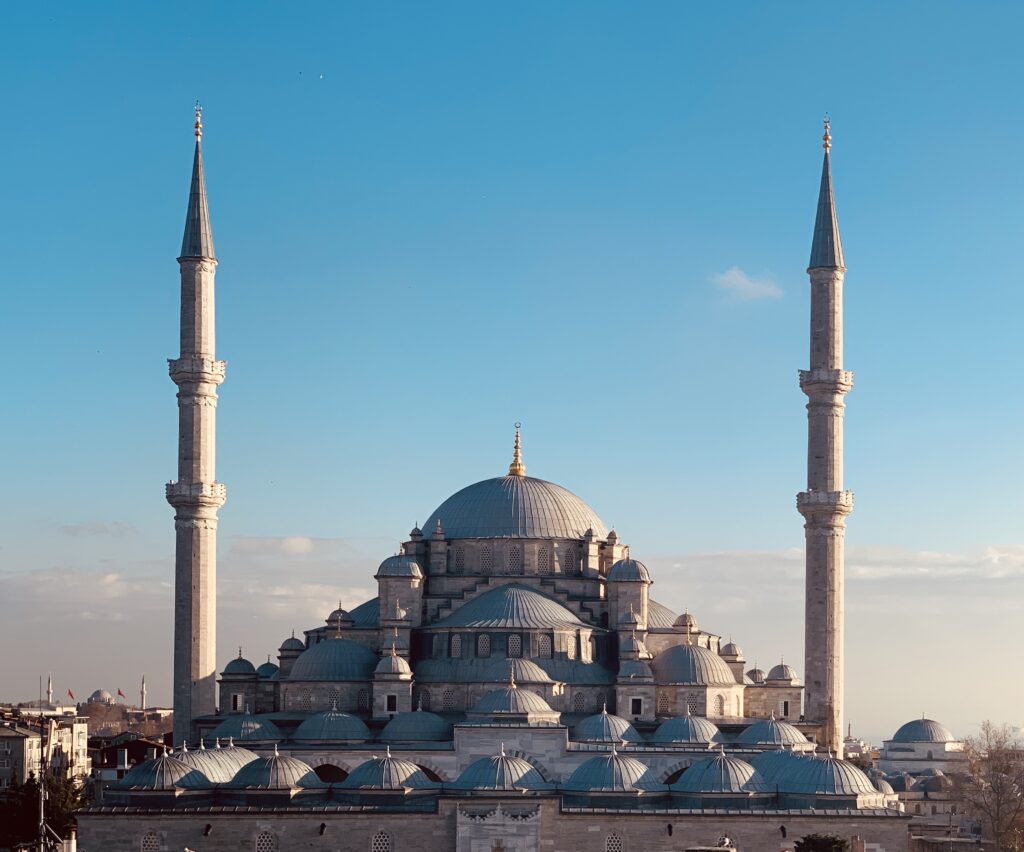
The Fatih Mosque brings an Ottoman-era note to the walk. Its central location makes it an easy stop while moving between the amphitheatre and the fortifications. Even a view from outside adds contrast to the Roman and medieval remains nearby.
As with any active religious site, dress modestly and be considerate of worshippers. The building works best here as a quiet point of orientation, not as a long detour.
See Durrës as a defended city
Next, head towards the Venetian Tower of Durrës and the remaining sections of the castle walls. The tower is one of the clearest visual reminders that Durrës was not only an ancient settlement, but also a strategic coastal stronghold. Its history reflects the city’s Byzantine foundations and later Venetian rebuilding.
The tower stands beside the central pedestrian area, so it is easy to include without disrupting the route. Do not plan the day around entering it, however. Its value lies in seeing the exterior and understanding its place in the old defensive circuit.
Nearby wall fragments deserve a few minutes as well. Their late-antique origins and later reconstructions show how long Durrës needed to protect its harbour and urban core. These remains are not an extensive castle complex; treat them as telling pieces of a much larger fortified past.
Vollga Promenade: the route opens onto the Adriatic
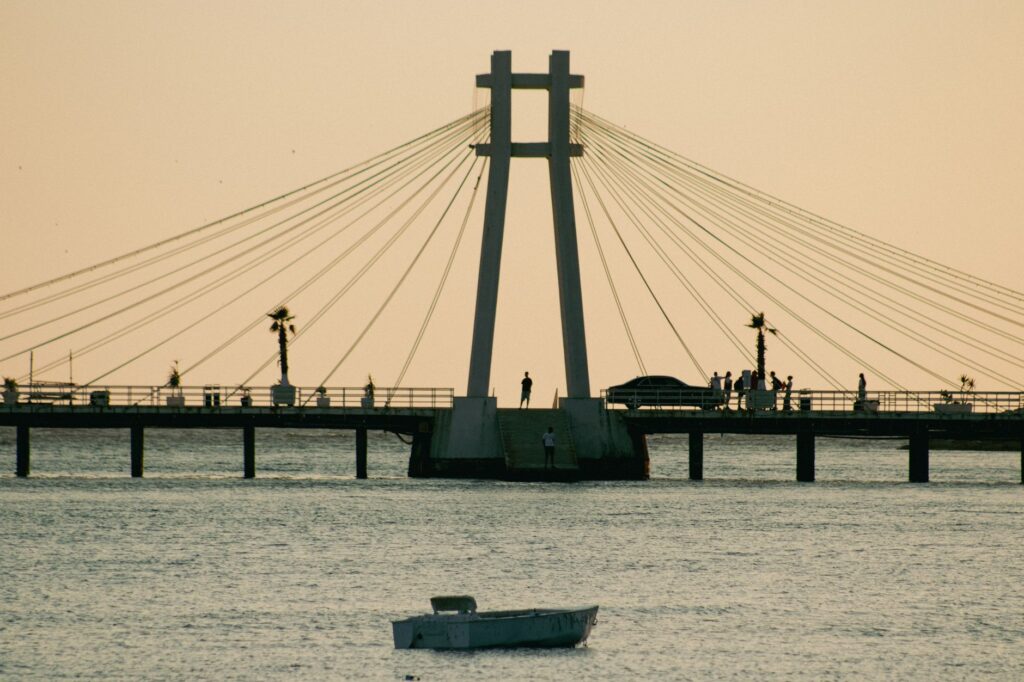
From the old centre, continue towards Vollga Promenade. This is where the itinerary shifts in mood. Stone, walls and narrow streets give way to open water, sea air and a broad walking route along the coast.
Vollga is ideal for a gentle stroll rather than a destination that demands a checklist. Cafés line parts of the waterfront, and the views reach across the Adriatic. After the concentrated history of the first half of the walk, the promenade gives Durrës room to breathe.
Conditions along the seafront naturally vary by season and weather. On a clear day, linger over the view. If wind or heat makes the walk less appealing, shorten the promenade section and stop at a waterfront café instead.
Finish at Sfinksi
Sfinksi is the promenade’s most distinctive modern landmark. These broad, stepped structures face the sea and serve as an informal gathering place for locals and visitors. They are a simple but effective finale, especially if you want to sit for a while and watch the waterfront activity.
The contrast is part of the pleasure. Earlier, you stood inside a Roman arena and beside medieval walls. Here, contemporary public space frames the same coastline that made Durrës important for centuries.
Optional additions: museum, beach and lunch
If you want more archaeological context, consider the Durrës Archaeological Museum near the waterfront. Its collection helps place the amphitheatre within the wider story of ancient Dyrrachium, the Roman-era city that preceded modern Durrës. It is best treated as an extension, not a required part of a half-day walk, and you should check access before relying on a visit.
For a longer coastal finish, continue beyond the central promenade towards Currila Beach. This is a better choice if your priority is sea views and a leisurely meal rather than more monuments. It also works well if you have completed the historic core quickly and want to stretch the outing into the afternoon.
Otherwise, end around Vollga for lunch. A table near the promenade lets you keep the itinerary’s main rhythm intact: ancient Durrës in the morning, then the Adriatic at your side.
Simple route logistics
Keep this walk focused on its four signature experiences: the amphitheatre, Venetian Tower, Vollga Promenade and Sfinksi. They sit in a logical sequence, with short urban stretches between them. There is little reason to backtrack unless you are returning to a particular café or transport point.
The amphitheatre is the one stop that benefits most from earlier attention, both for calm pacing and for giving the site the time it deserves. After that, the route becomes progressively more relaxed. The old-town landmarks provide context, while the waterfront supplies the reward.
This is not a route built around collecting every attraction in Durrës. It is a clear introduction to what defines the city: Roman ambition, fortified history and an enduring relationship with the Adriatic.