Bosnia and Herzegovina Travel Guide – Essential Information for Visitors
Bosnia and Herzegovina is one of the most culturally layered destinations in the Balkans,
shaped by centuries of Ottoman, Austro-Hungarian, and Slavic influences.
From historic old towns and riverside cities to dramatic mountains and traditional villages,
the country offers authentic experiences, warm hospitality, and outstanding value for travelers.
Essential Country Facts
- Official Name: Bosnia and Herzegovina
- Capital: Sarajevo
- Currency: Bosnia and Herzegovina Convertible Mark (BAM)
- Time Zone: Central European Time (GMT +1)
- Official Languages: Bosnian, Croatian, Serbian
- Emergency Number: 112
- UNESCO Sites: Old Bridge of Mostar; Mehmed Paša Sokolović Bridge (Višegrad)
Where Is Bosnia and Herzegovina?
Bosnia and Herzegovina is located in Southeast Europe on the Balkan Peninsula.
It borders Croatia to the north, west, and south, Serbia to the east,
and Montenegro to the southeast. The country also has a short Adriatic coastline
at the town of Neum.
Why Visit Bosnia and Herzegovina?
- One of Europe’s most culturally diverse and historically rich destinations
- Exceptional value for money compared to neighboring EU countries
- Authentic local life and less mass tourism
- Stunning rivers, waterfalls, mountains, and medieval towns
Best Time to Visit Bosnia and Herzegovina
- May–June: Pleasant weather, ideal for sightseeing and nature
- July–August: Warm summers, festivals, busy cities like Mostar
- September–October: Mild temperatures, fewer crowds, autumn colors
- December–March: Winter sports in mountain resorts such as Jahorina
Main Cities & Key Destinations
Sarajevo
The capital city blends Ottoman bazaars, Austro-Hungarian architecture,
religious landmarks, and vibrant café culture.
Mostar
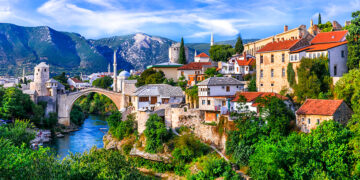
Famous for the UNESCO-listed Stari Most bridge and charming old town along the Neretva River.
Blagaj
Known for the Dervish monastery located at the source of the Buna River.
Travnik
Former Ottoman capital with fortresses, mosques, and traditional houses.
Getting to & Around Bosnia and Herzegovina
Airports
- Sarajevo International Airport (SJJ)
- Mostar International Airport (OMO)
- Banja Luka International Airport (BNX)
Transportation
- Buses are the main form of intercity transport
- Rail routes are scenic but limited
- Car rental recommended for rural areas and waterfalls
Local Cuisine & Food Culture
Bosnian cuisine is deeply influenced by Ottoman traditions.
Popular dishes include ćevapi, burek, begova čorba,
dolma, and traditional sweets like baklava.
Coffee culture plays a central role in daily life.
Safety, Health & Practical Tips
- Generally safe for tourists
- Be aware of marked minefields in remote rural areas
- Cash (BAM) widely used; cards accepted in cities
- Tipping is appreciated but modest (5–10%)
How Long to Stay
- 3–4 days: Sarajevo + Mostar
- 7 days: Sarajevo, Mostar, Blagaj, Travnik
- 10–14 days: In-depth exploration including mountains and rivers
Frequently Asked Questions
Is Bosnia and Herzegovina part of the European Union?
No. Bosnia and Herzegovina is not an EU member, but it is an EU candidate country.
Do I need a visa to visit Bosnia and Herzegovina?
Citizens of the EU, UK, USA, Canada, and many other countries can enter visa-free
for up to 90 days.
Is Bosnia and Herzegovina safe for tourists?
Yes. The country is generally safe for travelers, especially in tourist areas.
Basic precautions are sufficient.