
Pristina Travel Guide for First-Time Visitors
Discover Pristina’s bold architecture, café culture, Ottoman traces and independence-era landmarks with practical ideas for a rewarding first visit.

This Pristina travel guide introduces a capital that rewards curiosity more than checklist sightseeing. Kosovo’s largest city is youthful, energetic and full of contrasts. Ottoman-era buildings stand close to socialist modernism, while monuments from the independence era shape the streetscape.
Pristina is not a polished old-town destination, and that is part of its appeal. Its character lies in the layers: busy café terraces, striking concrete architecture, small historic corners and candid reminders of a difficult recent past. Two nights give most first-time visitors enough time to understand the city, slow down over coffee and use it as a base for wider Kosovo.
Continue planning with Best Day Trips from Pristina and Kosovo.
Why Pristina feels different
Pristina became Kosovo’s capital after the country declared independence in 2008, following the conflict of the late 1990s and a period of international administration. This history remains visible, but the city is far from a museum of the past. Students, young professionals and families give its central streets a sociable, forward-looking rhythm.
The Newborn Monument is the clearest symbol of that identity. Unveiled in 2008, it marked Kosovo’s declaration of independence and has been repainted in changing designs over the years. It is a central photo stop, but it also offers a useful introduction to how Pristina sees itself: resilient, contemporary and still defining its future.
Nearby, the vast facade of the Grand Hotel Pristina recalls a different chapter. The building is one of the city’s most recognisable socialist-modernist landmarks and faces Mother Teresa Square. Its imposing form will not suit every taste, yet it helps explain why Pristina feels so visually distinct from the region’s more traditional capitals.
On Bill Clinton Boulevard, the Bill Clinton Statue is another unexpected landmark. It reflects Kosovo’s gratitude for the United States’ role during the 1999 conflict and its aftermath. The statue is worth seeing not because it is grand art, but because it makes the city’s international ties tangible.
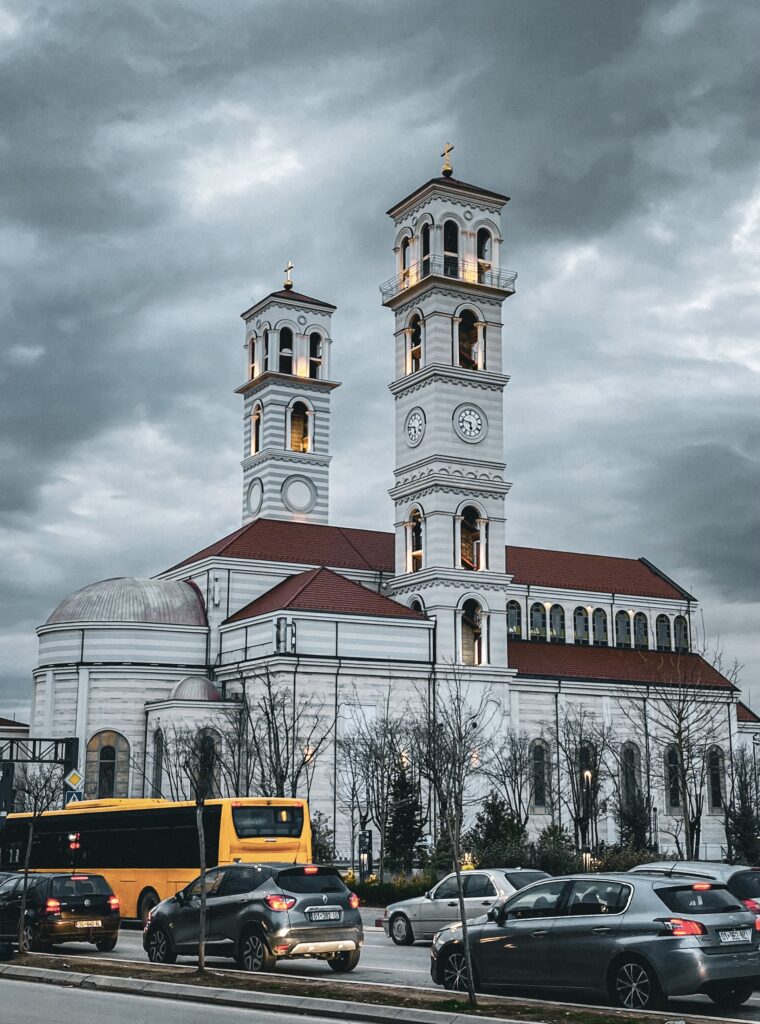
A first-day walk through central Pristina
Mother Teresa Square and the city’s daily rhythm
Mother Teresa Square is the natural place to get your bearings. This pedestrianised central avenue is where Pristina comes out to stroll, meet friends and linger at cafés. It has a lived-in feel rather than a formal grandeur, and that makes it ideal for your first unhurried walk.
Take time to sit outside with a coffee and watch the city move around you. Café culture is central to daily life in Pristina. Conversations stretch over espresso, macchiato and Turkish-style coffee, often long after the cup is empty.
From the square, central landmarks sit within an easy walk. The Newborn Monument is close by, while Bill Clinton Boulevard leads towards the cathedral district. This compact geography means you can cover the essential sights without turning the day into a rushed march.
The National Library of Kosovo
The National Library of Kosovo is Pristina’s defining architectural sight. Designed by Croatian architect Andrija Mutnjaković, the building is famous for its cluster of white domes and its unusual metal lattice exterior. Some visitors find it futuristic; others find it severe. Almost nobody finds it forgettable.
Its appearance reflects the late-modernist ambitions of the Yugoslav period, yet it now belongs firmly to Kosovo’s own cultural landscape. The library stands near the university campus, where the atmosphere becomes especially youthful. Even if you only admire it from outside, allow time to walk around the building and notice how its shapes change from different angles.
The Cathedral of Saint Mother Teresa
The Cathedral of Saint Mother Teresa provides a modern counterpoint to the library. This Roman Catholic cathedral is a prominent part of contemporary Pristina, despite Kosovo’s Muslim-majority population. Its presence speaks to the city’s mixed cultural history and its place within the wider Balkans.
The bell tower offers broad views over Pristina when access is available. Check locally before planning a climb, as access can vary. Even from ground level, the cathedral is a useful landmark and an easy addition to a walk along Bill Clinton Boulevard.
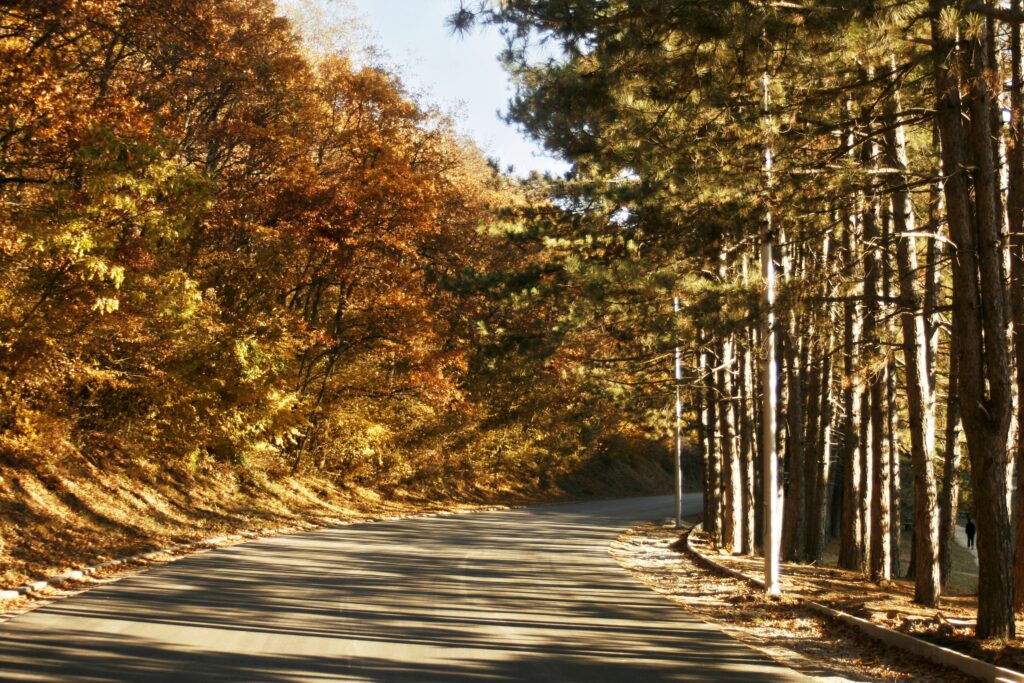
Ottoman-era Pristina in the old town
Pristina’s historic fabric is modest compared with cities such as Prizren, but a few surviving sites reveal its Ottoman past. The most rewarding is the Ethnological Museum, also known as Muzeu Etnologjik, housed in the restored Emin Gjiku complex.
This handsome Ottoman-era compound gives a more intimate view of Kosovo’s traditional domestic life than the modern city centre can offer. Its rooms, courtyard and folk-culture displays explore family customs, clothing, crafts and household life. The museum is especially valuable for first-time visitors because it adds texture to the country’s history beyond politics and architecture.
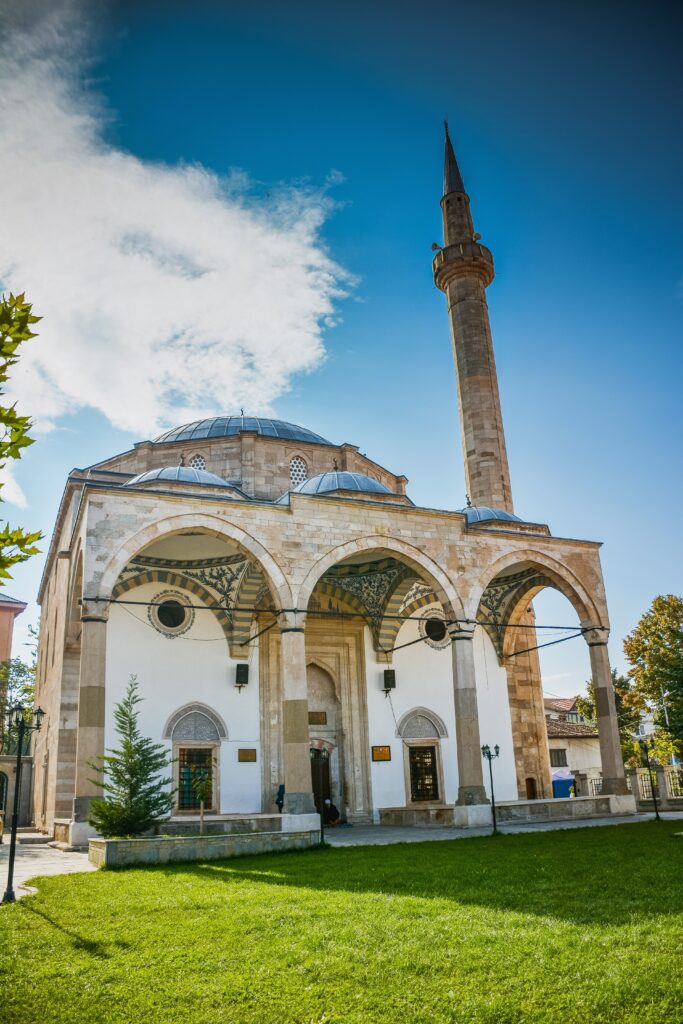
Nearby, the Imperial Mosque is an important surviving religious building with a foundation dating to the 15th century. It remains an active mosque, so dress respectfully and be mindful of worshippers. Its calm interior and traditional form offer a striking contrast to the concrete and glass of central Pristina.
If you are wandering through this area, you may also pass the Bazaar Mosque. These smaller traces are worth noticing, but do not expect an intact historic quarter. Pristina’s old town survives in fragments, which makes the Emin Gjiku complex all the more meaningful.
Bold buildings and the weight of recent history
Architecture is one of the best reasons to explore Pristina on foot. The National Library is the headline act, but the Grand Hotel and other large civic buildings reveal the scale and confidence of Yugoslav urban planning. Look beyond whether you find them beautiful. They show how the city changed rapidly during the 20th century.
Pristina also has memorials that honour those affected by the 1998–99 Kosovo conflict. The Heroinat Memorial, dedicated to women who endured wartime sexual violence, is one of the most affecting. It is not a sightseeing attraction in the conventional sense. Instead, it asks visitors to approach Kosovo’s recent history with care and respect.
A short visit cannot explain Kosovo’s political complexity in full. However, these public landmarks offer a clear starting point. They show why memory, identity and international relationships remain part of the city’s everyday landscape.
Coffee, food and Pristina’s social side
Pristina is at its best when you leave room for unplanned stops. Mother Teresa Square is the most obvious place to settle into café life, but the city’s social energy extends well beyond the pedestrian centre. The Kurrizi district is another popular area for cafés, casual meals and evening conversation.
Look for Balkan and Albanian-influenced dishes such as flija, a layered pastry-like dish often served with dairy products, or grilled meats with fresh salads and bread. Bakeries are useful for quick savoury snacks, while cafés provide an easy refuge between sights.
Meals in Pristina often feel informal and communal. Choose places that seem busy with local groups, then take your time. The city is less about formal fine dining than shared tables, strong coffee and a relaxed willingness to linger.
Make time for Germia Park and the Kosovo Museum
For a break from the centre, head east to Germia Park. This large wooded area is one of Pristina’s favourite recreational escapes. Its paths and open spaces offer a welcome change from traffic, apartment blocks and busy pavements.
Germia is particularly appealing if you are spending more than one day in the city. Go for a walk, join local families enjoying the outdoors, or simply take a slower afternoon. It is a reminder that Pristina’s life extends beyond its central monuments.
The Kosovo Museum is another worthwhile stop for visitors planning to travel onward. Housed in an Austro-Hungarian-era building near the centre, it presents archaeological and historical material that helps place Kosovo within a much longer Balkan story. Its displays can provide helpful background before visiting historic towns, monasteries or archaeological sites elsewhere in the country.
Practical notes for a first visit
- Give Pristina two nights: one full day covers the central sights, while a second allows time for Germia Park, museums or a more relaxed city rhythm.
- Bring euros: Kosovo uses the euro, though it is not part of the European Union or the Schengen Area. Carry some cash for small purchases and local buses.
- Dress appropriately at religious sites: The Imperial Mosque is active, so modest clothing and respectful behaviour matter.
- Confirm access before visiting: Museum entry arrangements and cathedral tower access may change.
- Check border implications: Kosovo’s entry rules and border crossings can affect plans to continue into Serbiathe requirements for your own passport and itinerary before travelling.
Using Pristina as a base for Kosovo
Pristina works well as an arrival point and a base for exploring Kosovo. The city is connected by road to other parts of the country, and Pristina International Airport Adem Jashari serves as the main air gateway. The bus station is useful for independent onward travel, though it is wise to confirm routes locally.
Save the country’s major landscapes, monasteries and traditional old towns for day trips or longer stays beyond the capital. Pristina itself gives you the context first: an introduction to Kosovo’s modern identity, cultural layers and everyday energy. Once you have walked its squares, sat at its cafés and seen its bold landmarks, the rest of the country becomes easier to read.
Recommended hotels in Pristina
A smaller selection of better-rated hotels with established review history and Agoda booking links.

Selection favors established hotels with stronger ratings, review volume and usable imagery. Final rates and availability are shown by Agoda.