
Belgrade Fortress Kalemegdan: Visitor Guide
Explore Belgrade Fortress and Kalemegdan through its citadel walls, landmark viewpoints, Ottoman gates, memorials and evocative Lower Town churches.
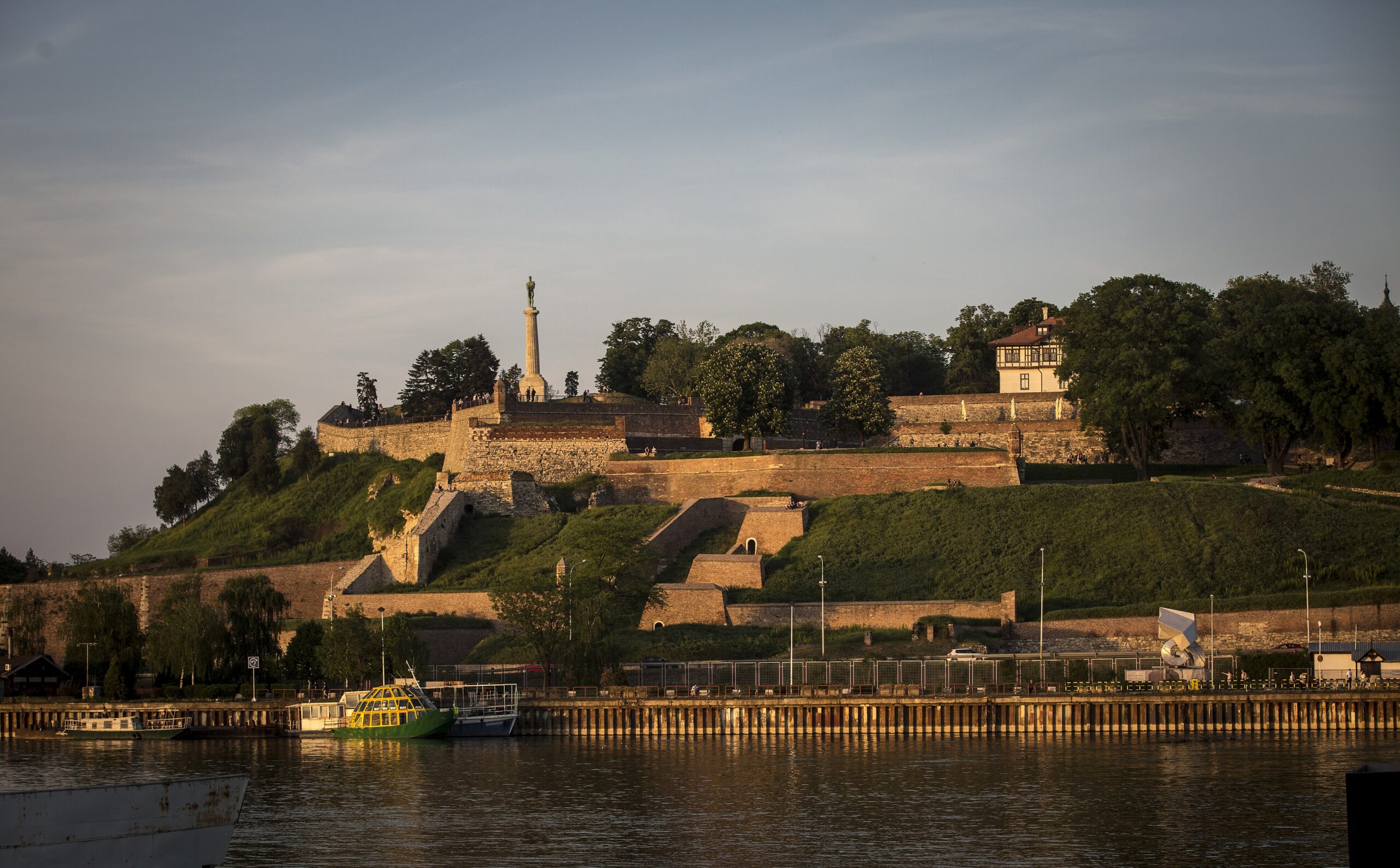
The belgrade fortress is the best place to understand why Serbia’s capital stands where it does. Its ramparts rise above the meeting point of the Sava and Danube, a position that brought trade, power and repeated conflict for centuries. Today, the fortress and surrounding Kalemegdan Park form one vast, walkable historic landscape rather than a single museum-like monument.
Come for the views, certainly, but give the site time. Roman Singidunum, medieval Serbia, Ottoman rule and Habsburg military engineering all left their mark here. Some structures have been rebuilt or heavily altered after warfare, yet that complicated fabric is part of the fortress’s story.
Continue planning with Best Things to Do in Belgrade and Best Belgrade Tours & Experiences.
Why Belgrade Fortress matters
Belgrade Fortress occupies one of the Balkans’ most strategic natural positions. From its high ground, defenders could watch the Sava flowing into the Danube and control approaches from the Pannonian Plain, Central Europe and the Balkan interior. The first significant fortified settlement here was Roman Singidunum, whose location later shaped every version of Belgrade that followed.
The complex is broadly divided into the Upper Town, where the citadel and major defensive works stand, and the Lower Town, which descends towards the rivers. This is not a preserved medieval castle in the neat western European sense. It is a palimpsest: walls, gates and towers belong to different eras, and many have been damaged, reconstructed or adapted.
That layered character gives a visit its appeal. You can move from an Ottoman gate to a medieval tower, then look across Habsburg-influenced ramparts towards a riverfront that was once a military frontier. Even those with little interest in military history usually find the setting compelling.
Enter through Kalemegdan and follow the ridge
For a first visit, approach from central Belgrade along Knez Mihailova Street. Its pedestrian route leads naturally towards the park entrance and Stambol Gate, an Ottoman-era gateway that marks the transition from city streets to the open grounds of Kalemegdan.
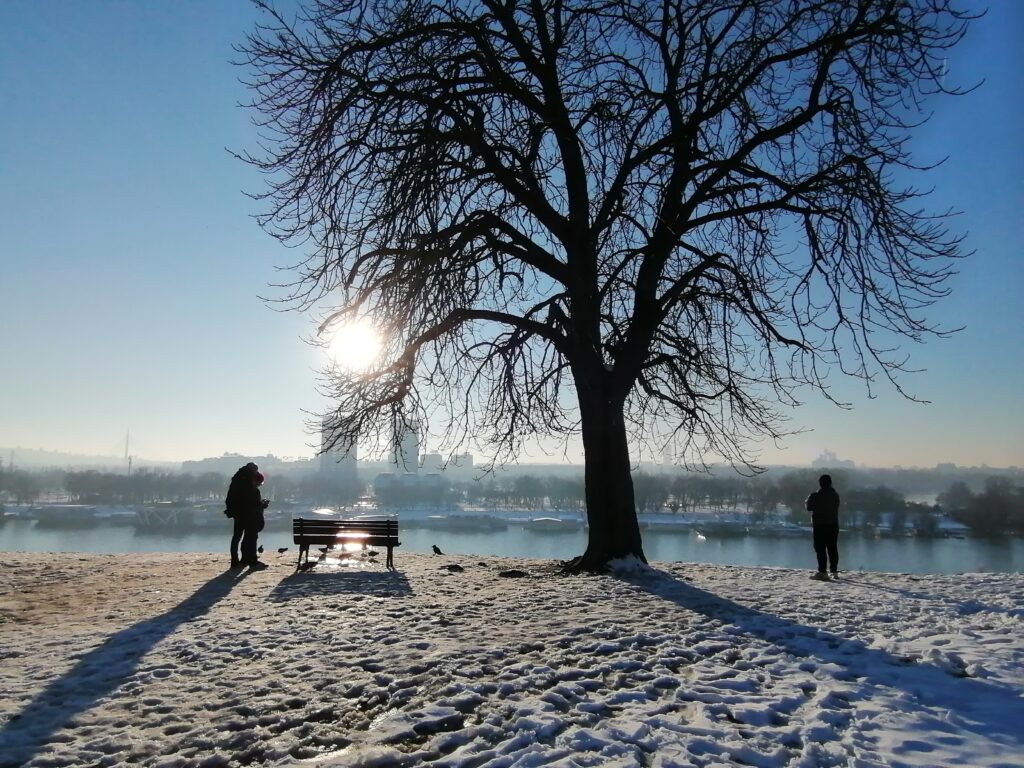
Kalemegdan began as a public park in the 19th century, after the fortress ceased to serve its former defensive purpose. Mature trees, broad paths and memorials now soften the former military ground. Yet the park never hides the site’s original logic: the land falls sharply away towards the rivers, while the central ridge directs you towards the citadel.
A route with a sense of place
Walk through the park at an unhurried pace, keeping the river views in mind as your orientation point. The best route gradually moves downhill: take in the main terraces and monument first, explore the Upper Town defenses, then continue through the gates into the Lower Town. This direction helps the fortress reveal its geography instead of turning the visit into a scatter of separate stops.
Paths can be uneven, with steps, cobbles and exposed sections near the walls. Comfortable shoes make a real difference. The complex is also far larger than it appears from central Belgrade, so allow time to pause rather than treating it as a brief photo stop.
Victor Monument and the great river outlook
The fortress’s most recognisable landmark is the Victor Monument, known locally as Pobednik. Created by the Croatian sculptor Ivan Meštrović and installed in 1928, it commemorates Serbian victories in the Balkan Wars and the First World War.
The monument depicts a nude male figure holding a sword and a pigeon. Its simple, upright form is striking against the sky, but its placement matters as much as the sculpture itself. Victor faces towards the broad confluence, turning a memorial into a statement of vigilance, survival and national confidence.
Pobednik Plateau
The terrace around the monument, often called Pobednik Plateau, is among Belgrade’s essential viewpoints. Below, the Sava joins the Danube in a wide sweep of water. The opposite banks and distant flatlands make Belgrade feel unusually open for a capital city.
It is especially atmospheric later in the day, when the low light catches the rivers and fortress stone. However, the view is worth seeing at any time because it explains the whole site. From here, the strategic advantage of the cliff-top position becomes instantly clear.
Take a moment to look beyond the monument rather than photographing it and moving on. The rivers were highways, borders and invasion routes. Their confluence is the reason the fortress endured so many sieges and transformations.
Upper Town: gates, walls and the citadel
The Upper Town contains the most concentrated sequence of defenses. Its walls, earthworks and gateways reflect the long shift from medieval warfare to artillery-based fortification. The result can feel complex, but you do not need to identify every masonry phase to appreciate the scale of the place.
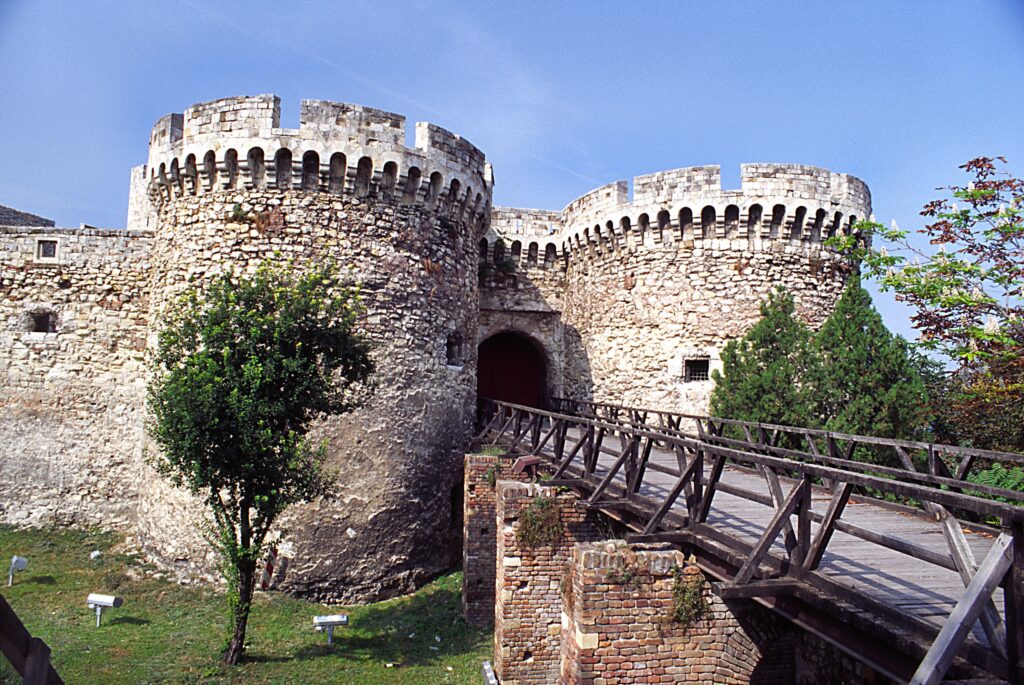
Zindan Gate is the standout stop. This imposing defensive gate, with its twin towers and barbican-like form, makes the fortress’s military purpose tangible. Its name refers to a dungeon, and its heavy stonework feels notably different from the open lawns and promenades of Kalemegdan.
The gate belongs to the Ottoman period, with important 15th-century work associated with the changing defenses of Belgrade. As with much of the fortress, later modifications complicate any simple reading. Still, it offers a vivid sense of how an entrance could become a carefully controlled killing ground rather than a welcoming threshold.
Traces of medieval Belgrade
Continue towards the Lower Town side to spot Despot Stefan Tower. This landmark recalls the early 15th century, when Belgrade became the capital of the Serbian Despotate under Despot Stefan Lazarević. It is one of the clearest reminders that the fortress was once central to a medieval Serbian state, not only an Ottoman or Habsburg border post.
You may also encounter the Roman Well within the fortress grounds. Despite its name, it is not a Roman construction. It belongs to the much later Habsburg period and is best understood as a deep, intriguing engineering feature rather than evidence of ancient Singidunum.
Lower Town: a quieter side of the fortress
The Lower Town has a different mood. The upper ramparts command panoramic views, while this lower section feels more enclosed and contemplative. It is where religious sites, older routes and specialist landmarks sit beneath the main defensive ridge.
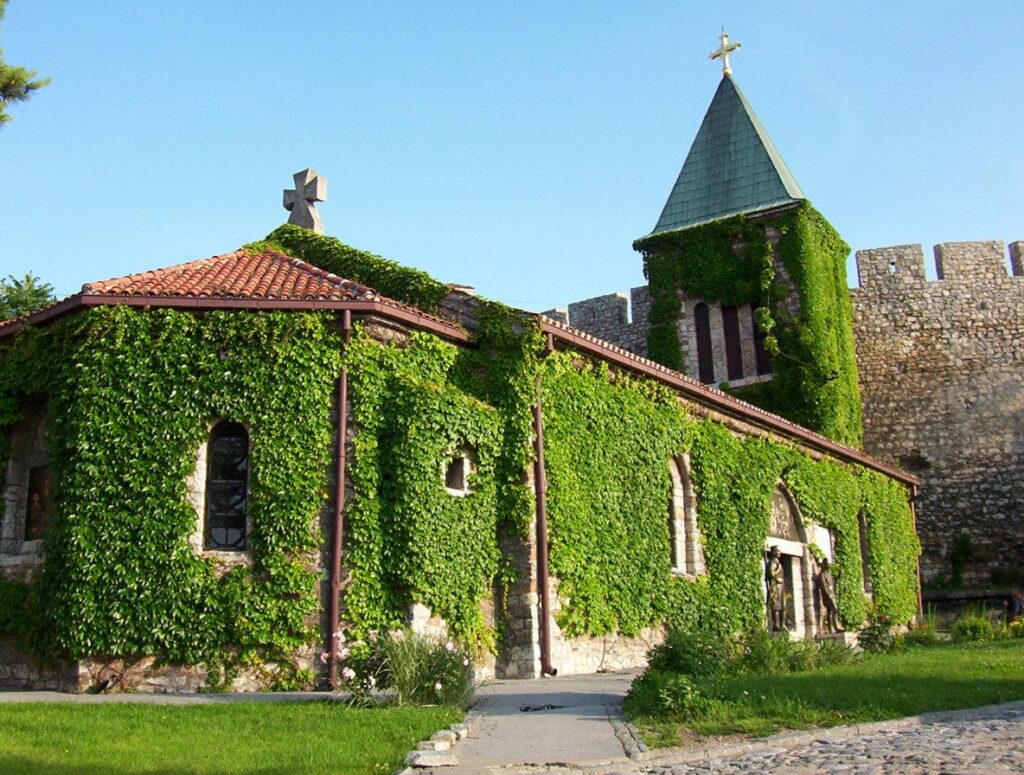
Ružica Church is the key stop here. The modest church stands on the site of earlier sacred buildings and has a long, disrupted history shaped by the fate of the fortress itself. Its present form is closely associated with the period after the First World War.
Inside, look for its unusual chandeliers and fittings made from military materials. The use of shell casings, weapons and other martial elements creates an unsettling but memorable contrast with the church’s devotional setting. It is a small space, yet it brings the human cost of the fortress’s military history into focus.
An Ottoman bath with a new purpose
Nearby, the Belgrade Planetarium occupies a former Turkish bath. It is an unexpected building in the Lower Town and a fine example of how the fortress has been repurposed over time. For many visitors, it is enough to notice its setting and unusual history; those with a particular interest in astronomy or adaptive reuse may wish to investigate access separately.
Further along the riverside defenses stands Nebojša Tower, another optional detour for travelers with extra time. It adds to the sense that the Lower Town once extended far beyond the core citadel, linking river access with a wider defensive system.
The Military Museum: context beyond the walls
The Military Museum, set within the fortress, is a worthwhile addition if you want more than an architectural overview. Its outdoor display of artillery and military vehicles is visible before you enter, immediately reinforcing the fortress setting.
Inside, the collections cover weapons, uniforms and material connected with Serbia’s military history across many periods. The museum can add essential context to a visit, especially if the sequence of Ottoman, Habsburg, Serbian and Yugoslav eras feels difficult to untangle from the walls alone.
It is not necessary for every visitor. Those focused on scenery and a short walk can enjoy the fortress without it. History-minded travelers, however, will find that the museum makes the site’s many military layers more legible.
How to visit Belgrade Fortress well
Treat Kalemegdan Park and Belgrade Fortress as one connected outing. Enter from the city side near Stambol Gate, walk across the park to Victor Monument, explore the Upper Town and Zindan Gate, then descend into the Lower Town for Ružica Church and its quieter surroundings.
- Allow room to wander: the strongest moments often come from an unplanned rampart view or a quiet passage beneath the walls.
- Wear supportive footwear: stone paths, gradients and stairs are part of the experience.
- Read the site in layers: avoid expecting every wall to belong to one era or one ruler.
- Check access details locally: museum, church and specialist-site entry can vary.
- Combine it with central Belgrade: Knez Mihailova Street makes a natural approach, while the fortress offers a powerful counterpoint to the city’s cafés and shopping streets.
Belgrade Fortress is not simply the city’s most famous viewpoint, although its views are exceptional. It is the physical record of Belgrade’s position between worlds: Roman frontier town, medieval capital, Ottoman stronghold, Habsburg target and modern public park. Walk it slowly, and the confluence below begins to explain the city above.
Tours & experiences for Belgrade
Popular experiences with current pricing and traveler ratings.
 Free cancellation
Northern Serbia: Sremski Karlovci and Novi Sad Full-Day Tour from Belgrade
 Free cancellation
From Belgrade: Novi Sad and Sremski Karlovci Tour
 Free cancellation
From Belgrade: Eastern Serbia Jewels
 Free cancellation
Belgrade Underground Tour w/ Sparkling Wine Along the River
 Free cancellation
Iron Gate NP Tour with 1-hour speedboat ride + 2 viewpoints
ToursToBalkans may earn a commission when you book through our partner links.


