Greece Travel Guide – Essential Information for Visitors
Greece is one of the world’s most iconic travel destinations, offering a unique combination of
ancient history, Mediterranean culture, world-class beaches, islands, gastronomy, and vibrant modern cities.
With thousands of islands and a mainland rich in heritage, Greece appeals to first-time visitors
and seasoned travelers alike.
Essential Country Facts
- Official Name: Hellenic Republic
- Capital: Athens
- Currency: Euro (€)
- Time Zone: Eastern European Time (GMT +2)
- Official Language: Greek
- Main Cities: Athens, Thessaloniki, Patras, Heraklion, Larissa
- Main Airports: Athens (ATH), Thessaloniki (SKG), Heraklion (HER), Rhodes (RHO)
- UNESCO Sites: Acropolis of Athens, Meteora, Delphi, Mystras, Olympia
Where Is Greece?
Greece is located in southeastern Europe, at the crossroads of Europe, Asia, and Africa.
It borders Albania, North Macedonia, Bulgaria, and Turkey, and is surrounded by the Aegean,
Ionian, and Mediterranean Seas. The country includes a mountainous mainland and more than 6,000 islands,
of which around 200 are inhabited.
Why Visit Greece?
- World-renowned ancient history and archaeological sites
- Beautiful islands with diverse landscapes and cultures
- Mediterranean cuisine considered among the best in the world
- Warm climate and long summer season
- Excellent combination of culture, nature, and leisure
Best Time to Visit Greece
- April–June: Ideal for sightseeing, islands, and mild temperatures
- July–August: Peak summer season, beaches and festivals
- September–October: Warm sea, fewer crowds, excellent value
- November–March: Best for city breaks and cultural travel
Main Cities & Key Destinations
Athens
The historic capital and cultural heart of Greece, home to the Acropolis,
world-class museums, vibrant neighborhoods, and modern city life.
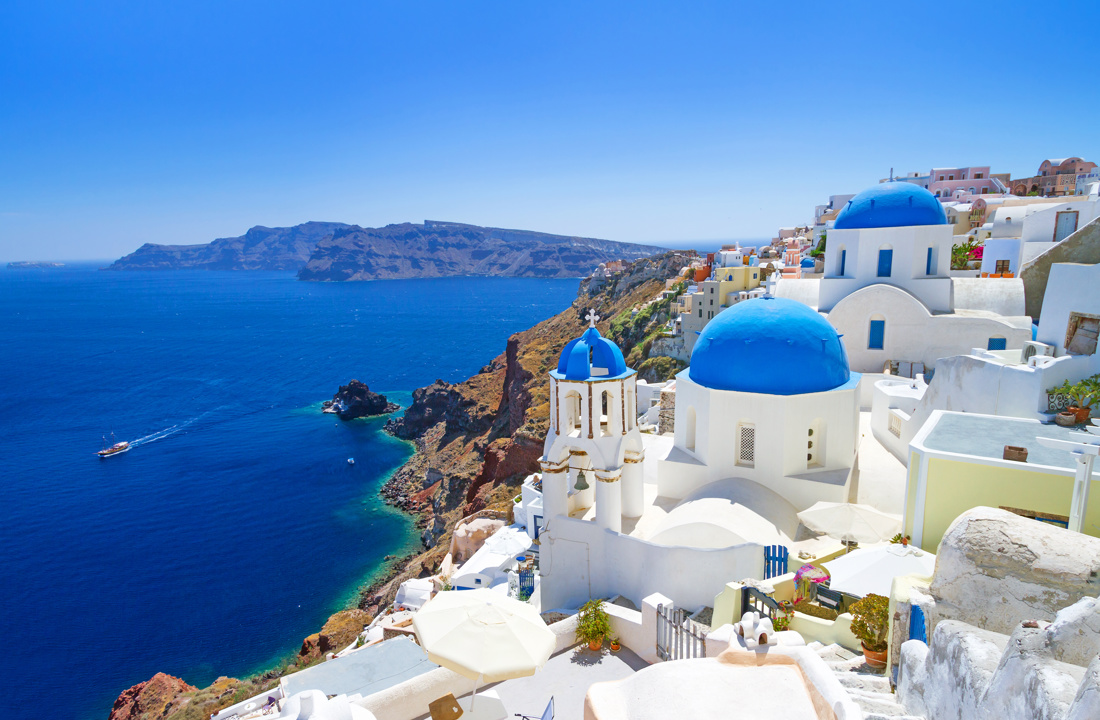
Santorini
Famous for its volcanic landscape, whitewashed villages, sunsets,
and luxury experiences overlooking the Aegean Sea.
Crete
Greece’s largest island, offering ancient sites, mountain villages,
beaches, and strong local traditions.
Thessaloniki
A lively northern city known for Byzantine heritage, gastronomy,
nightlife, and seaside promenades.
Other Must-See Places
- Meteora: Monasteries perched on dramatic rock formations
- Delphi: One of the most important ancient religious sites
- Rhodes: Medieval old town and island beaches
- Mykonos: Cosmopolitan island with vibrant nightlife
- Peloponnese: Ancient cities, castles, and scenic coastlines
Getting to & Around Greece
Air Travel
- Athens International Airport (ATH) – main gateway
- Numerous international airports on islands during summer
Transportation
- Extensive ferry network connecting islands
- Buses and trains connect major mainland cities
- Car rental recommended for islands and rural areas
Greek Cuisine & Food Culture
Greek cuisine is based on fresh ingredients, olive oil, herbs, vegetables, seafood,
and grilled meats. Popular dishes include moussaka, souvlaki, gyros, Greek salad,
fresh seafood, and regional cheeses, accompanied by excellent local wines.
Safety, Health & Practical Tips
- Generally very safe destination for travelers
- Tap water is safe on the mainland; bottled water preferred on some islands
- Cards widely accepted; cash useful in small villages
- Respect archaeological sites and local customs
How Long to Stay in Greece
- 4–5 days: Athens or a single island
- 7–10 days: Athens + one or two islands
- 14+ days: Mainland highlights and multiple islands
Frequently Asked Questions
Do I need a visa to visit Greece?
Greece is part of the Schengen Area. Many travelers can enter visa-free for stays of up to 90 days.
Is Greece expensive?
Costs vary by destination and season. Major islands and summer months are more expensive,
while mainland regions and shoulder seasons offer excellent value.
Is English widely spoken in Greece?
Yes. English is widely spoken, especially in tourist areas and major cities.