
The Railway Museum and Savamala: A Different Half-Day Walk in Belgrade
Follow Belgrade’s railway past through Savamala’s grand façades, riverfront views, and overlooked streets on a flexible half-day urban walk.
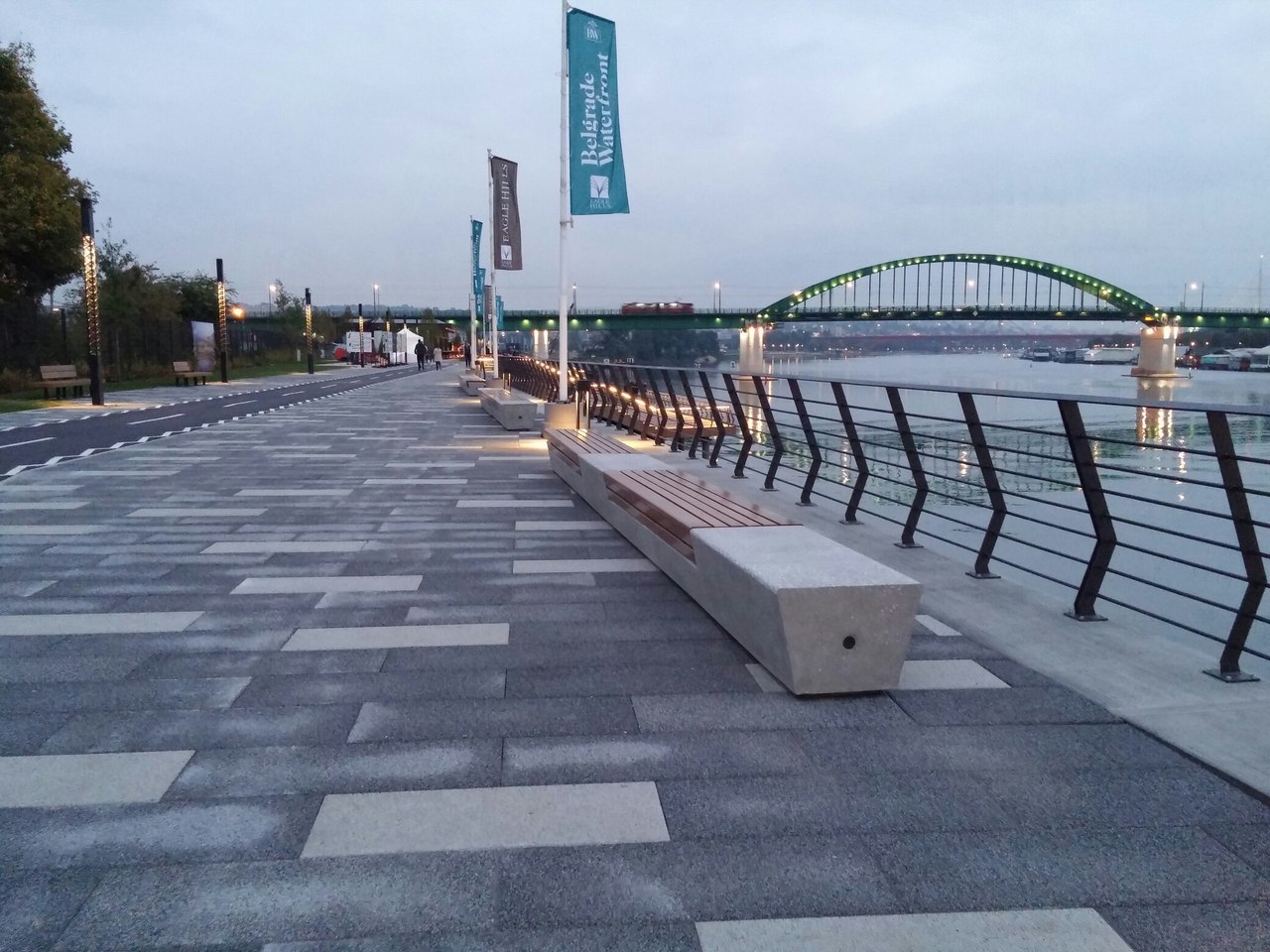
The Savamala Belgrade walking route offers a different side of the Serbian capital. Rather than following the busy central shopping streets, this half-day walk traces the city’s old gateway by rail, its former merchant quarter, and the changing banks of the Sava River.
It is a walk for travellers who enjoy architecture, urban history, and contrasts. You will move from the imposing old railway station to weathered warehouses, ornate commercial buildings, and a modernised riverfront. Allow time to look up: many of Savamala’s best details sit above street level.
Continue planning with Best Things to Do in Belgrade and Where to Stay in Belgrade: Best Areas for Visitors.
Why Savamala rewards a closer look
Savamala lies on the slope between central Belgrade and the Sava River. For much of the late 19th and early 20th centuries, this was a vital commercial district. Railways, river trade, warehouses, hotels, banks, and workshops all shaped its streets.
That history gives the neighbourhood a character unlike polished Knez Mihailova. Some buildings remain grand, while others show decades of hard use. New development along the waterfront has also changed the setting. The appeal lies in seeing these layers together rather than expecting a perfectly preserved historic quarter.
This route covers roughly 3 to 5 kilometres, depending on detours. It works well as a relaxed half-day outing, especially if you stop for the museum and spend time along the river.
Begin with Belgrade’s railway heritage
The Railway Museum
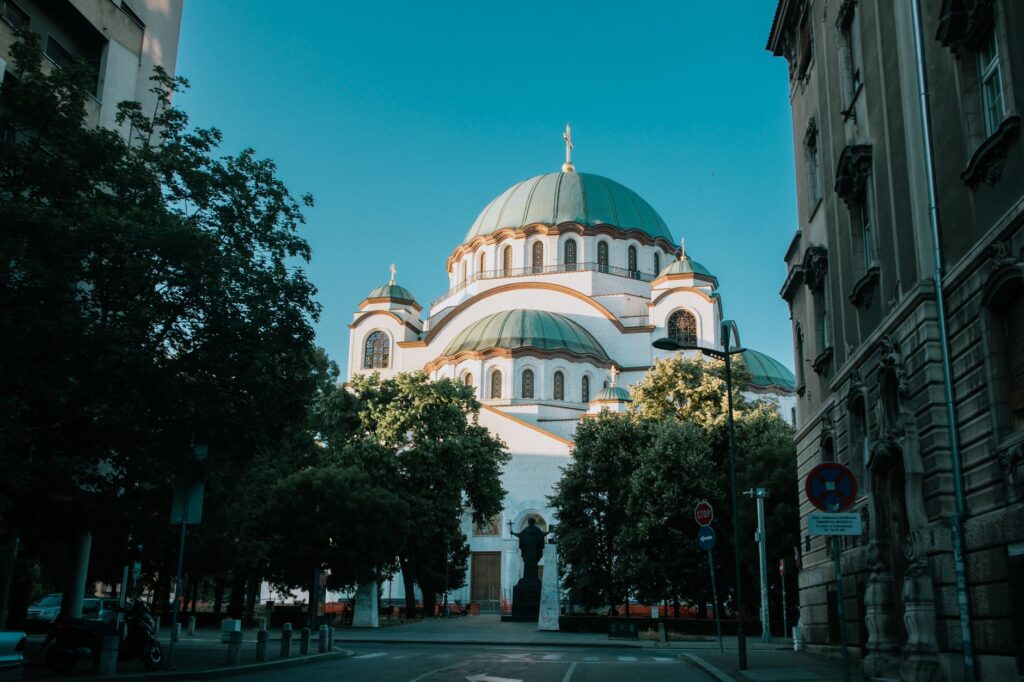
Begin near Železnički muzej, Belgrade’s Railway Museum. It provides the best introduction to the district because railways once defined this part of the city. The museum’s collection includes historic railway objects and documents that place Serbia’s rail network within a wider Balkan and European story.
Even for travellers who are not railway enthusiasts, it is a worthwhile indoor stop. Old maps, uniforms, technical equipment, and archival material help explain how rail transport connected Belgrade with the region. It also makes the later walk through Savamala feel more purposeful.
Museum access arrangements can change, so check visiting details before setting out. If you cannot visit inside, the surrounding station district still makes a strong opening chapter for the walk.
Belgrade Main Railway Station building
Just nearby stands the former Belgrade Main Railway Station, a monumental building that once welcomed generations of arrivals. Its long, formal façade reflects the confidence of a city establishing itself as a modern transport hub in the late 19th century.
Rail operations have moved away from this historic station, but the building remains essential to understanding Savamala. Pause across the street for a broader view of its symmetry and scale. Then imagine the busy arrival hall, luggage traffic, and railway tracks that once made this area one of Belgrade’s main entrances.
Follow Karađorđeva Street through old Savamala
From the station area, continue along Karađorđeva Street, the main historic corridor running beside the river. This is not a quiet pedestrian lane. Traffic can be busy, and the pavement varies, but the street rewards patient walking.
Look beyond the storefronts and parked cars. The façades reveal the ambitions of a neighbourhood built around commerce. Hotels, offices, warehouses, and merchant buildings stood close to the railway and river, where goods and visitors flowed into Belgrade.
The Bristol Hotel and the merchant city
The historic Bristol Hotel is one of the street’s most recognisable landmarks. Its dignified architecture recalls the era when Savamala served business travellers, traders, and people arriving by rail. The building carries a sense of old Belgrade grandeur, even as its surroundings continue to evolve.
This stretch is especially good for understanding the district’s former status. Savamala was never simply a riverside backstreet. It was a working urban quarter with serious commercial ambitions, and its surviving architecture still makes that clear.
Geozavod Building
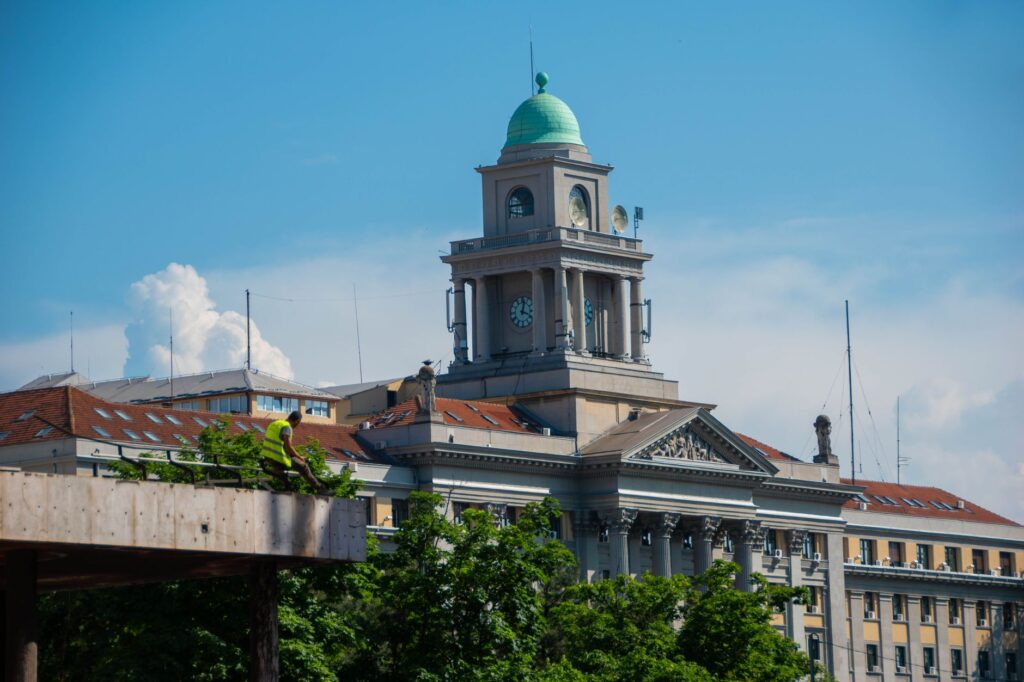
Continue towards the Geozavod Building, one of Savamala’s most ornate structures. Built for a cooperative bank, it is richly decorated and deliberately theatrical. Its eclectic design stands out against the tougher industrial character of the surrounding streets.
Take time to view it from several angles. The building is a useful reminder that this riverside district once attracted significant financial and commercial investment. It also makes a fine visual counterpoint to the plainer warehouses nearby.
Manak’s House and an older Belgrade
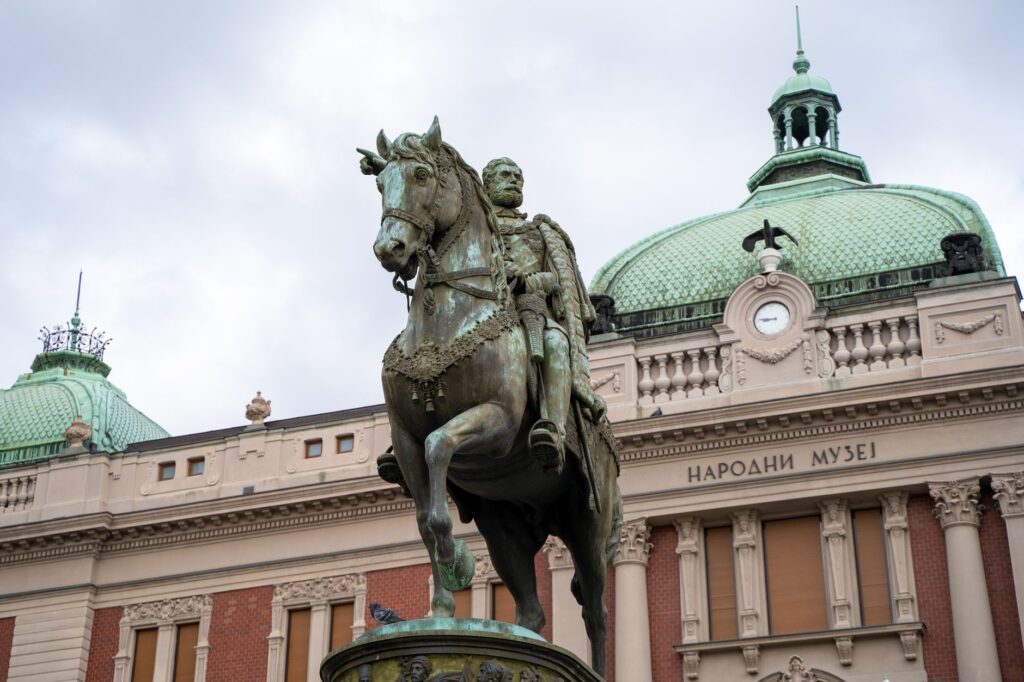
A short diversion inland brings you to Manak’s House, a small 19th-century house that feels very different from the grand buildings on Karađorđeva Street. Its modest scale evokes the Balkan town that existed before the district gained its railway-era confidence.
The house is associated with ethnographic collections and traditional urban life. If it is accessible during your visit, it offers a compact cultural stop. Even from outside, it helps show how many versions of Belgrade meet within a few blocks.
End at the Sava River
The Sava Promenade is the natural finish for this route. After the enclosed streets and heavy façades of Savamala, the open river feels like a release. Find a place to pause and look across the water toward New Belgrade.
The riverfront now sits beside the Belgrade Waterfront area, creating a sharp contrast with old Savamala. You can see the city’s past and present in one view: the historic commercial quarter behind you, broad river space ahead, and newer buildings along the bank.
This is not a walk that asks you to choose between old and new Belgrade. Its value comes from the tension between them. The Sava has always been part of the city’s commercial life, and the waterfront remains one of the clearest places to feel that connection.
Views from Brankov Most
For a wider perspective, walk toward Brankov Most. The bridge is a practical crossing between central Belgrade and New Belgrade, but it also offers revealing views over the Sava and the low-rise historic quarter.
You do not need to cross the whole bridge to enjoy the outlook. A short walk onto it can show how Savamala sits at the edge of central Belgrade, below the higher streets and ridges of the old city.
An uphill detour to Kosančićev Venac
Travellers comfortable with hills can extend the route to Kosančićev Venac. The climb is short but steep in places, and surfaces can be uneven. However, it leads to one of old Belgrade’s most atmospheric areas.
Cobblestone lanes, older houses, and views down towards the Sava give this neighbourhood a more intimate mood than Savamala. It is a pleasing contrast after Karađorđeva Street’s commercial scale. From here, Belgrade feels less like a railway gateway and more like a layered Balkan capital built across hills.
If you continue north, the riverside area around Beton Hala can provide another place to pause before heading towards the fortress district. That extension suits travellers with more time, although it is not necessary for the core half-day route.
Planning the walk
This route is easy to adapt. The former main station and Railway Museum make the most logical beginning, while the Sava Promenade offers the clearest ending. If you are arriving from central Belgrade, Zeleni Venac and Terazije are useful nearby reference points for orienting yourself before heading downhill.
- Distance: Expect around 3 to 5 kilometres, depending on museum time and detours.
- Terrain: Karađorđeva Street is largely level, while Kosančićev Venac involves a steep uphill section.
- Footwear: Wear comfortable shoes for uneven pavements and sloping streets.
- Timing: Leave room for unplanned pauses; this route is best enjoyed slowly.
- Awareness: Take care near traffic on Karađorđeva Street and watch for changing pedestrian routes near the waterfront.
Savamala will not present Belgrade in its most polished form. That is precisely why it is memorable. This walk reveals the city as a place shaped by trade, railways, rivers, and constant reinvention—one street and façade at a time.
Tours & experiences for Belgrade
Popular experiences with current pricing and traveler ratings.
 Free cancellation
Day Trip from Belgrade: Gems of Eastern Serbia
 Free cancellation
From Belgrade: Golubac fortress & Iron Gate Danube gorge
 Free cancellation
Northern Serbia: Sremski Karlovci and Novi Sad Full-Day Tour from Belgrade
 Free cancellation
Belgrade Private City Tour
 Free cancellation
Belgrade Old Town Walking Tour with a Guide
 Free cancellation
From Belgrade: 3 Danube Fortresses tour
ToursToBalkans may earn a commission when you book through our partner links.