
Kruje Castle and the Skanderbeg Museum: A Practical Visitor Guide
Explore Kruje Castle, the Skanderbeg Museum and the old bazaar with historical context, route ideas and practical advice for a rewarding visit.
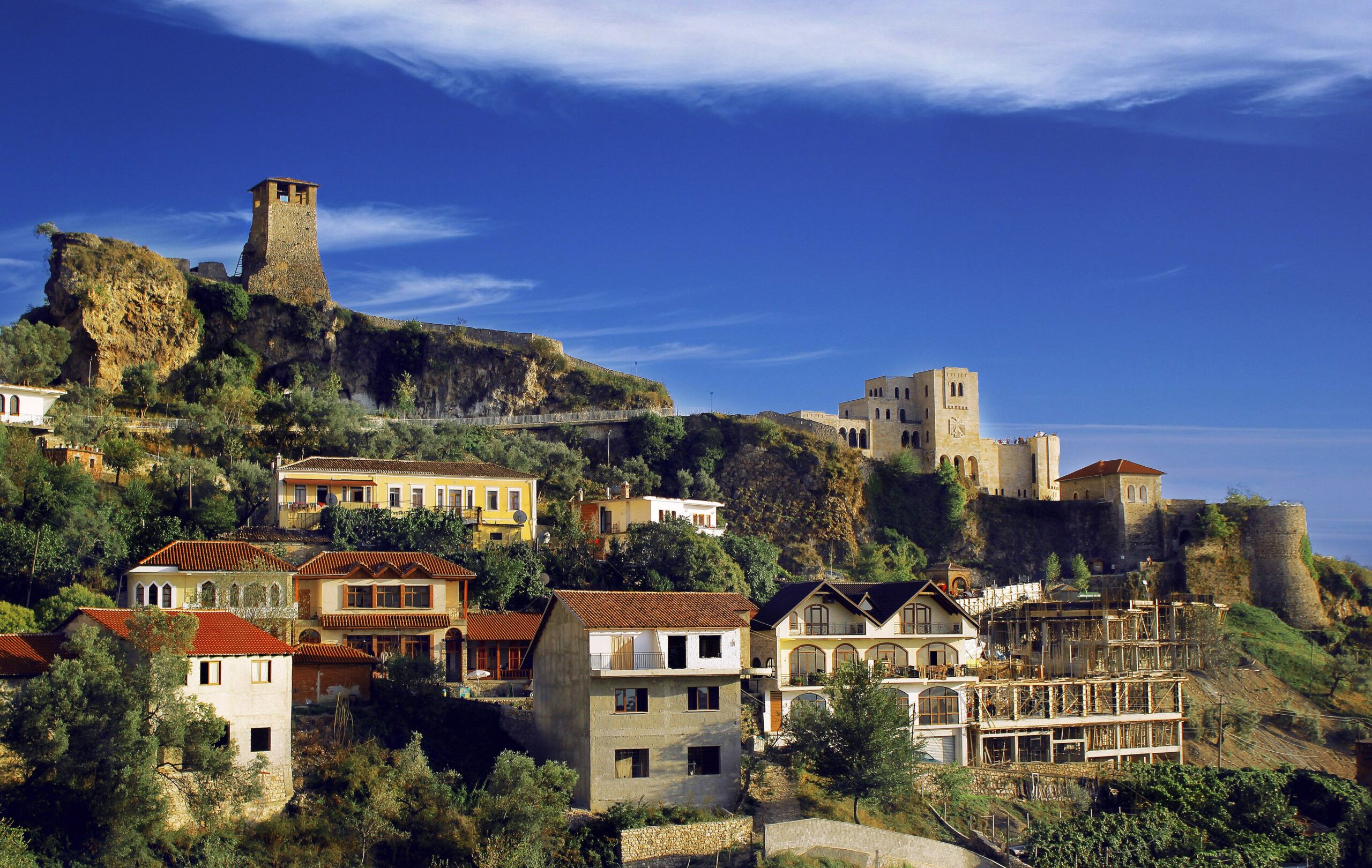
The Kruje Castle Skanderbeg Museum is one of Albania’s most meaningful heritage visits. Set high above the town, the castle evokes the struggle led by Gjergj Kastrioti Skanderbeg against the Ottoman Empire in the 15th century. The museum gives that story shape, while the old bazaar adds the atmosphere of an Ottoman-era mountain town.
Kruje works well as a half-day excursion from Tirana, although history-minded travelers can easily fill a full day. The main sites sit close together, but expect slopes, cobbles and uneven ground. Take your time rather than treating the castle as a quick photo stop.
Why Kruje matters in Albanian history
Kruje holds a special place in Albania’s national memory because it was Skanderbeg’s principal stronghold. Born Gjergj Kastrioti, Skanderbeg had served within the Ottoman system before returning to lead an Albanian resistance movement. From Kruje, he became the central figure in a long campaign against Ottoman expansion in the western Balkans.
The fortress occupied a naturally strategic position on the slopes of Mount Kruje. Its high setting gave defenders wide views over the plain below and made access difficult for attacking forces. The castle is therefore more than a scenic landmark. It is the physical setting for one of the defining stories of medieval Albania.
It helps to approach the site with a little historical perspective. Kruje Castle has changed greatly over the centuries, and not every wall or building seen today is medieval. Surviving fortifications, later additions and modern reconstruction all contribute to the present-day complex. The experience is strongest when you see it as a historical landscape rather than a perfectly preserved medieval fortress.
Exploring Kruje Castle
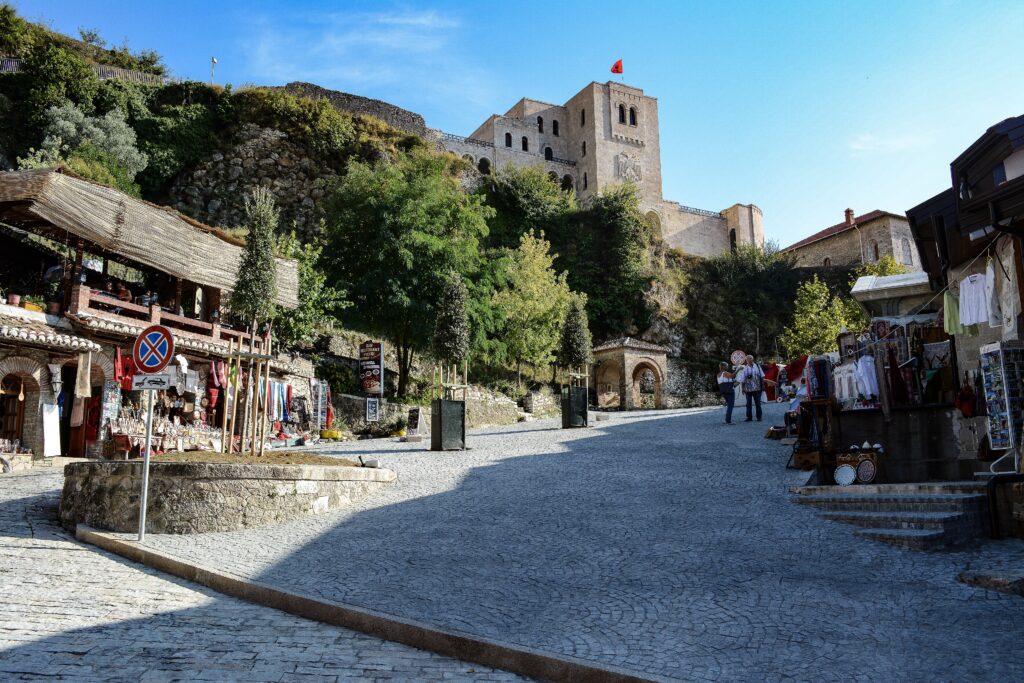
The route to the castle rises from the town through the old bazaar area. Once inside the grounds, pause in the courtyard before heading straight to the museum. This open space helps explain the castle’s scale and its commanding hilltop location.
Look beyond the museum façade for fragments of the defensive setting: sections of wall, stonework, gateways and views towards the lowlands. The fortress does not overwhelm visitors with vast intact battlements. Instead, its power comes from its position and the events associated with it.
Views from the hilltop
The castle’s elevation is part of the story. From the higher sections of the complex, the landscape opens towards central Albania and, on clearer days, far beyond the town. These views make the strategic logic of Kruje immediately understandable.
They also provide a welcome pause between museum rooms. Bring shoes with grip, especially if you plan to explore the outer areas of the castle. Stone surfaces and cobbled paths can be slippery or awkward underfoot.
Inside the Gjergj Kastrioti Skanderbeg Museum
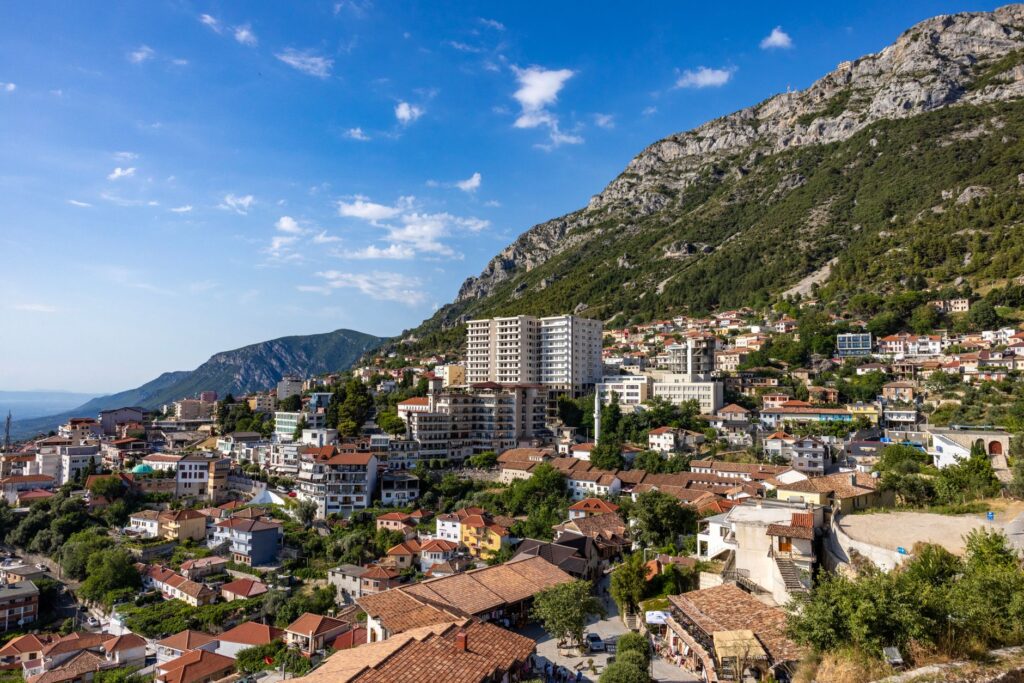
The Gjergj Kastrioti Skanderbeg Museum stands inside the castle and is the natural centrepiece of a visit. Its architecture makes a bold statement, deliberately recalling a medieval fortress. The building is modern, yet it was designed to present Skanderbeg’s era with the gravity it holds in Albanian culture.
Inside, the displays trace medieval Albanian history and Skanderbeg’s military and political role. Visitors will find arms, armour-related material, replicas, visual reconstructions and interpretive exhibits that place the resistance within the wider Balkans and Mediterranean world.
Some objects and settings are reproductions or later interpretations rather than original 15th-century material. That does not lessen the museum’s value. Instead, it is worth reading the exhibits as a carefully constructed introduction to a complicated period, where surviving evidence, national memory and later commemoration meet.
What the museum helps you understand
The museum’s great strength is context. Skanderbeg’s story can otherwise become reduced to a simple heroic tale of sieges and victories. Here, visitors can better understand the pressures faced by local rulers during Ottoman expansion, as well as the alliances required to sustain resistance.
Skanderbeg helped establish the League of Lezhe in 1444, bringing together Albanian nobles in a shared military alliance. The league was not a modern nation-state, and its members had their own interests and rivalries. Still, it became a powerful symbol of unity and resistance in later Albanian history.
Skanderbeg died in 1468, but his reputation endured far beyond his lifetime. For Albanian visitors, Kruje is not simply a medieval attraction. It is a place connected to national identity, resilience and political memory. A respectful, unhurried visit will reveal far more than a quick tour focused only on weapons and battles.
The old bazaar: the essential second half of the visit
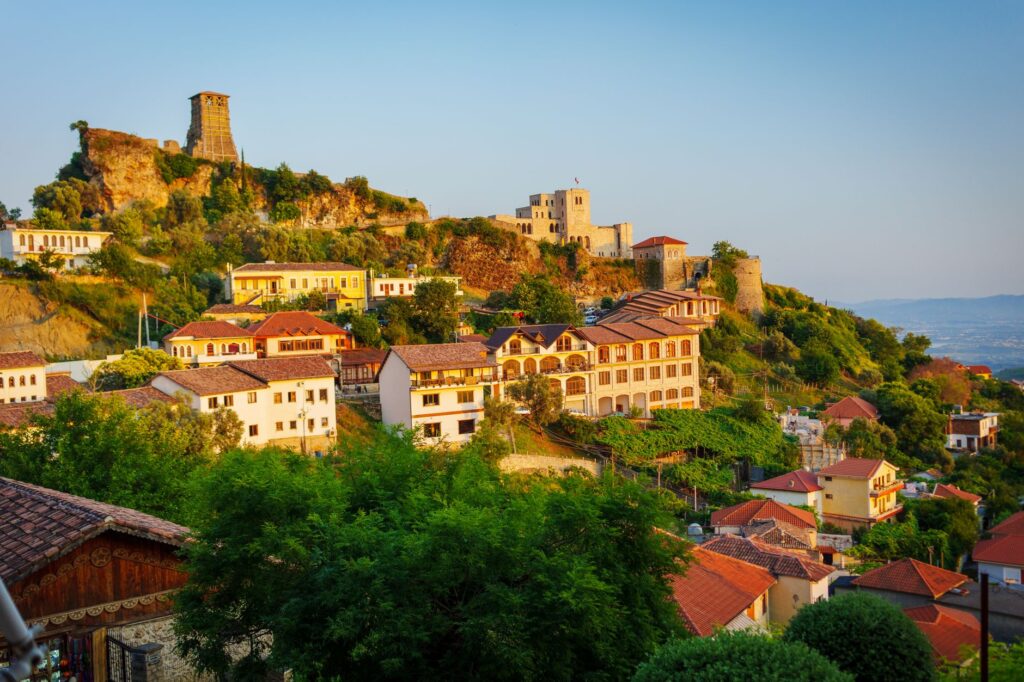
After the castle, walk through Kruje Old Bazaar. The cobbled street runs between the town and castle area, making it the most natural companion to the historical sites. Its wooden-fronted stalls and traditional feel create a strong contrast with the fortress above.
The bazaar follows the character of an Ottoman-era trading street, although, like much of Kruje, it has been restored and adapted over time. Browse with curiosity, but avoid expecting a museum-piece market frozen in the past. It remains a visitor-focused place where craft goods, textiles and souvenirs share space with everyday shopping.
Look for Albanian handicrafts, woven items, carved wood and traditional-style textiles. Bargaining may be part of the experience in some stalls, but a friendly and relaxed approach goes a long way. Even travelers who do not wish to shop should walk the full lane for its stone paving, mountain-town setting and changing views towards the castle.
A quieter historical stop near the bazaar
The Ethnographic Museum of Kruje offers a valuable change of scale after the military history of the castle. Set in a traditional Ottoman-era townhouse near the bazaar, it focuses on domestic life, craft traditions and the material culture of a well-to-do household.
Its rooms, furnishings and objects help answer a different question: how did people live in this region? If the Skanderbeg Museum explains leadership, conflict and resistance, the Ethnographic Museum gives a more intimate view of family life and skilled work. It is especially worthwhile for visitors spending a full day in Kruje.
Planning your route from Tirana
Kruje is close enough to Tirana for a day trip and sits northwest of the capital in the foothills. A private car, taxi or organised excursion gives the simplest route, particularly if you want to continue higher into the mountains. Public transport can also be an option, but departure points and services can change, so check locally before relying on a particular connection.
Once in Kruje, the main heritage area is best explored on foot. The ascent from the lower town towards the bazaar and castle is noticeable, though manageable for most visitors at a steady pace. Those with limited mobility should allow extra time and be aware that cobbles, steps and uneven surfaces are common.
A half-day visit can cover the bazaar, castle grounds and Skanderbeg Museum. Allow a full day if you also want to visit the Ethnographic Museum, enjoy a leisurely meal in town, or travel up Mount Kruje.
A sensible order for the day
- Walk through the old bazaar on the way towards the castle.
- Explore Kruje Castle and take in the views before entering the museum.
- Spend time in the Skanderbeg Museum while the historical setting is fresh in your mind.
- Return to the bazaar for a slower look at its shops and architecture.
- Add the Ethnographic Museum if you want a fuller picture of traditional Kruje life.
Check museum access arrangements locally before travelling, particularly outside the busiest travel months. Opening patterns can vary, and religious or cultural observances may affect individual sites.
Mount Kruje and the Sari Salltik Cave
Travelers with more time can continue up Mount Kruje to the Sari Salltik Cave, a Bektashi pilgrimage site above the town. It adds a spiritual dimension to a day otherwise shaped by military and political history.
The cave is best reached by vehicle or as part of a purposeful hike, rather than squeezed into a rushed castle visit. The route and terrain demand more preparation than the compact old-town circuit. However, the higher viewpoint and mountain setting reward those who want to see Kruje within its wider landscape.
Dress modestly and behave quietly at the shrine. As at any active religious place, photography and access expectations may differ from those at a museum or public viewpoint.
Following Skanderbeg beyond Kruje
Kruje is the clearest place to understand Skanderbeg’s military legacy, but it is not the only place tied to his life. In Lezhe, the memorial site at St. Nicholas Church is associated with his tomb and offers an important companion visit for travelers tracing his story across Albania.
Lezhe should be treated as a separate day-trip destination rather than an extra stop on a short Kruje visit. Together, Kruje and Lezhe frame two sides of the same history: the mountain stronghold linked with resistance and the place associated with the League of Lezhe and Skanderbeg’s final resting place.
Make time for the setting, not only the exhibits
Kruje Castle and the Skanderbeg Museum are at their best when visited as one connected experience. The castle provides the landscape and strategic reality behind the history. The museum explains the man, the conflict and the legacy. The bazaar then brings you back into the texture of the town below.
Give yourself enough time to walk slowly, read the displays and look out from the walls. Kruje rewards travelers who arrive with curiosity about Albania’s past and leave with a clearer sense of why Skanderbeg remains such a powerful national figure.
Recommended hotels in Kruje
A smaller selection of better-rated hotels with established review history and Agoda booking links.
 9.2
9.2
Hotel PANORAMA Kruje view over the castle and the old town
Selection favors established hotels with stronger ratings, review volume and usable imagery. Final rates and availability are shown by Agoda.