
Sarajevo in Winter: What to Do, See & Eat
Discover Sarajevo’s atmospheric Old Town, essential museums, warming Bosnian dishes and nearby Olympic mountains during a memorable winter city break.
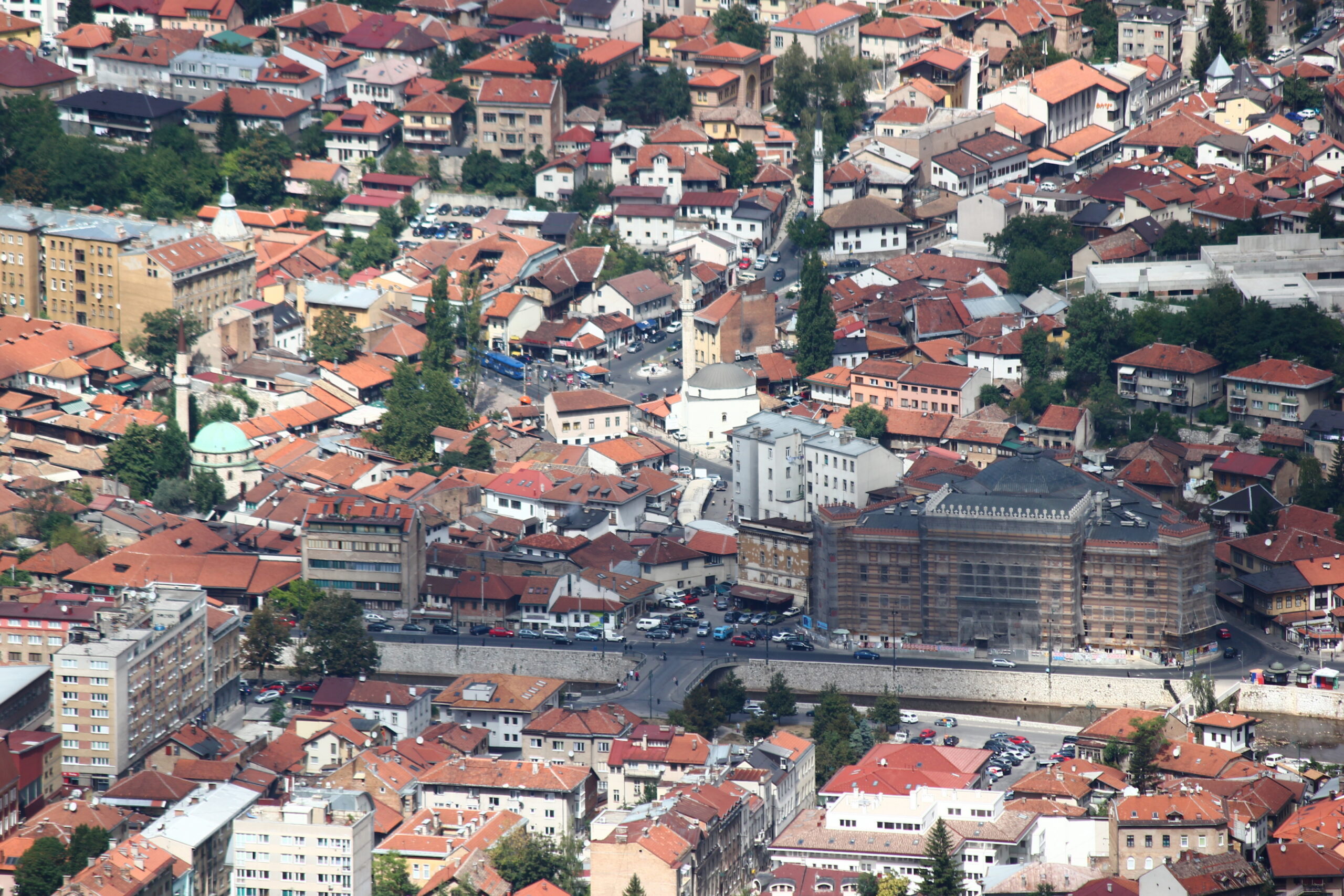
Sarajevo winter travel has a distinct character: woodsmoke in the air, snow or mist on the surrounding Dinaric Alps, and cafés that invite you to slow down. The city’s compact centre makes it easy to combine Ottoman-era streets, Austro-Hungarian architecture, thoughtful museums and comforting food in one rewarding day.
Winter does not need to mean a ski-focused holiday here. Sarajevo works especially well for travellers who enjoy history, culture and long lunches. The mountains remain close, however, so a clear day can bring wide views over the basin and an easy sense of escape from the city.
Continue planning with Sarajevo Old Town Guide: Baščaršija, Food & History and Where to Eat in Sarajevo: Local Food Guide.
Why Sarajevo feels made for winter
Sarajevo sits in a valley surrounded by mountains, and its layered past is visible at every turn. Within a short walk, you can move from the Ottoman character of Baščaršija to grand late-19th-century boulevards and memorials to the city’s recent history.
Cold weather suits the city’s indoor pleasures. Museums offer depth without rushing, while traditional cafés provide a welcome pause between walks. Even when the skyline disappears into winter fog, Sarajevo’s close-set streets retain their atmosphere.
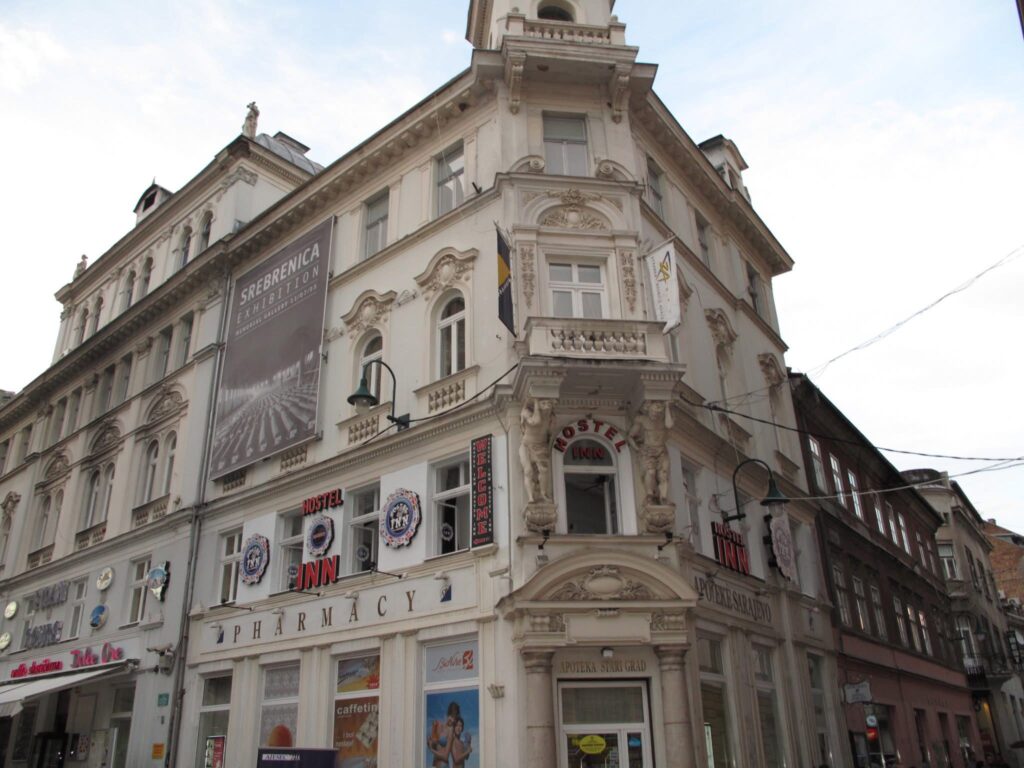
Wander Baščaršija, Sarajevo’s Old Town
Baščaršija is the natural heart of a winter visit. Its narrow lanes, low-roofed shops and small squares feel intimate in cold weather. Begin around Sebilj, the wooden fountain that marks the best-known corner of the old bazaar.
From there, follow the lanes past metalworkers, cafés and small food counters. Coppercraft remains one of the area’s defining traditions, and the hand-hammered coffee sets make a meaningful souvenir. This is not an open-air museum, though. Baščaršija remains a working neighbourhood where worshippers, shoppers and friends meet throughout the day.
Gazi Husrev-beg Mosque and its surroundings
The 16th-century Gazi Husrev-beg Mosque is one of Sarajevo’s most important Ottoman landmarks. Its courtyard, fountain and elegant dome offer a quieter contrast to the busy bazaar lanes. The wider complex helped shape the life of the historic quarter through religious, educational and commercial buildings.
As it is an active place of worship, dress modestly and respect the rules for visitors. A calm visit here adds essential context to Sarajevo’s Islamic heritage and the enduring rhythm of Old Town life.
Warm up with Sarajevo’s essential museums
Sarajevo’s museums are not simply rainy-day alternatives. They explain the city far better than a quick walk through its streets can. Allow time to reflect, especially in institutions dealing with the war of the 1990s.
Vijećnica: the city’s striking riverside landmark
Beside the Miljacka River, Sarajevo City Hall, known as Vijećnica, is one of the city’s most recognisable buildings. Its richly detailed Moorish Revival design feels especially impressive after the restrained architecture of Baščaršija.
The building has a complex history and has become a symbol of Sarajevo’s cultural endurance. Inside, exhibitions help place the city’s past in context. It is an excellent stop before or after exploring the Old Town, particularly on a cold afternoon.
Gallery 11/07/95: essential, difficult and deeply human
Gallery 11/07/95 documents the Srebrenica genocide through photography, testimony and archival material. It is a powerful visit, and one that deserves unhurried attention. The exhibitions address an event that remains central to understanding Bosnia and Herzegovina’s recent past.
This is not a light stop between sightseeing. Go with care, allow quiet time afterwards and let the material shape your understanding of the country beyond Sarajevo’s beautiful streetscape.
National Museum and the War Childhood Museum
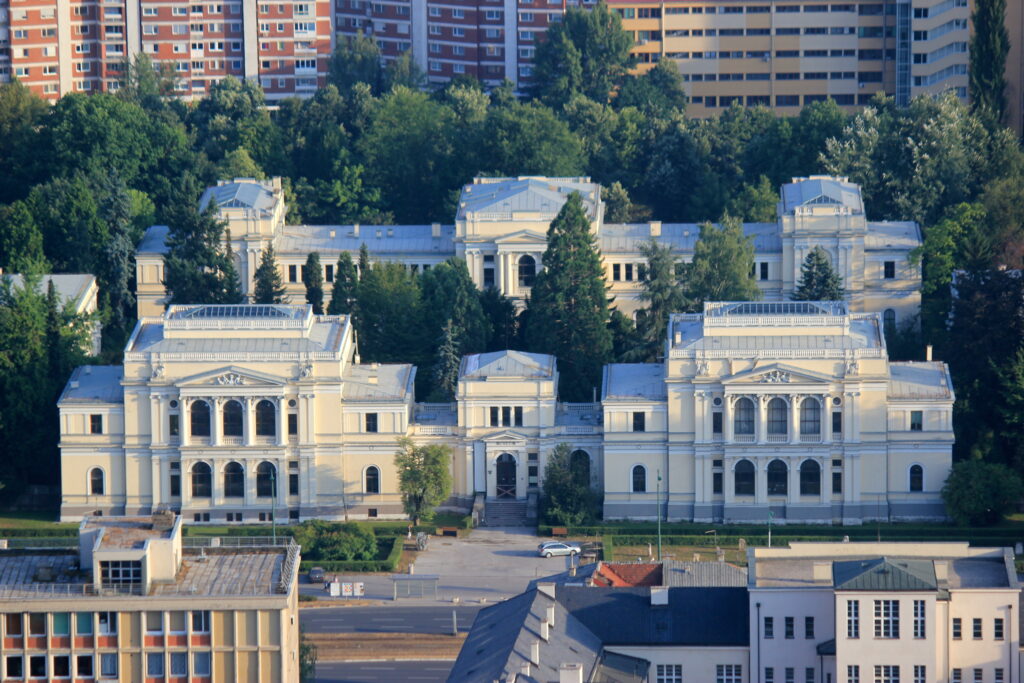
The National Museum of Bosnia and Herzegovina offers a broader view of the country, from archaeology and natural history to artistic and cultural heritage. Its historic museum complex is worthwhile for anyone staying more than a day. The Sarajevo Haggadah, one of the museum’s most celebrated treasures, is a particularly important part of its collection.
For a more personal perspective on the siege years, visit the War Childhood Museum. Through objects and first-hand narratives, it shows how war affected ordinary childhoods. The approach is accessible but never superficial, making it a meaningful indoor addition to a winter itinerary.
Eat slowly: ćevapi, burek and Bosnian coffee
Food is one of the best reasons to visit Sarajevo in winter. A plate of ćevapi, small grilled minced-meat sausages served in soft somun bread, is the classic cold-weather meal. It is usually simple, filling and best enjoyed without overthinking it.
For another everyday favourite, try burek, the savoury filled pastry associated with the region. In Sarajevo, the word burek traditionally refers to the meat-filled version, while other fillings have their own names. It makes an easy breakfast or warming snack during a long walk.
Take time over the coffee ritual
Bosnian coffee is served in a small copper pot, or džezva, with a cup and often a piece of sugar or something sweet alongside it. The ritual matters as much as the drink. Rather than carrying it away, sit down, talk and watch the street life unfold.
Finish with baklava or tufahija, a poached apple dessert commonly filled with walnuts and topped with cream. These are the flavours that make Sarajevo feel particularly welcoming when the air is sharp outside.
Ride the cable car to Trebević
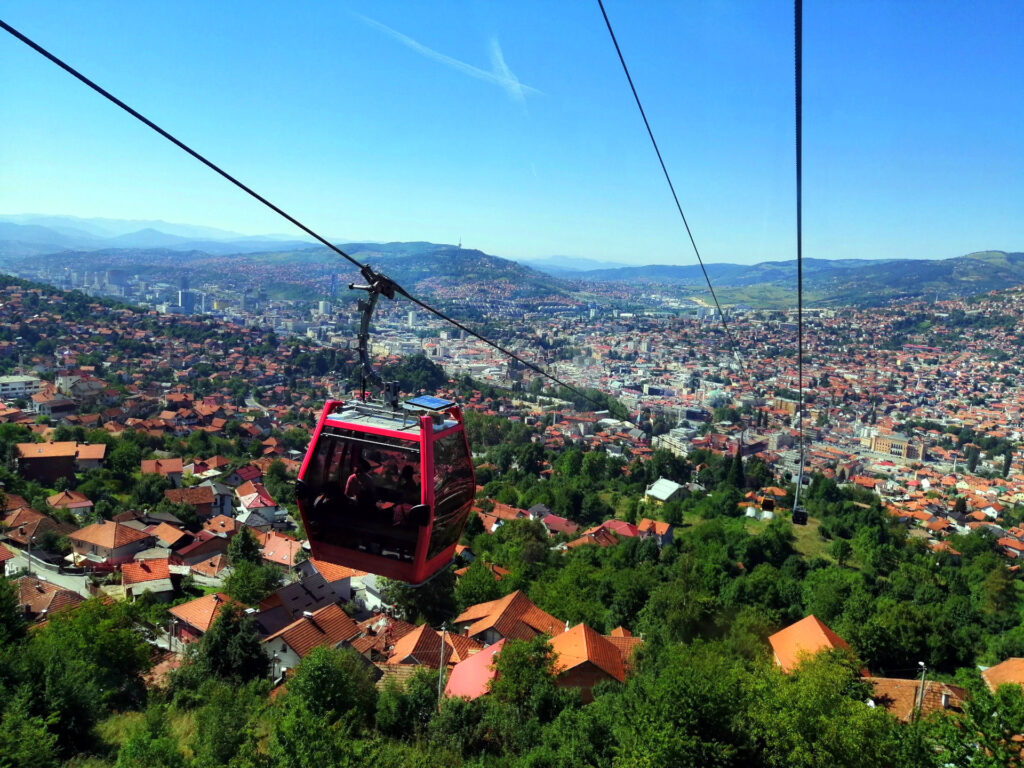
The Trebević Cable Car offers one of Sarajevo’s most memorable changes of scene. The ascent rises above the city and, when visibility allows, reveals the shape of the basin and the mountains beyond. It is a fine choice for travellers who want mountain atmosphere without committing to a full ski excursion.
At the top, Trebević offers walking possibilities and a more open landscape than the city below. The Trebević Olympic Bobsleigh Track, built for the 1984 Winter Olympics, lies nearby and remains one of the most evocative reminders of Sarajevo’s Olympic past.
Conditions can change quickly in winter. Fog may hide the view, paths can become slippery and mountain weather is often colder than in the centre. Check local operating information before setting out, and wear footwear with reliable grip.
Jahorina and Bjelašnica for a mountain day
If your trip allows extra time, Jahorina and Bjelašnica are the main winter mountain options beyond Sarajevo. Both were used during the 1984 Winter Olympics and remain associated with skiing and highland scenery.
Jahorina is the more obvious choice for travellers seeking established ski infrastructure. Bjelašnica has higher-elevation terrain and a wilder mountain feel. Neither should be treated as an automatic day trip, however. Snow, road conditions, visibility and transport arrangements all affect what is realistic.
Plan these as optional excursions rather than the foundation of your Sarajevo stay. If conditions are poor, the city’s museums, cafés and Old Town provide more than enough for a satisfying winter day.
Winter planning notes for Sarajevo
Sarajevo International Airport provides a convenient arrival point for many visitors, while the city centre is manageable on foot once you are based nearby. Sarajevo’s tram network is useful for moving along the main urban corridor, including journeys between the central districts and the area around the National Museum.
Pack layers, a warm outer coat and shoes that handle wet pavements and ice. Side streets can be slippery, especially away from the main routes. Keep your schedule flexible as fog can affect mountain views and winter travel.
For a one-day visit, concentrate on Baščaršija, Vijećnica, one major museum and a long meal. With a second day, add the National Museum, the War Childhood Museum and Trebević if conditions permit. Sarajevo rewards this slower approach: the city is best understood over coffee, conversation and time spent looking closely.
Tours & experiences for Sarajevo
Hand-picked experiences with live pricing and traveler ratings.
 Free cancellation
Sarajevo: Mostar, Blagaj, Pocitelj, Waterfall, Konjic with fees
 Free cancellation
Fall of Yugoslavia, Sarajevo War Tour with Tunnel of Hope Museum and Frontlines
 Free cancellation
ROSES OF SARAJEVO (Official War + City tour) -Story of a Survivor
 Free cancellation
Mostar & Herzegovina 4 Cities Day-tour from Sarajevo (fees incl.)
 Free cancellation
Sarajevo to Belgrade: Transfer With East Bosnia Tour
 Free cancellation
Sarajevo to Dubrovnik: Transfer With Herzegovina Tour
ToursToBalkans may earn a commission when you book through our partner links.
Best places in Sarajevo
Selected attractions and places to eat with Tripadvisor data, curated for a cleaner trip-planning experience.
Top attractions in Sarajevo


Recommended hotels in Sarajevo
A smaller selection of better-rated hotels with established review history and Agoda booking links.
 8.8
8.8
Residence Inn by Marriott Sarajevo
Experience an abundance of unparalleled facilities and features at Residence Inn by Marriott Sarajevo.Car hire offeri…
 9.0
9.0
Courtyard by Marriott Sarajevo
Experience an abundance of unparalleled facilities and features at Courtyard by Marriott Sarajevo.Experience the wond…
 8.5
8.5
 8.4
8.4
Selection favors established hotels with stronger ratings, review volume and usable imagery. Final rates and availability are shown by Agoda.